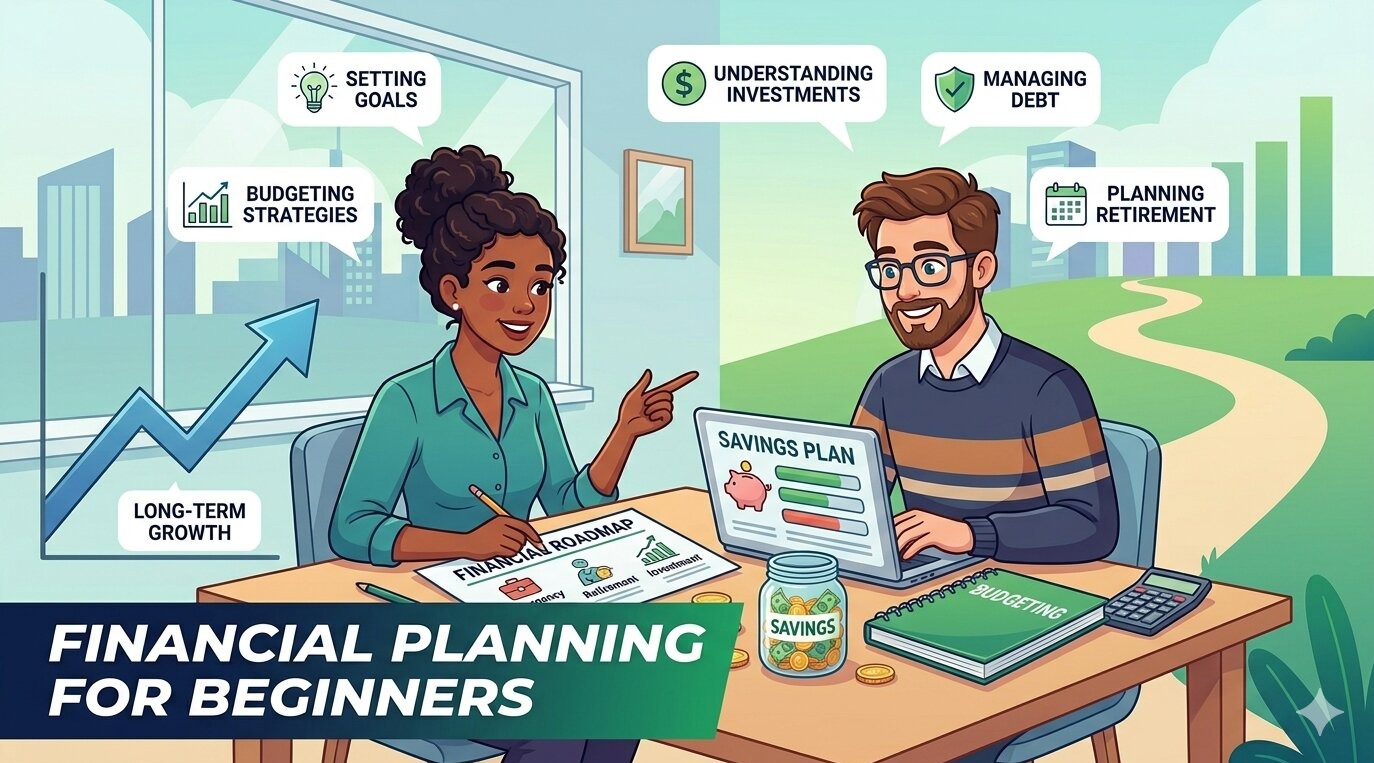
Most people think financial planning is something only wealthy individuals need. In reality, it’s even more important when you’re just starting out.
Without a plan, money tends to disappear. With a plan, even a modest income can build long-term stability.
The good news? Financial planning doesn’t have to be complicated. You don’t need advanced knowledge or expensive advisors. You just need a clear structure and consistent habits.
Let’s break it down step by step.
What Is Financial Planning (In Simple Terms)
Financial planning is simply deciding:
- How you earn
- How you spend
- How you save
- How you grow your money
It’s about making sure your money works for your goals—not against them.
For example:
- Saving for emergencies
- Planning big purchases
- Building long-term wealth
Everything starts with understanding your current situation.
Step 1: Understand Your Income and Expenses
Before planning the future, you need clarity about the present.
Track:
- Monthly income
- Fixed expenses (rent, bills)
- Variable expenses (food, shopping)
If you don’t already have a structure, start here:
https://statush.com/money/how-to-create-a-monthly-budget-that-works
This becomes the foundation of your entire financial plan.
Step 2: Set Clear Financial Goals
Without goals, saving money feels pointless.
Divide your goals into three categories:
| Goal Type | Examples | Timeframe |
|---|---|---|
| Short-term | Emergency fund, gadgets | 0–1 year |
| Mid-term | Car, travel, education | 1–5 years |
| Long-term | House, retirement | 5+ years |
Tip: Be specific.
Instead of “save money,” say “save ₹1,00,000 in 12 months.”
Step 3: Build an Emergency Fund
Before investing or taking risks, you need a safety net.
An emergency fund should cover:
- 3–6 months of expenses
This protects you from:
- Job loss
- Medical emergencies
- Unexpected expenses
Start small and grow it gradually.
You can follow this step-by-step guide:
https://statush.com/money/how-to-build-an-emergency-fund-from-zero
Step 4: Manage Debt Smartly
Not all debt is bad—but unmanaged debt is dangerous.
Focus on:
- Paying high-interest loans first
- Avoiding unnecessary credit usage
- Keeping EMIs within limits
If a large portion of your income goes into debt, your financial growth slows down significantly.
Step 5: Start Saving Consistently
Saving is the backbone of financial planning.
A simple rule:
Save before you spend.
For example:
- Income = ₹50,000
- Save ₹10,000 first
- Spend ₹40,000
Even small amounts grow over time with consistency.
Step 6: Begin Investing (Even Small Amounts)
Saving protects money—investing grows it.
You don’t need large amounts to start.
Options include:
- Mutual funds
- Fixed deposits
- Stocks (with knowledge)
Real-world example:
Investing ₹5,000/month consistently can grow significantly over years due to compounding.
The key is starting early—not waiting for the “perfect time.”
Step 7: Control Lifestyle Inflation
As income increases, expenses tend to rise too.
This is called lifestyle inflation.
For example:
- Salary increase → more eating out
- Better income → expensive purchases
Instead:
- Increase savings rate
- Maintain controlled spending
This is one of the biggest differences between people who build wealth and those who don’t.
Step 8: Protect Your Finances
Financial planning isn’t just about growth—it’s also about protection.
Basic protections include:
- Health insurance
- Life insurance (if you have dependents)
Without protection, one emergency can destroy years of savings.
Step 9: Review and Adjust Regularly
Your financial plan is not fixed.
Review it when:
- Income changes
- Expenses increase
- Goals evolve
A monthly or quarterly review is enough to stay on track.
Step 10: Keep It Simple and Consistent
You don’t need a complicated system.
Focus on:
- Clear goals
- Regular saving
- Smart spending
- Long-term thinking
Consistency matters more than complexity.
Simple Financial Planning Structure
Here’s a basic structure you can follow:
| Step | Action | Priority |
|---|---|---|
| Budgeting | Track income & expenses | High |
| Emergency Fund | Save 3–6 months expenses | High |
| Debt Management | Reduce high-interest loans | High |
| Saving | Save monthly | High |
| Investing | Start small, grow gradually | Medium |
Real-Life Example
Neha earns ₹45,000/month.
Before planning:
- No savings
- Frequent spending
- Financial stress
After applying financial planning:
- ₹8,000 monthly savings
- Emergency fund built in 8 months
- Started investing ₹3,000/month
Her income didn’t change—her system did.
Common Mistakes to Avoid
- Not having clear goals
- Ignoring emergency funds
- Delaying investing
- Overspending after salary increases
- Not reviewing finances
These mistakes are common—but easy to fix with awareness.
Connecting It All Together
Financial planning is not a single step—it’s a system.
It combines:
- Budgeting
- Saving
- Spending control
- Long-term thinking
If you’re still struggling with daily finances, start here:
https://statush.com/money/how-to-stop-living-paycheck-to-paycheck
Final Thoughts
Financial planning is less about numbers and more about habits.
You don’t need a high income to start—you need consistency.
Start small:
- Track your money
- Set simple goals
- Save regularly
Over time, these small steps create strong financial stability.