One of the biggest mistakes beginner investors make is putting too much money into a single investment idea. Sometimes it is one stock. Sometimes it is one industry. Occasionally it is a trendy asset everyone online suddenly becomes excited about.
That approach can work temporarily, but it also creates unnecessary risk.
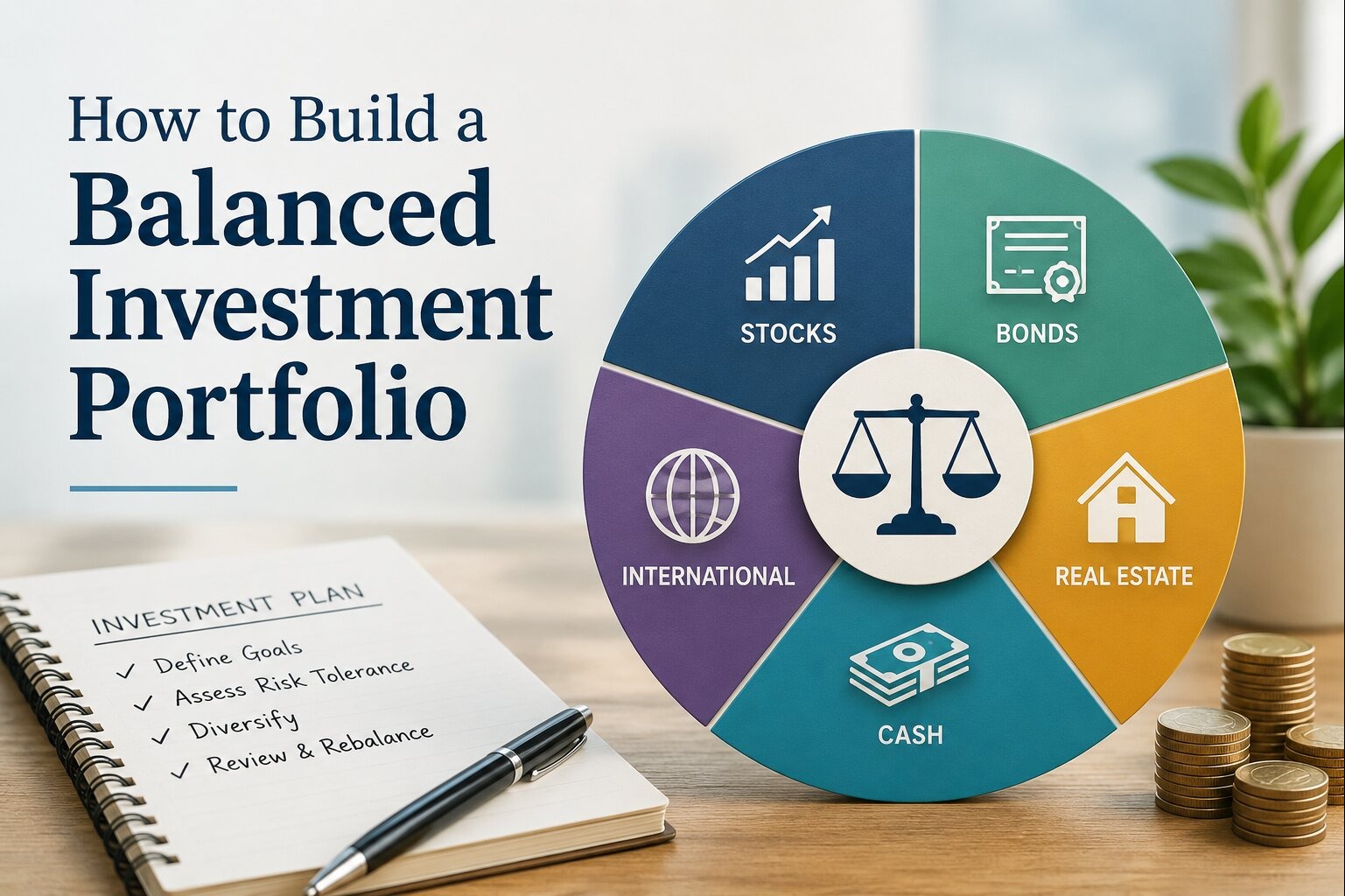
A balanced investment portfolio is designed to reduce risk while still providing long-term growth opportunities. Instead of relying heavily on one investment, a balanced portfolio spreads money across different asset types, industries, and investment styles.
The goal is not eliminating risk completely because that is impossible in investing. The goal is managing risk intelligently while still allowing your money to grow over time.
In many ways, portfolio balance is what helps investors survive difficult markets emotionally and financially.
What Is a Balanced Investment Portfolio?
A balanced portfolio combines different investments to create a mix of:
- Growth potential
- Stability
- Income generation
- Risk management
Rather than concentrating everything in one area, balanced portfolios typically include multiple asset classes.
Common portfolio components include:
- Stocks
- Bonds
- ETFs
- Index funds
- Dividend investments
- International exposure
- Cash reserves
The exact allocation depends on:
- Age
- Financial goals
- Risk tolerance
- Investment timeline
If you are still building your investing foundation, you may also want to read How to Build a Long-Term Investment Strategy.
Why Portfolio Balance Matters
Markets constantly change.
Some investments perform well during certain periods while others struggle.
For example:
- Technology stocks may surge during growth periods
- Defensive sectors may perform better during recessions
- Bonds may provide stability during stock market declines
Without diversification and balance, portfolios can become highly vulnerable to market swings.
Balanced investing helps:
- Reduce volatility
- Manage emotional investing
- Improve long-term consistency
- Protect against concentration risk
Honestly, many investors underestimate how important emotional stability becomes during market downturns.
Understanding Asset Allocation
Asset allocation refers to how investments are divided across different categories.
This is one of the most important parts of portfolio construction.
Example Balanced Portfolio
| Asset Type | Allocation |
|---|---|
| Stocks | 60% |
| Bonds | 25% |
| International Investments | 10% |
| Cash | 5% |
Different investors will use different allocations depending on their situation.
Stocks for Growth
Stocks are usually the main growth engine of a portfolio.
Over long periods, stocks have historically produced stronger returns than many other asset classes.
Stock exposure may include:
- Large-cap stocks
- Mid-cap stocks
- Small-cap stocks
- Growth stocks
- Dividend stocks
Diversifying across stock categories reduces dependence on one specific market segment.
You may also enjoy reading:
Bonds for Stability
Bonds generally provide:
- Lower volatility
- More predictable income
- Portfolio stability
During stock market downturns, bonds sometimes help reduce overall portfolio declines.
Common bond categories include:
- Government bonds
- Corporate bonds
- Treasury securities
- Inflation-protected bonds
Conservative investors often allocate more money toward bonds.
You may also want to read How to Invest in Bonds for Beginners.
International Diversification
Many beginners invest only in domestic companies.
However, international investing provides exposure to:
- Global economic growth
- Foreign markets
- Emerging economies
- Currency diversification
International exposure can reduce dependence on a single country’s economy.
Common international investments include:
- Developed international markets
- Emerging market funds
- Global ETFs
You may enjoy reading:
Dividend Investments for Income
Dividend-paying investments can add stability and passive income to a balanced portfolio.
Benefits include:
- Recurring cash flow
- Dividend reinvestment opportunities
- Lower volatility in some cases
Many balanced portfolios include:
- Dividend stocks
- Dividend ETFs
- Dividend growth companies
You can learn more in How to Start Dividend Investing.
Risk Tolerance and Portfolio Allocation
Every investor has a different comfort level with risk.
Conservative Investors
May prefer:
- Higher bond allocations
- Dividend stocks
- Defensive sectors
- Lower volatility
Aggressive Investors
May prefer:
- Higher stock exposure
- Growth investments
- Smaller companies
- Greater market volatility
Moderate Investors
Often combine:
- Growth opportunities
- Income generation
- Stability assets
A portfolio only works if the investor can stay committed during difficult markets.
You may also want to read How to Reduce Investment Risk.
Portfolio Allocation by Age
Age often influences portfolio structure because investment timelines change over time.
Younger Investors
Often prioritize:
- Higher stock exposure
- Long-term growth
- Aggressive compounding
Older Investors
May focus more on:
- Capital preservation
- Income generation
- Reduced volatility
Example Allocation Comparison
| Investor Age | Stocks | Bonds |
|---|---|---|
| 25 Years Old | 85% | 15% |
| 45 Years Old | 70% | 30% |
| 65 Years Old | 50% | 50% |
These are only examples. Actual allocations depend on individual circumstances.
You may also enjoy reading Investment Portfolio Allocation by Age.
ETFs and Index Funds for Diversification
Many investors build balanced portfolios primarily using:
- ETFs
- Index funds
These investments simplify diversification because they provide exposure to many companies simultaneously.
For example:
- S&P 500 ETFs
- Total market index funds
- Bond ETFs
- International funds
This approach reduces company-specific risk.
You may also want to read:
Rebalancing Your Portfolio
Over time, portfolio allocations change naturally as markets move.
For example:
- Stocks perform strongly
- Stock allocation grows larger than intended
- Portfolio risk increases
Rebalancing means adjusting investments back to target allocations.
Example
| Asset | Original Allocation | New Allocation |
|---|---|---|
| Stocks | 60% | 75% |
| Bonds | 40% | 25% |
An investor may sell some stocks and buy bonds to restore balance.
Many investors rebalance:
- Once per year
- Twice per year
- After major market changes
Rebalancing helps maintain discipline and control risk.
Common Portfolio Mistakes
Overconcentration
Putting too much money into:
- One stock
- One sector
- One asset class
creates unnecessary risk.
Chasing Performance
Many investors buy investments after strong rallies and panic-sell during downturns.
This emotional behavior often hurts long-term returns.
Ignoring Risk Tolerance
Aggressive portfolios may look attractive during bull markets but become emotionally difficult during crashes.
Constant Portfolio Changes
Frequent changes often increase:
- Stress
- Trading costs
- Emotional decision-making
Long-term consistency usually works better.
Emotional Discipline Matters
Even the best portfolio will experience temporary declines.
This is normal.
Markets regularly go through:
- Corrections
- Bear markets
- Recessions
- Volatility spikes
Balanced portfolios help investors stay calmer during difficult periods because risk is spread across multiple investments.
That emotional benefit is honestly one of diversification’s biggest advantages.
You may also want to read Market Cycles Explained for Investors.
Final Thoughts
Building a balanced investment portfolio is one of the most important steps toward long-term investing success.
A strong portfolio typically includes:
- Diversification
- Risk management
- Multiple asset classes
- Long-term discipline
- Consistent investing
The perfect allocation will differ for every investor, but balance helps reduce unnecessary risk while still allowing meaningful long-term growth.
In many ways, successful investing is not about finding one magical investment. It is about building a portfolio capable of surviving changing markets while continuing to grow steadily over time.