Startups are often seen as exciting, innovative, and full of potential. Stories of billion-dollar companies can make entrepreneurship look glamorous—but the reality is far more complex.
Behind every successful startup, there are many that fail. Understanding startup failure rates is not about discouragement—it’s about awareness. When you know the risks and reasons behind failure, you can make smarter decisions.
Let’s break down the key startup failure statistics in the USA, along with practical insights and real-world context.
What Is a Startup? (Quick Context)
A startup is typically a new business designed to grow quickly, often built around innovation, technology, or scalability.
Here’s a simple breakdown:
| Type | Description | Example |
|---|---|---|
| Traditional Startup | New small business | Local service business |
| High-Growth Startup | Scalable business | Tech platform |
| Bootstrapped Startup | Self-funded business | Freelance agency |
| Funded Startup | Backed by investors | Venture-backed company |
If you want to understand how startups fit into the broader ecosystem, you can explore Entrepreneurship Statistics in the USA https://statush.com/finance-statistics/entrepreneurship-statistics-in-the-usa.
Startup Failure Rates (Key Statistics)
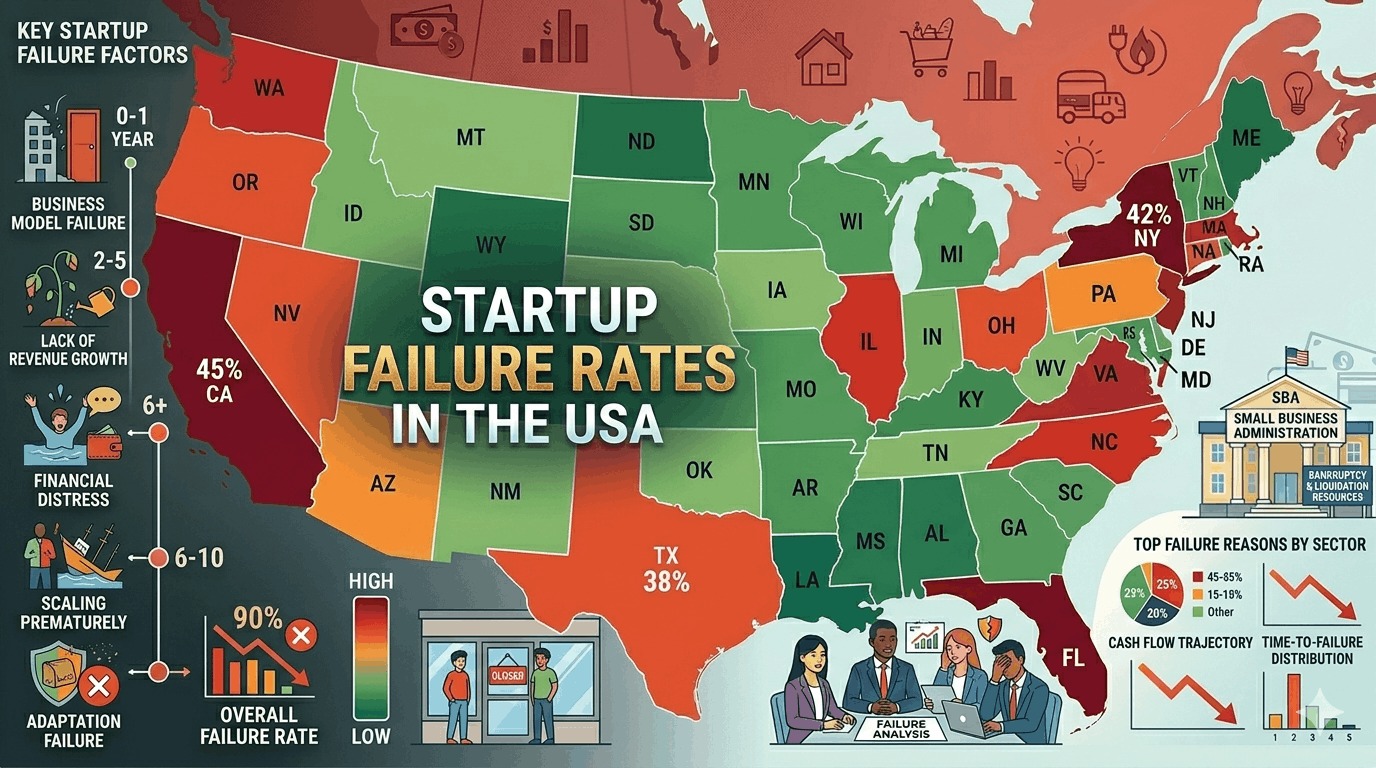
Startup failure is common—and the numbers are important to understand.
- Around 20% of startups fail within the first year
- Nearly 50% fail within five years
- About 70% fail within ten years
What This Means
Failure is not the exception—it’s part of the process.
Real-World Example
A startup may launch with a great idea but fail to find enough paying customers. For example, a new app might get downloads but struggle to generate revenue, leading to cash flow issues and eventual shutdown.
Top Reasons Startups Fail
Understanding why startups fail is more important than knowing how many fail.
Common Reasons
- Lack of market demand
- Poor cash flow management
- Strong competition
- Weak business model
- Pricing issues
Real-World Example
One of the most common reasons is building something people don’t actually need. A founder may spend months developing a product, only to discover that customers are not willing to pay for it. This mismatch between product and market demand is a major cause of failure.
Financial Challenges and Cash Flow Issues
Financial mismanagement is one of the biggest causes of startup failure.
Key Insight
Profit is important—but cash flow is critical.
Real-World Example
A startup might show strong sales but still fail because customers pay late while expenses (like salaries and rent) must be paid immediately. This creates a cash crunch that can shut down the business.
Understanding financial basics and planning ahead is essential. You can explore related concepts in How Taxes Impact Wealth Building https://statush.com/finance-statistics/how-taxes-impact-wealth-building.
Funding and Capital Problems
Access to funding can determine whether a startup survives or fails.
What This Means
Even a good idea can fail without enough capital.
Real-World Example
A startup may run out of money before reaching profitability. For instance, a product-based business might need inventory, marketing, and logistics—but without sufficient funding, growth stalls and operations stop.
Funding challenges are closely tied to trends in Personal Loan Debt Statistics in the USA https://statush.com/finance-statistics/personal-loan-debt-statistics-in-the-usa.
Market Competition and Timing
Competition and timing play a huge role in startup success.
Key Insight
Being too early or too late can both lead to failure.
Real-World Example
A startup entering a crowded market may struggle to stand out, even with a good product. On the other hand, launching a product too early—before the market is ready—can also lead to failure.
Understanding broader trends can help, such as those discussed in Investment Trends in the US Market https://statush.com/finance-statistics/investment-trends-in-the-us-market.
Team and Management Issues
A strong team is critical for startup success.
Common Problems
- Lack of experience
- Poor leadership
- Internal conflicts
Real-World Example
Even with a great product, a startup can fail if the team cannot execute properly. For example, disagreements between co-founders can delay decisions and weaken business direction.
Role of Technology in Startup Success and Failure
Technology can both help and hurt startups.
What This Means
It lowers entry barriers but increases competition.
Real-World Example
Today, anyone can launch an online business quickly. However, this also means markets become crowded fast. Without differentiation, startups struggle to survive.
This trend is closely linked to Digital Economy Growth Statistics https://statush.com/finance-statistics/digital-economy-growth-statistics.
Industry-Specific Failure Trends
Some industries have higher failure rates than others.
High-Risk Industries
- Restaurants and food services
- Retail
- New tech startups
Real-World Example
Restaurants often fail due to high operating costs and thin profit margins. Even with good food, factors like location, pricing, and customer traffic determine survival.
You can explore related patterns in Small Business Statistics in America https://statush.com/finance-statistics/small-business-statistics-in-america.
Lessons from Startup Failures
Failure provides valuable lessons for future success.
Key Takeaways
- Validate your idea before building
- Manage cash flow carefully
- Focus on customer needs
- Adapt quickly to changes
Real-World Example
Many successful entrepreneurs failed multiple times before building successful companies. Each failure helped them refine their strategy, understand markets better, and avoid previous mistakes.
Why Startup Failure Rates Matter
Understanding failure rates helps entrepreneurs prepare better.
Practical Takeaways
- Expect challenges and plan for them
- Build a financial safety buffer
- Start small and test ideas
- Learn continuously
If you’re planning a business, understanding future trends can help guide your decisions. Explore Future Financial Trends in the US https://statush.com/finance-statistics/future-financial-trends-in-the-us.
Final Thoughts
Startup failure rates in the USA may seem discouraging—but they also provide valuable insights.
The reality is:
- Failure is common
- Risk is high
- But opportunity is huge
The difference between failure and success often comes down to:
- Preparation
- Financial discipline
- Market understanding
In the end, startups are not just about ideas—they’re about execution, resilience, and learning from mistakes.
And sometimes, failure isn’t the end—it’s just part of the journey toward success.