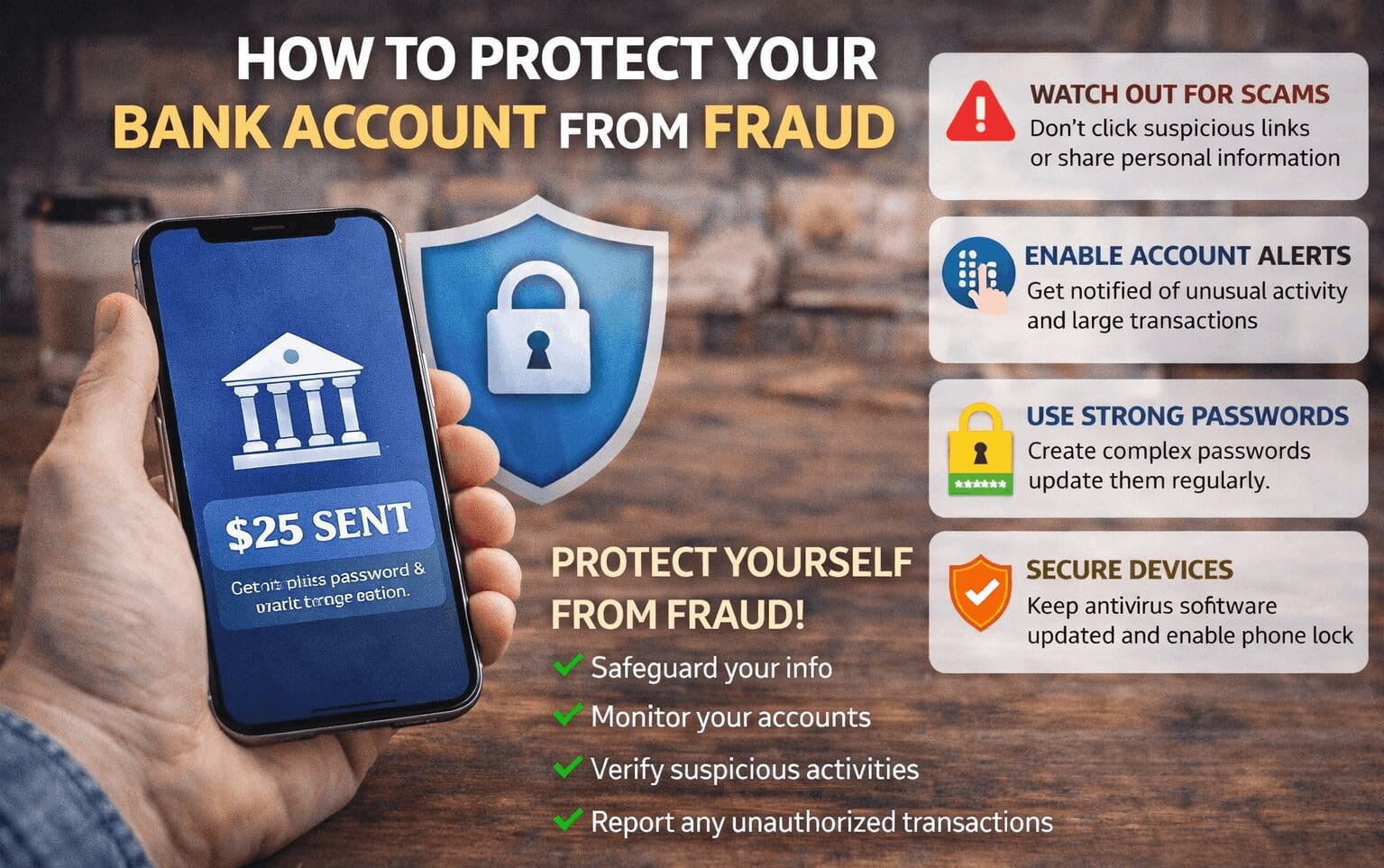
Bank account fraud is more common than most people think—and it doesn’t just happen to careless users. Even financially savvy people can fall victim to scams, phishing attacks, or unauthorized transactions.
The good news? Most fraud is preventable if you understand how it happens and take a few smart precautions.
This guide will walk you through everything you need to know, with real-world examples and practical steps you can actually use.
What Is Bank Account Fraud?
Bank account fraud happens when someone gains unauthorized access to your account and uses your money without permission.
This can include:
- Unauthorized transactions
- Identity theft
- Account takeovers
- Fake payment requests
Here’s a simple breakdown:
| Type of Fraud | What It Means |
|---|---|
| Phishing | Fake emails or messages to steal your info |
| Account takeover | Hacker gains access to your bank account |
| Card fraud | Unauthorized debit or credit card use |
| Scam payments | Tricking you into sending money |
How Fraud Happens (Real-World Examples)
Understanding real scenarios helps you recognize danger faster.
Example 1: Phishing Email
You receive an email that looks like it’s from your bank asking you to “verify your account.”
You click the link, enter your login details…
…and your account gets compromised.
Example 2: Fake Payment Request
Someone on a marketplace asks you to send money via an app.
You send it—but the product never arrives.
Example 3: Public Wi-Fi Hack
You log into your banking app on public Wi-Fi at a café.
A hacker intercepts your data.
Example 4: SIM Swap Scam
A fraudster transfers your phone number to their SIM card and gains access to your OTPs and bank alerts.
Warning Signs of Fraud
Sometimes fraud is subtle. Watch for these red flags:
- Unknown transactions in your account
- Alerts for actions you didn’t take
- Sudden login issues
- Messages about password changes
- Calls asking for sensitive information
If something feels off, it probably is.
Essential Security Measures
Let’s get practical—these are the basics everyone should follow.
1. Use Strong Passwords
- Avoid simple passwords like “123456”
- Use a mix of letters, numbers, and symbols
- Never reuse passwords across accounts
2. Enable Two-Factor Authentication (2FA)
This adds an extra layer of protection.
Even if someone has your password, they can’t log in without a second verification step.
3. Monitor Your Account Regularly
Check your transactions at least once a week.
Better yet, use mobile apps to track activity:
👉 Mobile Banking Apps Explained
4. Set Up Alerts
Enable notifications for:
- Transactions
- Logins
- Password changes
This helps you catch fraud immediately.
Safe Banking Habits
Small habits can make a big difference.
Avoid Public Wi-Fi for Banking
Always use secure networks or mobile data.
Don’t Share Sensitive Information
Banks will never ask for:
- Passwords
- OTPs
- Full PINs
If someone asks, it’s a scam.
Log Out After Use
Especially on shared or public devices.
Keep Your Apps Updated
Updates often include security improvements.
Protecting Yourself from Online Scams
Scammers are getting smarter, but you can stay ahead.
Common Scam Tactics:
- Urgency (“Act now or your account will be locked!”)
- Fear (“Suspicious activity detected!”)
- Too-good-to-be-true offers
What to Do:
- Verify messages directly with your bank
- Avoid clicking unknown links
- Type official websites manually
Using Payment Apps Safely
Apps make payments easy—but also create new risks.
If you use P2P apps, read:
👉 Peer-to-Peer Payment Apps Explained
Key Tips:
- Send money only to trusted people
- Double-check usernames
- Treat payments like cash (non-reversible)
Debit Card vs Credit Card Safety
There’s an important difference.
| Feature | Debit Card | Credit Card |
|---|---|---|
| Linked to | Your bank account | Borrowed money |
| Fraud impact | Direct loss of funds | Temporary charge |
| Protection | Limited | Stronger |
Using a credit card can offer better protection.
Learn more here:
👉 How Credit Cards Work in the USA
Protecting Against Advanced Threats
Let’s go a step deeper.
1. Use a Dedicated Email for Banking
Keep financial accounts separate from everyday email use.
2. Freeze Your Credit
Prevents fraudsters from opening accounts in your name.
3. Use Virtual Cards
Some banks offer temporary card numbers for online purchases.
4. Avoid Saving Payment Info on Unknown Sites
Convenience isn’t worth the risk.
What to Do If You’re a Victim of Fraud
Act fast—timing matters.
Step-by-Step Actions:
- Contact your bank immediately
- Freeze or lock your account
- Change passwords
- Report unauthorized transactions
- Monitor your account closely
The faster you act, the better your chances of recovery.
Role of Digital Banking in Security
Modern banking apps offer powerful tools:
- Real-time alerts
- Instant card locking
- Transaction tracking
- Fraud detection systems
Learn more about these tools:
👉 Digital Wallets Explained
Common Mistakes to Avoid
Let’s keep it real—these mistakes are very common:
- Using the same password everywhere
- Ignoring small suspicious transactions
- Clicking unknown links
- Sharing OTPs
- Not checking bank statements
Avoiding these alone can prevent most fraud cases.
Practical Daily Checklist
Here’s a simple routine:
- Check your bank balance
- Review recent transactions
- Avoid suspicious links
- Keep your phone secure
- Update passwords regularly
It takes less than a minute but adds serious protection.
Final Thoughts
Protecting your bank account isn’t about being paranoid—it’s about being aware.
Fraudsters rely on small mistakes and moments of inattention. The more informed and alert you are, the harder it becomes for them to succeed.
You don’t need advanced tech skills or complicated tools. Just a few smart habits, consistent monitoring, and a healthy level of skepticism.
Because at the end of the day, the best defense against fraud is simple:
Pause, verify, and think before you act.