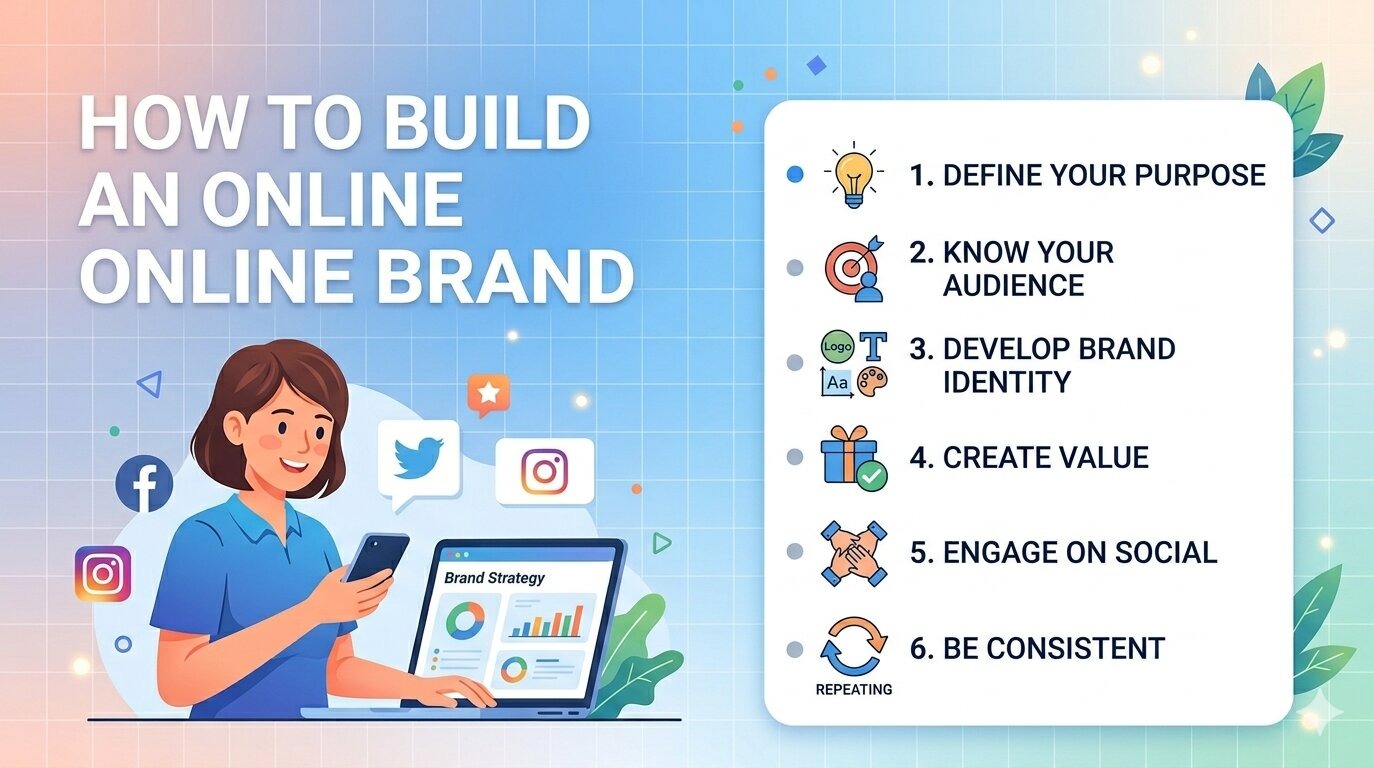
Building an online business is one thing. Building an online brand is what makes that business last.
In competitive markets like the U.S., customers don’t just buy products—they buy trust, identity, and experience. That’s exactly what a strong brand delivers.
Without a brand, you compete on price. With a brand, you compete on value.
Let’s break down how to build an online brand step by step, in a practical and real-world way.
What is an Online Brand?
An online brand is how people perceive your business on the internet.
It includes:
- Your messaging
- Visual identity
- Customer experience
- Reputation
Simple example
Two stores sell the same product—one feels premium and trustworthy, the other looks generic. Customers will choose the brand they trust.
If you’re just starting, begin here:
How to Start an Online Business in the USA – https://statush.com/business/how-to-start-an-online-business-in-the-usa
Why Branding Matters
A strong brand helps you:
- Build trust faster
- Charge higher prices
- Increase customer loyalty
- Stand out from competitors
Real insight
In the U.S., customers often choose brands they recognize—even if they cost more.
1. Define Your Brand Identity
Start with clarity.
Define:
- Your target audience
- Your mission
- Your values
- Your positioning
Example
Are you:
- Budget-friendly?
- Premium?
- Fast and convenient?
Practical tip
If you don’t define your brand, the market will define it for you.
2. Create a Strong Visual Identity
Your visuals create the first impression.
Include:
- Logo
- Color palette
- Typography
- Website design
Real insight
Consistency in visuals builds recognition over time.
3. Develop a Clear Brand Message
Your message should answer:
👉 Why should customers choose you?
Focus on:
- Benefits (not just features)
- Clear communication
- Consistent tone
Example
Instead of “high-quality products,” say “durable products that last twice as long.”
4. Build Trust Through Content
Content is one of the strongest branding tools.
Types of content:
- Educational posts
- Social media content
- Blogs
- Videos
Practical tip
Provide value before asking for a sale.
For acquisition strategies:
Customer Acquisition Strategies for Small Businesses – https://statush.com/business/customer-acquisition-strategies-for-small-businesses
5. Be Consistent Across All Platforms
Consistency builds credibility.
Maintain consistency in:
- Messaging
- Visuals
- Customer experience
Example
Your website, social media, and emails should feel like the same brand.
6. Focus on Customer Experience
Branding isn’t just what you say—it’s what customers experience.
Improve by:
- Fast responses
- Easy buying process
- Reliable delivery
Real insight
Customer experience is one of the biggest drivers of brand loyalty.
7. Use Social Proof
People trust other people.
Examples:
- Customer reviews
- Testimonials
- Case studies
Practical tip
Show real results and feedback whenever possible.
8. Build a Community
Strong brands build communities, not just customers.
Ways to do it:
- Engage on social media
- Create groups or forums
- Interact regularly
Example
Brands with active communities grow faster and retain customers better.
9. Position Yourself Differently
If you look like everyone else, you’ll be treated like everyone else.
Differentiate by:
- Unique offers
- Strong messaging
- Specific target audience
Real insight
Clarity beats complexity when it comes to positioning.
10. Think Long-Term
Branding is not instant—it’s built over time.
Focus on:
- Consistency
- Value delivery
- Trust building
Practical tip
Short-term sales matter, but long-term branding creates real business value.
Online Branding Strategy Table
| Element | Importance Level | Difficulty | Best Practice |
|---|---|---|---|
| Brand identity | Very High | Medium | Define clearly |
| Visual consistency | High | Medium | Maintain uniform design |
| Messaging | Very High | Medium | Focus on value |
| Content creation | High | Medium | Educate and engage |
| Customer experience | Very High | Medium | Deliver consistently |
| Social proof | High | Low | Showcase reviews |
| Community building | Medium | Medium | Engage regularly |
Common Branding Mistakes
Let’s be honest—many businesses struggle with branding.
Avoid:
- Inconsistent messaging
- Weak positioning
- Copying competitors
- Ignoring customer experience
- Expecting instant results
Connecting Branding with Growth
Branding supports every part of your business.
To grow your business faster:
How to Grow a Small Business Faster – https://statush.com/business/how-to-grow-a-small-business-faster
To increase revenue:
How to Increase Business Revenue – https://statush.com/business/how-to-increase-business-revenue
To build a scalable business:
How to Build a Scalable Business Model – https://statush.com/business/how-to-build-a-scalable-business-model
Final Thoughts
Building an online brand isn’t about logos or colors—it’s about how people feel about your business.
Focus on:
- Clarity
- Consistency
- Trust
Start simple, stay consistent, and improve over time.
Because in today’s market, the businesses that win aren’t just selling products—they’re building brands people remember and trust.