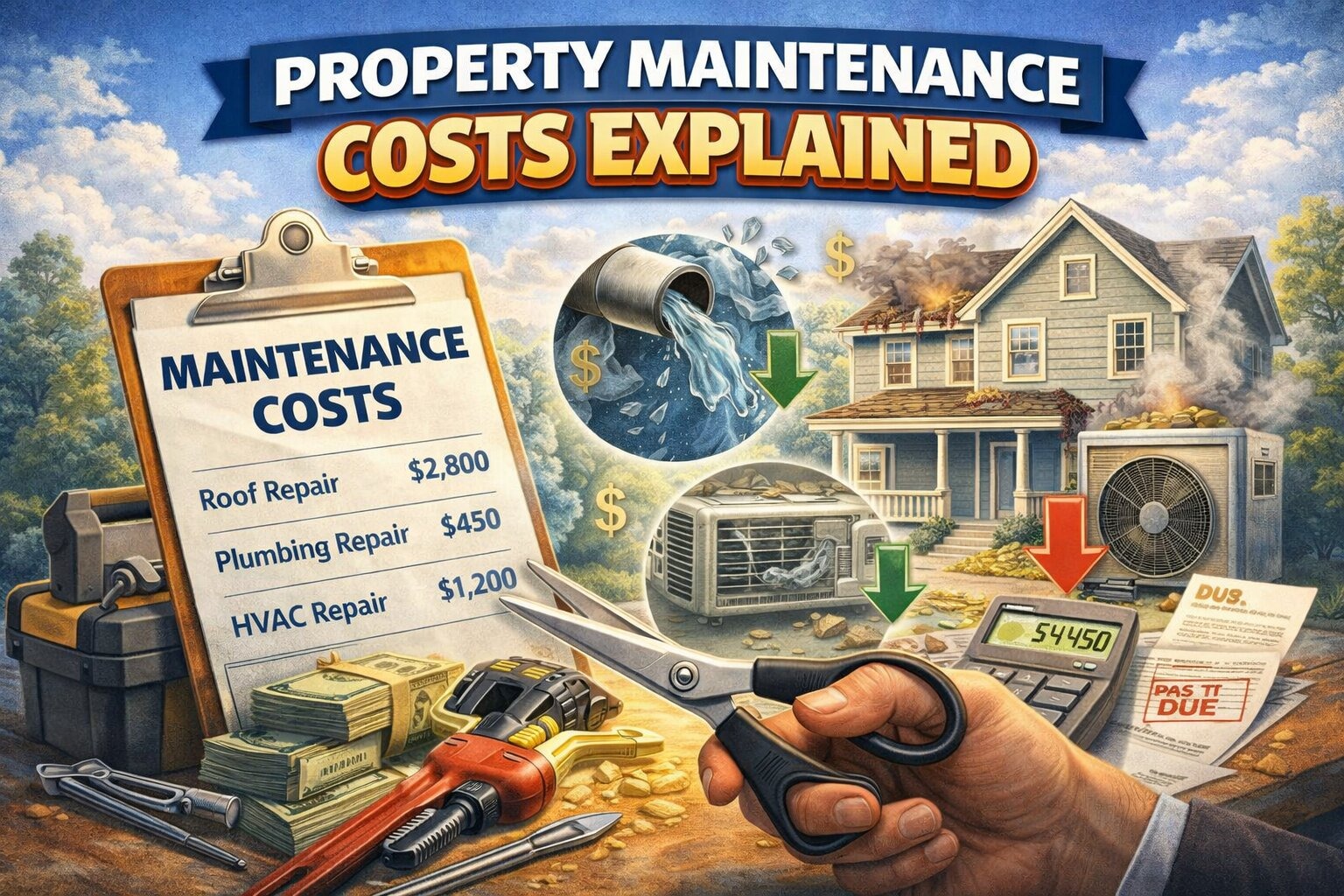
Property maintenance costs are one of the most important—and often underestimated—expenses in real estate investing. While rental income and purchase price usually get the most attention, ongoing maintenance is what quietly determines your long-term profitability.
Ignore maintenance, and small issues turn into expensive problems. Manage it well, and you protect both your cash flow and property value.
This guide breaks down property maintenance costs in the U.S., including what to expect, how to budget, and practical ways to control expenses without cutting corners.
What Are Property Maintenance Costs?
Property maintenance costs include all expenses required to keep a rental property in good condition and functioning properly.
These costs cover:
- Repairs
- Routine upkeep
- Preventive maintenance
- System replacements
In simple terms:
- Maintenance keeps your property livable, rentable, and valuable
If you're new to real estate investing, start here:
How Real Estate Investing Works — https://statush.com/real-estate/how-real-estate-investing-works
Types of Maintenance Costs
Not all maintenance expenses are the same. Understanding the categories helps you plan better.
| Type | Examples | Frequency | Cost Impact |
|---|---|---|---|
| Routine Maintenance | HVAC servicing, landscaping | Regular | Low to moderate |
| Repairs | Plumbing fixes, appliance repair | Occasional | Moderate |
| Preventive Maintenance | Inspections, servicing systems | Scheduled | Saves long-term costs |
| Capital Expenditures (CapEx) | Roof, HVAC replacement | Infrequent | High |
Each category plays a role in maintaining your investment.
Real-World Example: Annual Maintenance Budget
Let’s take a rental property in Charlotte, North Carolina:
- Property Value: $250,000
Estimated Annual Costs:
- Routine maintenance: $1,200
- Repairs: $1,000
- CapEx reserve: $2,000
Total Annual Maintenance Budget: ~$4,200
This is why experienced investors always plan for maintenance—it’s not optional.
The 1% Rule (Quick Estimate)
A common guideline is the 1% rule:
- Annual maintenance = ~1% of property value
Example:
- Property value: $300,000
- Estimated maintenance: $3,000/year
This isn’t exact, but it provides a useful starting point.
Key Factors That Affect Maintenance Costs
Maintenance costs vary widely depending on several factors:
1. Property Age
Older properties typically require more repairs.
2. Property Condition
Well-maintained properties cost less over time.
3. Tenant Behavior
Good tenants reduce wear and tear.
4. Location
Climate and weather impact maintenance needs.
5. Property Type
Single-family homes vs multi-family units have different cost structures.
Understanding these factors helps you estimate costs more accurately.
Breakdown of Common Maintenance Expenses
Here’s a more detailed look at typical costs:
| Category | Examples | Notes |
|---|---|---|
| HVAC | Repairs, servicing | High-cost system |
| Plumbing | Leaks, pipe issues | Frequent minor repairs |
| Electrical | Wiring, fixtures | Safety-critical |
| Appliances | Replacement or repair | Depends on age |
| Exterior | Roof, paint, landscaping | Impacts property value |
Each of these areas requires attention over time.
Maintenance vs Repairs vs CapEx
This distinction is important for both budgeting and taxes.
| Type | Description | Example |
|---|---|---|
| Maintenance | Regular upkeep | Cleaning gutters |
| Repairs | Fix existing issues | Fixing a leak |
| CapEx | Major replacements | New roof |
CapEx items are larger, less frequent, and should be planned in advance.
How Maintenance Impacts Profitability
Maintenance directly affects your returns.
Example:
- Rent: $2,000/month → $24,000/year
- Maintenance costs: $4,000
Net impact:
- Reduced profit by ~17%
However, skipping maintenance can lead to:
- Larger future expenses
- Lower property value
- Higher vacancy
To understand profitability:
How to Analyze Rental Property Profitability — https://statush.com/real-estate/how-to-analyze-rental-property-profitability
Practical Tips to Reduce Maintenance Costs
Smart investors don’t eliminate maintenance—they optimize it.
1. Focus on Preventive Maintenance
Regular inspections catch issues early.
2. Use Durable Materials
Higher upfront cost → lower long-term expenses.
3. Build a Reliable Contractor Network
Trusted contractors reduce costs and delays.
4. Screen Tenants Carefully
Good tenants reduce damage and maintenance needs.
Learn more:
How to Screen Rental Tenants — https://statush.com/real-estate/how-to-screen-rental-tenants
5. Budget for CapEx
Set aside funds for major replacements.
Maintenance Budgeting Strategies
A good budgeting system keeps your finances stable.
Common Methods:
- Percentage Rule: 1% of property value annually
- Monthly Reserve: Set aside 5–10% of rent
- CapEx Fund: Separate savings for large expenses
Consistency is more important than the method you choose.
Common Mistakes to Avoid
Underestimating Costs
Many beginners assume maintenance will be minimal—it rarely is.
Delaying Repairs
Small issues become expensive problems.
Ignoring Preventive Maintenance
Skipping inspections leads to higher long-term costs.
Not Tracking Expenses
Without tracking, you can’t optimize.
For broader mistakes:
Real Estate Investing Mistakes to Avoid in USA — https://statush.com/real-estate/real-estate-investing-mistakes-to-avoid-in-usa
Maintenance and Property Management
Maintenance is a core part of property management.
Good management leads to:
- Faster response times
- Lower repair costs
- Better tenant satisfaction
To understand the full picture:
Property Management Basics — https://statush.com/real-estate/property-management-basics
Maintenance and Long-Term Property Value
Maintenance doesn’t just affect cash flow—it impacts property value.
Well-maintained properties:
- Appreciate more consistently
- Attract better tenants
- Sell faster
Neglected properties:
- Lose value
- Require costly repairs before sale
For value insights:
How Property Values Increase Over Time — https://statush.com/real-estate/how-property-values-increase-over-time
When Maintenance Costs Are Highest
Maintenance expenses tend to increase when:
- Properties are older
- Tenants change frequently
- Preventive maintenance is ignored
- Systems reach end of life
Planning ahead reduces financial surprises.
Final Thoughts
Property maintenance costs are not just an expense—they are an investment in your property’s performance and longevity. Managing them effectively allows you to:
- Protect your asset
- Maintain steady cash flow
- Avoid costly surprises
The key is not to avoid maintenance, but to plan for it, budget for it, and manage it efficiently.
Over time, disciplined maintenance practices can significantly improve your returns and help you build a stronger, more sustainable real estate portfolio.
To see how maintenance fits into a broader strategy:
Best Real Estate Investment Strategies — https://statush.com/real-estate/best-real-estate-investment-strategies