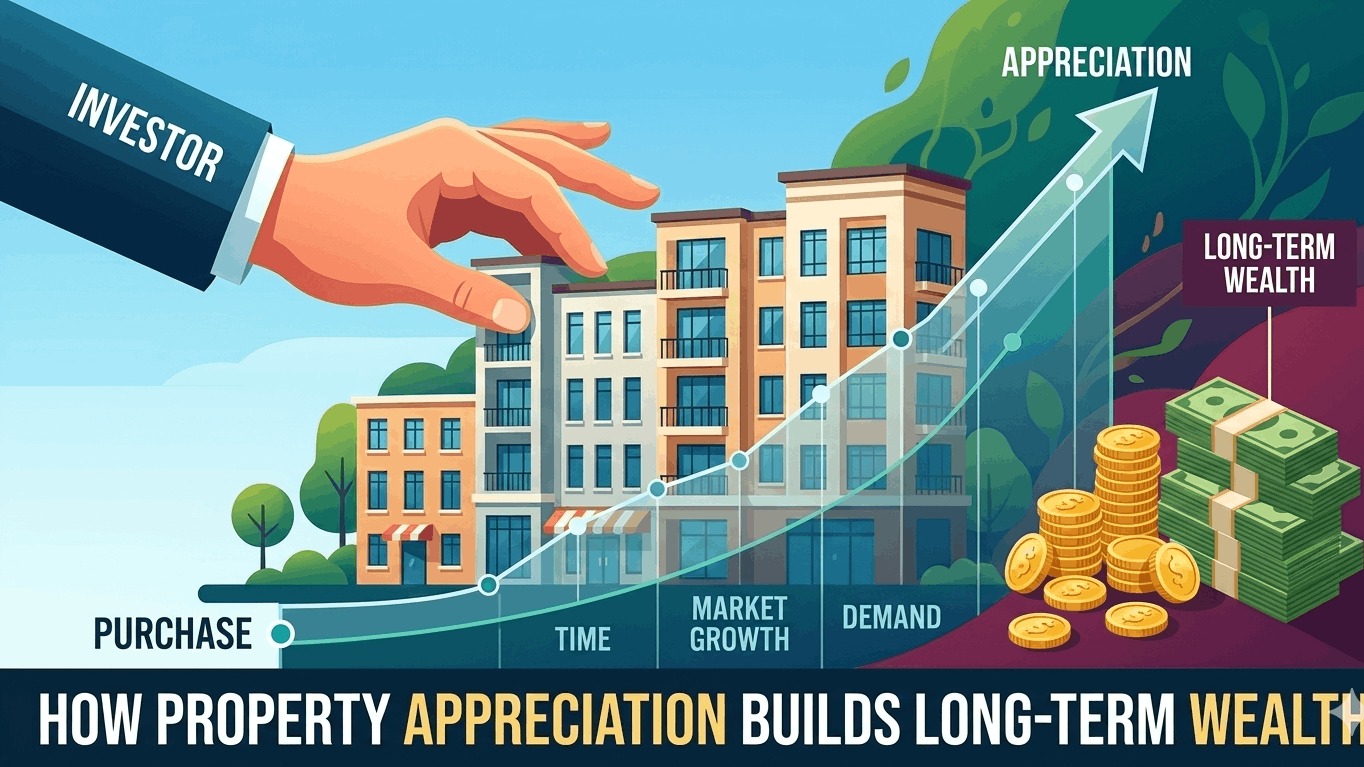
In the 2026 economic landscape, property appreciation remains the single most powerful "quiet" driver of wealth in the United States. While cash flow provides the monthly paycheck, appreciation is what builds the legacy-sized net worth.
Even in a year like 2026, where national price growth is moderating to a steady 2% to 4%, the compounding effect of appreciation on a leveraged asset creates a wealth-building machine that few other investments can match.
1. The Power of Leverage: The "Multiplier" Effect
The reason real estate appreciation builds wealth faster than stocks is leverage. When you buy $100,000 in stocks and they grow by 4%, you make $4,000. When you buy a $500,000 house with a $100,000 down payment (20% leverage) and it grows by 4%, you make $20,000.
The Math: A 4% market increase resulted in a 20% return on your actual invested cash. This "multiplier" is why homeowners often see their net worth explode even during years of "boring" 3% market growth.
2. Natural vs. Forced Appreciation
Wealthy investors don't just wait for the market to go up; they take control of the timeline.
Natural Appreciation (Passive)
This is driven by external factors you can't control:
- Inflation Hedge: As the price of milk and gas goes up, so does the cost of building materials and labor, naturally pushing home values higher.
- Supply & Demand: In 2026, the U.S. still faces a structural housing shortage. Limited inventory plus a growing population equals upward pressure on prices.
- Infrastructure: A new metro line, a "tech HQ2," or a high-end grocery store opening nearby can cause a localized "pop" in value.
Forced Appreciation (Active)
This is wealth you create through sweat equity or strategic capital. In 2026, the most effective "forced" moves include:
- Adding Square Footage: Converting a garage or attic into an ADU (Accessory Dwelling Unit).
- Energy Retrofitting: In a high-utility-cost environment, solar and smart-home efficiency upgrades are seeing a higher-than-average ROI.
- Cosmetic Flips: Modernizing kitchens and baths to move a property from "C-Class" to "B-Class" in the eyes of an appraiser.
3. Tapping into "Lazy Equity"
Appreciation is just a number on a screen until you use it. In 2026, investors use their increased equity as a "launchpad" for more wealth:
- The Cash-Out Refinance: Taking a new loan to pull out the appreciated value tax-free to buy a second investment property.
- HELOCs (Home Equity Lines of Credit): Using your home’s growth as a low-interest "emergency fund" or a down payment for future deals.
- 1031 Exchanges: Selling an appreciated property and rolling 100% of the profit into a larger property without paying capital gains taxes.
4. Appreciation vs. Inflation: 2026 Reality
In 2026, consumer price inflation is hovering around 2.5% to 3%. If your property appreciates at 4%, you are not just keeping up with the cost of living—you are beating it.
Real estate is a "real asset." Unlike cash in a savings account, which loses purchasing power every year, a house is a physical commodity that historically maintains or exceeds its value relative to the dollar.