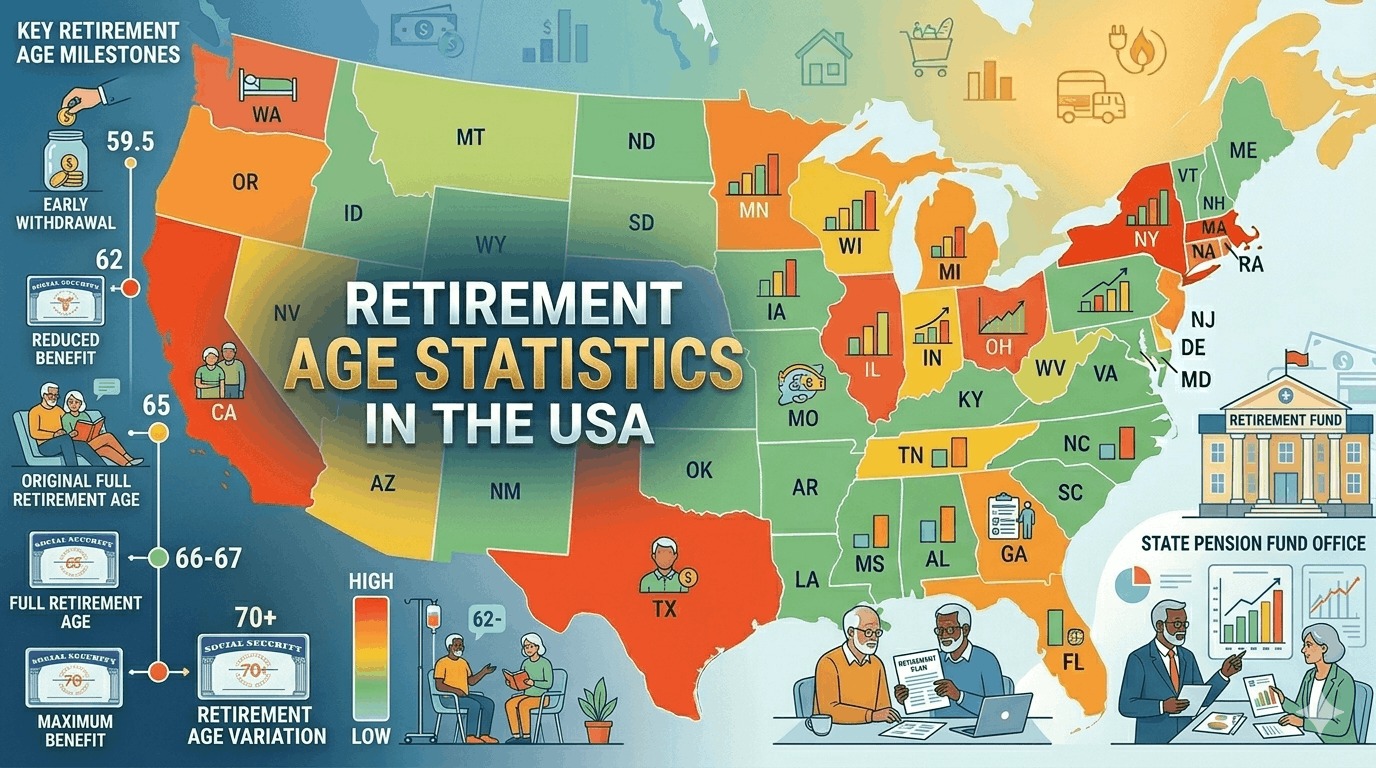
Retirement is one of the most important financial milestones in life. But when do Americans actually retire? The answer varies more than most people expect.
Understanding retirement age statistics in the United States helps you see real trends, set realistic expectations, and plan your own financial future more effectively. It also highlights how factors like income, health, and savings influence when people stop working.
What Is the Retirement Age?
Retirement age refers to the age at which a person stops working full-time and begins relying on savings, pensions, or government benefits for income.
In the U.S., there are two key concepts:
- Average retirement age – when people actually retire
- Full retirement age (FRA) – the age at which you can receive full Social Security benefits
These two are often different.
Average Retirement Age in the USA
In recent years, the average retirement age in the United States has been:
- Men: around 65–67 years
- Women: around 63–65 years
Overall, many Americans retire in their mid-60s, although this can vary widely depending on personal circumstances.
Full Retirement Age (FRA)
The official full retirement age is set by the Social Security Administration.
| Birth Year Range | Full Retirement Age |
|---|---|
| 1943–1954 | 66 |
| 1955–1959 | 66 + a few months |
| 1960 or later | 67 |
This is the age at which you can receive full Social Security benefits without reductions.
Early vs Late Retirement
Not everyone retires at the same time. Some retire earlier, while others continue working longer.
| Retirement Type | Age Range | Financial Impact |
|---|---|---|
| Early Retirement | Before 62 | Reduced benefits, requires strong savings |
| Standard | 62–67 | Balanced approach |
| Delayed | 67+ | Higher benefits, more savings |
Delaying retirement can increase Social Security benefits and allow more time for savings to grow.
Why Retirement Age Is Increasing
Over time, the average retirement age has gradually increased.
Longer Life Expectancy
People are living longer, which means they need more savings to support retirement.
Financial Necessity
Some individuals continue working because they have not saved enough for retirement.
Better Health and Work Flexibility
Many people are able to work longer due to improved health and flexible job options.
Real-World Example
Let’s compare two individuals:
Person A
- Retires at 60
- Has strong savings and investments
- Relies less on Social Security
Person B
- Retires at 68
- Has moderate savings
- Receives higher Social Security benefits
Even though Person B works longer, both can achieve financial stability depending on their planning.
Retirement Age by Income Level
Income plays a major role in determining when people retire.
| Income Level | Retirement Trend | Explanation |
|---|---|---|
| Lower Income | Later retirement | Limited savings, reliance on continued work |
| Middle Income | Around average age | Balanced savings and benefits |
| Higher Income | Earlier or flexible retirement | Strong investments and financial independence |
Higher-income individuals often have more flexibility in choosing when to retire.
Retirement Age by Occupation
Different types of jobs also influence retirement age.
- Physically demanding jobs → earlier retirement
- Office or professional jobs → later retirement
For example, someone in construction may retire earlier due to physical strain, while a professional in finance may continue working longer.
Retirement and Savings
Your retirement age is closely linked to how much you’ve saved.
Example
- Savings: $500,000 → may require working longer
- Savings: $1.5 million → allows earlier retirement
The more you save, the more flexibility you have in choosing when to retire.
To explore savings patterns:
Average Retirement Savings by Age – https://statush.com/finance-statistics/average-retirement-savings-by-age
Impact of Healthcare Costs
Healthcare is one of the biggest factors affecting retirement decisions.
Higher medical expenses can:
- Delay retirement
- Increase required savings
To understand this:
Average Healthcare Costs in the USA – https://statush.com/finance-statistics/average-healthcare-costs-in-the-usa
Retirement Age and Lifestyle
Retirement is not just a financial decision—it’s also about lifestyle.
Some people retire early to:
- Travel
- Spend time with family
- Pursue hobbies
Others choose to work longer for:
- Financial security
- Personal fulfillment
There is no “one-size-fits-all” retirement age.
Planning for Retirement Age
Choosing when to retire requires careful planning.
Key considerations include:
- Savings and investments
- Expected expenses
- Health and life expectancy
- Social Security benefits
Planning ahead gives you more control over your retirement timeline.
Tools to Plan Retirement
Financial tools can help you estimate your retirement readiness.
- Retirement Calculator – https://statush.com/retirement-calculator
- Savings Goal Calculator – https://statush.com/savings-goal-calculator
- Net Worth Calculator – https://statush.com/net-worth-calculator
These tools help you determine when you can realistically retire.
A Practical Perspective
Instead of focusing only on averages, think about your personal goals.
Ask yourself:
- When do I want to retire?
- Am I saving enough to reach that goal?
- Do I want flexibility in my retirement age?
Your retirement plan should reflect your unique situation.
Final Thoughts
Retirement age statistics in the USA show that while many people retire in their mid-60s, the reality varies widely based on financial, personal, and health factors.
The key takeaway is simple:
- Retirement age is flexible, not fixed
- Savings and planning determine your options
- Starting early gives you more control
When you understand these trends and plan ahead, you can design a retirement that fits your goals—not just follow the average.