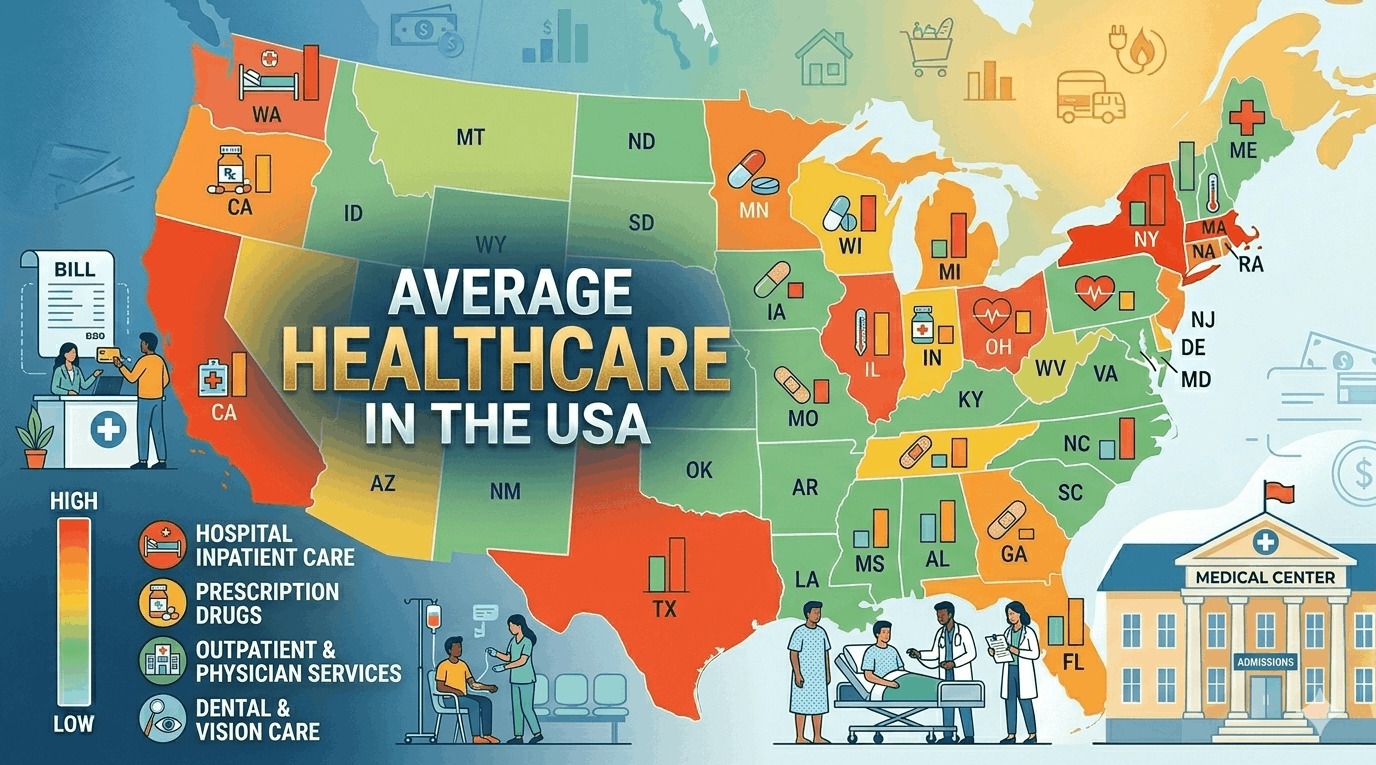
Healthcare is one of the largest and fastest-growing expenses for individuals and families in the United States. Whether it’s routine doctor visits, insurance premiums, or unexpected medical emergencies, healthcare costs can have a major impact on your financial life.
Understanding average healthcare costs in the U.S. helps you plan better, avoid financial surprises, and make informed decisions about insurance, savings, and long-term financial security.
What Are Healthcare Costs?
Healthcare costs refer to all expenses related to medical care. These costs go beyond just doctor visits and include a wide range of services and payments.
| Cost Category | What It Includes | Impact on Budget |
|---|---|---|
| Insurance Premiums | Monthly payments for coverage | Fixed recurring expense |
| Out-of-Pocket Costs | Deductibles, copays, coinsurance | Variable expenses |
| Prescription Drugs | Medications | Ongoing cost for many individuals |
| Hospital Services | Surgeries, emergency care | High, often unexpected costs |
| Preventive Care | Checkups, screenings | Lower cost but essential |
Healthcare costs can be predictable in some areas but highly unpredictable in others.
Average Healthcare Costs in the USA
Healthcare spending in the United States is among the highest in the world.
Recent estimates show:
- Average healthcare spending per person: $12,000 – $14,000 per year
- Family healthcare costs: $25,000+ annually (including insurance and out-of-pocket)
These numbers include both insurance premiums and direct medical expenses.
Health Insurance Premiums
Health insurance is a major part of healthcare costs.
| Coverage Type | Average Annual Premium | Monthly Equivalent |
|---|---|---|
| Individual Plan | $7,000 – $8,500 | $600 – $700 |
| Family Plan | $20,000 – $24,000 | $1,600 – $2,000 |
Employers often cover part of these costs, but individuals still pay a significant portion.
Out-of-Pocket Costs
Even with insurance, individuals still pay out-of-pocket expenses.
These include:
- Deductibles (amount paid before insurance kicks in)
- Copayments (fixed cost per visit)
- Coinsurance (percentage of costs shared)
Real-World Example
- Doctor visit: $150
- Insurance covers 80%
- You pay: $30
However, major procedures can result in thousands of dollars in out-of-pocket costs.
Healthcare Costs by Age
Healthcare expenses increase significantly with age.
| Age Group | Cost Trend | Explanation |
|---|---|---|
| 18–34 | Lower costs | Fewer medical needs |
| 35–54 | Moderate increase | More routine care and family expenses |
| 55–64 | Higher costs | Increased health risks |
| 65+ | Highest costs | Chronic conditions, long-term care |
This trend highlights the importance of planning for healthcare in retirement.
Why Healthcare Costs Are High
Healthcare costs in the U.S. are influenced by several factors.
Advanced Medical Technology
Innovations improve care but also increase costs.
Administrative Expenses
Complex healthcare systems and insurance processes add to overall expenses.
Prescription Drug Prices
Medication costs are often higher compared to other countries.
Demand for Services
An aging population increases demand for healthcare services.
Real-World Scenario
Let’s compare two individuals:
Person A (Young Adult)
- Annual healthcare costs: ~$3,000
- Mostly insurance and occasional visits
Person B (Older Adult)
- Annual healthcare costs: ~$12,000+
- Includes medications, treatments, and specialist visits
This shows how costs can rise significantly over time.
Healthcare Costs and Financial Planning
Healthcare is not just a medical issue—it’s a financial one.
High healthcare costs can:
- Reduce savings
- Increase debt
- Delay financial goals
This makes planning essential, especially for long-term stability.
To understand broader financial impact:
How Taxes Impact Wealth Building – https://statush.com/finance-statistics/how-taxes-impact-wealth-building
Healthcare and Cost of Living
Healthcare is a major component of overall living expenses.
In some states:
- Insurance premiums are higher
- Medical services cost more
This affects your total cost of living.
To explore this:
Average Cost of Living by State – https://statush.com/finance-statistics/average-cost-of-living-by-state
Common Financial Challenges
Many Americans face similar challenges with healthcare costs.
These include:
- High insurance premiums
- Unexpected medical bills
- Difficulty affording medications
These challenges can create financial stress if not managed properly.
Strategies to Manage Healthcare Costs
Managing healthcare expenses requires planning and awareness.
Choose the Right Insurance Plan
Compare coverage, premiums, and deductibles carefully.
Use Preventive Care
Regular checkups can help avoid costly treatments later.
Build a Health Savings Fund
Saving for medical expenses can reduce financial stress.
Understand Your Coverage
Knowing what your insurance covers helps avoid unexpected costs.
Tools to Plan Healthcare Expenses
Financial tools can help you prepare for medical costs.
- Savings Goal Calculator – https://statush.com/savings-goal-calculator
- Budget Calculator – https://statush.com/budget-calculator
- Net Worth Calculator – https://statush.com/net-worth-calculator
These tools help you incorporate healthcare into your financial plan.
Long-Term Outlook
Healthcare costs are expected to continue rising due to:
- Aging population
- Medical advancements
- Increased demand
Planning ahead is essential to manage these future expenses.
A Practical Perspective
Instead of focusing only on average costs, think about your personal situation.
Ask yourself:
- Do I have adequate insurance coverage?
- Am I prepared for unexpected medical expenses?
- Am I planning for healthcare in retirement?
These questions help you stay financially prepared.
Final Thoughts
Average healthcare costs in the USA highlight a critical reality: medical expenses are a major part of financial life and require careful planning.
The key takeaway is simple:
- Healthcare costs are high and continue to rise
- Insurance plays a major role in managing expenses
- Long-term planning is essential
When you understand healthcare costs and prepare for them, you can protect both your health and your financial future.