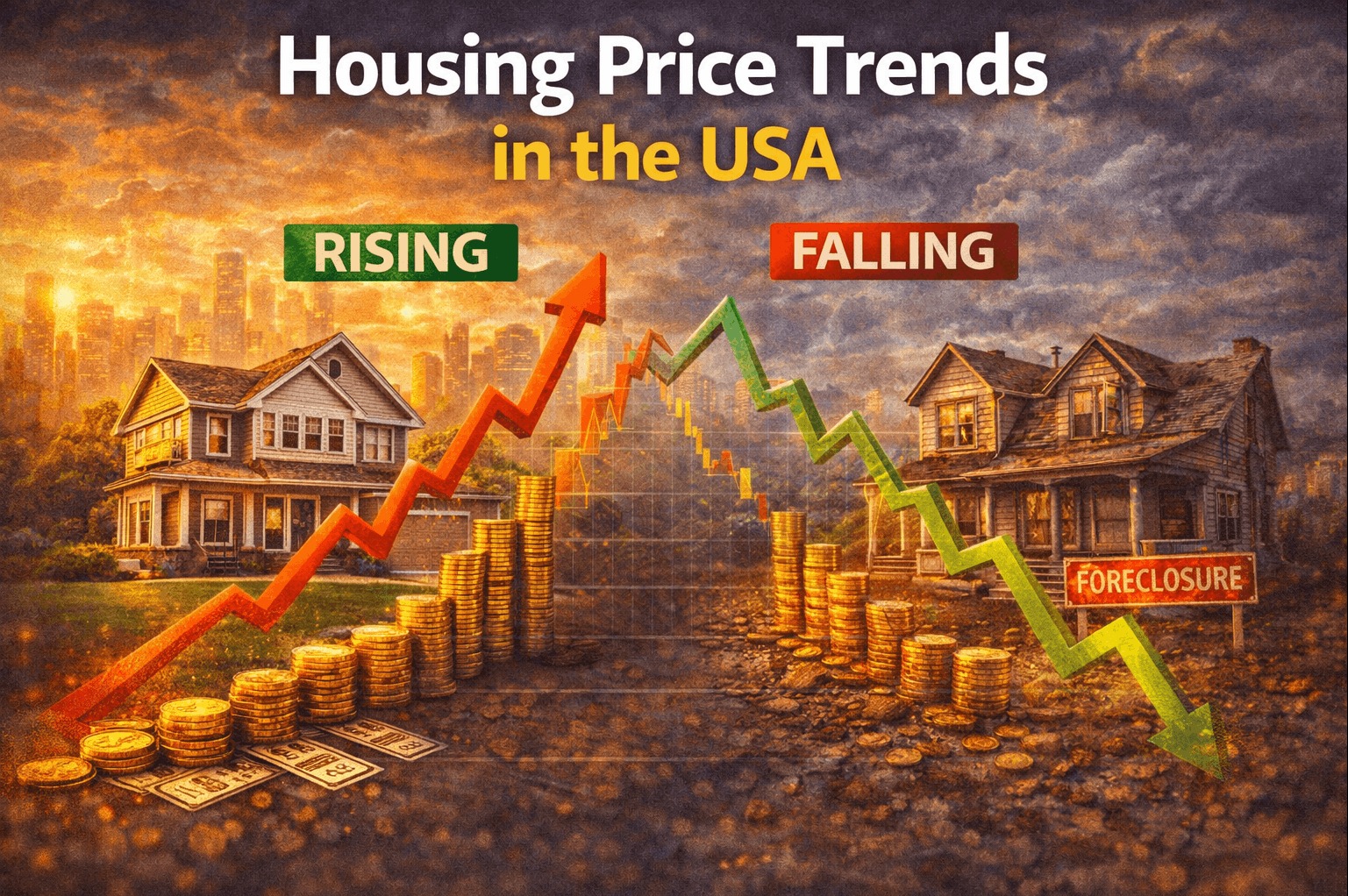
Housing prices in the United States have gone through significant changes over the years, shaped by economic conditions, interest rates, population growth, and supply-demand dynamics. For many Americans, housing is not just a place to live—it’s also one of the biggest financial investments they will ever make.
Understanding housing price trends helps you see how the market evolves, what drives price changes, and how those trends affect affordability, wealth building, and financial planning.
What Are Housing Price Trends?
Housing price trends refer to the changes in home prices over time. These trends can move upward, downward, or remain stable depending on various economic factors.
Housing prices are typically influenced by:
- Supply and demand
- Interest rates
- Economic growth
- Population shifts
Tracking these trends helps buyers, sellers, and investors make informed decisions.
Long-Term Housing Price Growth
Over the long term, housing prices in the U.S. have generally increased. However, this growth has not been smooth—it has included periods of rapid growth, slowdowns, and even declines.
Historical Pattern
| Period | Trend Description | Key Drivers |
|---|---|---|
| Pre-2008 | Rapid price growth | Easy credit, strong demand |
| 2008–2012 | Price decline | Housing market crash |
| 2013–2019 | Steady recovery | Economic growth, low interest rates |
| 2020–2022 | Sharp increase | Low rates, high demand, limited supply |
| 2023–Present | Slower growth or stabilization | Higher interest rates |
This cycle shows that housing prices are closely tied to broader economic conditions.
Why Housing Prices Increase
Housing prices don’t rise randomly—they are driven by specific factors.
Supply and Demand Imbalance
When demand for homes is higher than the available supply, prices increase. This has been one of the biggest drivers of recent price growth.
Low Interest Rates
Lower mortgage rates make borrowing cheaper, allowing more people to afford homes. This increases demand and pushes prices higher.
Population Growth and Urbanization
As more people move into cities or growing regions, housing demand increases, leading to higher prices.
Real-World Example
Let’s say a home was priced at $250,000 in 2015.
- By 2021, it might be worth $350,000
- By 2023, it could reach $400,000
This increase reflects a combination of demand, economic growth, and limited housing supply.
However, rising prices also mean higher entry costs for new buyers.
Housing Prices vs Affordability
One of the biggest challenges today is the gap between home prices and income growth.
| Factor | Trend | Impact on Buyers |
|---|---|---|
| Home Prices | Increasing | Higher purchase cost |
| Household Income | Slower growth | Reduced affordability |
| Interest Rates | Rising | Higher monthly payments |
This gap makes it harder for many people to enter the housing market.
To understand income trends:
Average Household Income in the USA – https://statush.com/finance-statistics/average-household-income-in-the-usa
Regional Differences in Housing Prices
Housing prices vary significantly depending on location.
Some areas experience:
- Rapid price growth due to demand
- High property values in major cities
Others may have:
- Slower growth
- More affordable housing options
Example
- A home in a major city may cost $800,000
- A similar home in a smaller town may cost $250,000
This shows how location plays a critical role in housing affordability.
The Role of Interest Rates
Interest rates are one of the most important factors affecting housing prices.
When rates are low:
- Monthly payments are lower
- More buyers enter the market
- Prices tend to rise
When rates increase:
- Borrowing becomes more expensive
- Demand may decrease
- Price growth may slow
Housing and Wealth Building
For many Americans, housing is a primary way to build wealth.
Homeownership allows:
- Equity accumulation
- Property value appreciation
- Long-term financial stability
Example
If you buy a home for $300,000 and its value increases to $450,000:
- You gain $150,000 in equity (excluding loan balance)
This makes housing a key component of wealth building.
To explore this further:
How Taxes Impact Wealth Building – https://statush.com/finance-statistics/how-taxes-impact-wealth-building
Risks in Housing Price Trends
While housing can build wealth, it also carries risks.
These include:
- Market downturns
- Overpaying during price peaks
- High debt levels
The 2008 financial crisis is a clear example of how housing markets can decline significantly under certain conditions.
Renting vs Buying Trends
As housing prices rise, more people choose to rent instead of buy.
| Option | Advantage | Challenge |
|---|---|---|
| Renting | Flexibility, lower upfront cost | No equity building |
| Buying | Builds wealth over time | High upfront and long-term costs |
The decision depends on financial goals, location, and market conditions.
Tools to Plan Home Buying
Before entering the housing market, it’s important to evaluate affordability.
- Mortgage Calculator – https://statush.com/mortgage-calculator
- Home Affordability Calculator – https://statush.com/home-affordability-calculator
- Net Worth Calculator – https://statush.com/net-worth-calculator
These tools help you understand costs and make better financial decisions.
Long-Term Outlook
Housing prices are expected to continue evolving based on economic conditions.
Key factors to watch include:
- Interest rate trends
- Housing supply levels
- Economic growth
While short-term fluctuations occur, housing has historically shown long-term growth.
A Practical Perspective
Instead of trying to predict exact market movements, it’s more useful to focus on your own financial readiness.
Ask yourself:
- Can I afford monthly payments comfortably?
- Am I planning to stay long-term?
- Does buying align with my financial goals?
These questions are more important than timing the market perfectly.
Final Thoughts
Housing price trends in the USA reflect a dynamic market shaped by economic forces, demand, and financial conditions.
The key takeaway is simple:
- Housing prices generally rise over time but can fluctuate
- Affordability depends on both prices and income
- Homeownership can build wealth if managed carefully
When you understand these trends, you can make smarter decisions—whether you’re buying your first home, investing in real estate, or simply planning your financial future.