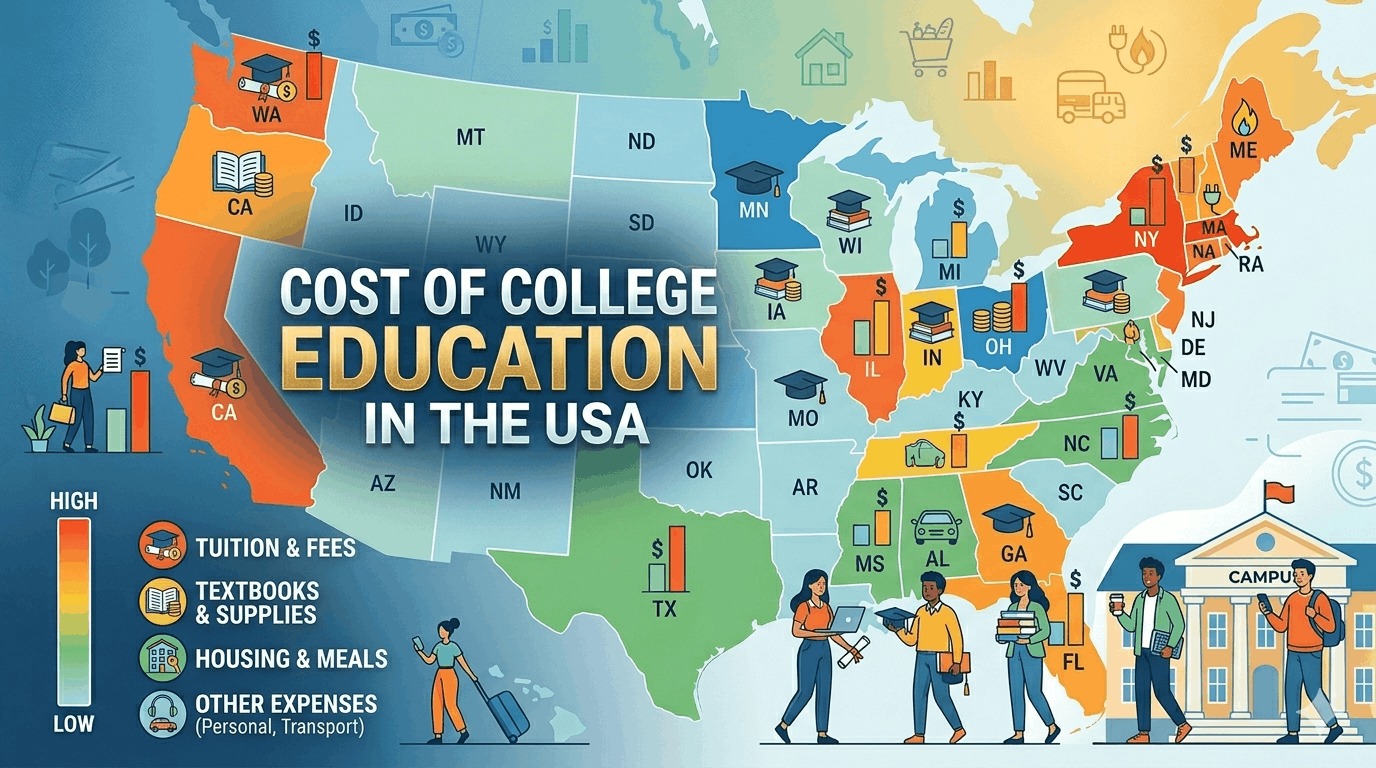
The cost of college education in the United States has become one of the most important financial topics for students and families. For many, college is an investment in future income and career opportunities—but it also comes with significant costs that can impact finances for years.
Understanding how much college really costs—and what drives those costs—helps you make smarter decisions about education, borrowing, and long-term financial planning.
What Does College Cost Include?
When people think about college expenses, they often focus only on tuition. But the true cost of education includes several components.
| Expense Category | What It Covers | Impact on Total Cost |
|---|---|---|
| Tuition & Fees | Classes, academic services | Largest direct cost |
| Room & Board | Housing and meals | Major ongoing expense |
| Books & Supplies | Textbooks, materials | Smaller but necessary cost |
| Transportation | Travel and commuting | Varies by location |
| Personal Expenses | Daily living costs | Adds up over time |
The total cost of attendance is often much higher than tuition alone.
Average College Costs in the USA
College costs vary depending on the type of institution.
| Type of Institution | Average Annual Cost (Approx) |
|---|---|
| Public (In-State) | $20,000 – $28,000 |
| Public (Out-of-State) | $35,000 – $45,000 |
| Private Colleges | $50,000 – $70,000+ |
These estimates include tuition, housing, and other expenses.
Total Cost Over Four Years
College is a multi-year investment, so it’s important to consider total cost.
Example
- Public in-state college: ~$100,000 over 4 years
- Private college: ~$200,000+ over 4 years
This is why many students rely on financial aid or loans to cover expenses.
Why College Costs Are So High
The rising cost of education is driven by several factors.
Increasing Tuition Fees
Colleges have raised tuition over time due to higher operational costs and demand.
Administrative and Facility Costs
Universities invest in infrastructure, technology, and services, which increases overall expenses.
Demand for Higher Education
More students pursuing college degrees has increased demand, contributing to higher costs.
Real-World Example
Let’s consider two students:
Student A (Public College)
- Annual cost: $25,000
- Total cost: $100,000
Student B (Private College)
- Annual cost: $60,000
- Total cost: $240,000
The difference of $140,000 can significantly impact future financial decisions.
College Costs and Student Loan Debt
Because of high costs, many students take out loans.
Student loan debt has become a major financial issue in the U.S.
- Average borrower debt: tens of thousands of dollars
- Repayment period: often 10–20 years
To understand this further:
Student Loan Debt Statistics in America – https://statush.com/finance-statistics/student-loan-debt-statistics-in-america
Cost Differences by State
College costs vary depending on the state and institution.
- Public universities are cheaper for in-state residents
- Out-of-state tuition can be significantly higher
- Private colleges have more consistent pricing across states
This makes location an important factor in total education cost.
Financial Aid and Scholarships
Many students reduce college costs through financial aid.
This can include:
- Scholarships (do not need to be repaid)
- Grants (need-based aid)
- Work-study programs
These options can significantly lower the total cost of education.
Return on Investment (ROI)
College should be viewed as an investment, not just an expense.
Example
- Degree cost: $120,000
- Higher lifetime earnings: significantly more
However, ROI depends on:
- Field of study
- Career opportunities
- Salary potential
Some degrees provide higher financial returns than others.
College Costs vs Income Potential
The relationship between education and income is important.
Higher education often leads to:
- Better job opportunities
- Higher earning potential
But this is not guaranteed, which is why planning is essential.
To explore income trends:
Average Household Income in the USA – https://statush.com/finance-statistics/average-household-income-in-the-usa
Impact on Financial Life
College costs affect long-term finances in several ways.
They can influence:
- Debt levels
- Ability to save and invest
- Major life decisions (buying a home, starting a business)
High education costs can delay financial milestones.
Strategies to Manage College Costs
Managing education expenses requires planning and awareness.
Choose Affordable Options
Public colleges and community colleges can reduce costs significantly.
Apply for Financial Aid Early
Many scholarships and grants are time-sensitive.
Consider Return on Investment
Choose degrees and programs with strong career prospects.
Limit Borrowing
Avoid taking more loans than necessary.
Tools to Plan Education Costs
Financial planning tools can help estimate and manage costs.
- Student Loan Calculator – https://statush.com/student-loan-calculator
- Savings Goal Calculator – https://statush.com/savings-goal-calculator
- Net Worth Calculator – https://statush.com/net-worth-calculator
These tools help you plan ahead and reduce financial stress.
A Practical Perspective
Instead of focusing only on the total cost, think about long-term value.
Ask yourself:
- Does this education align with my career goals?
- Is the cost manageable?
- Will the investment pay off over time?
These questions help you make better decisions.
Final Thoughts
The cost of college education in the USA is high—but it can also be a valuable investment when approached carefully.
The key takeaway is simple:
- College costs vary widely by institution and location
- Loans are common but should be managed carefully
- Planning and financial aid can reduce the burden
When you understand the full cost and plan strategically, you can make education a stepping stone to long-term financial success—not a financial setback.