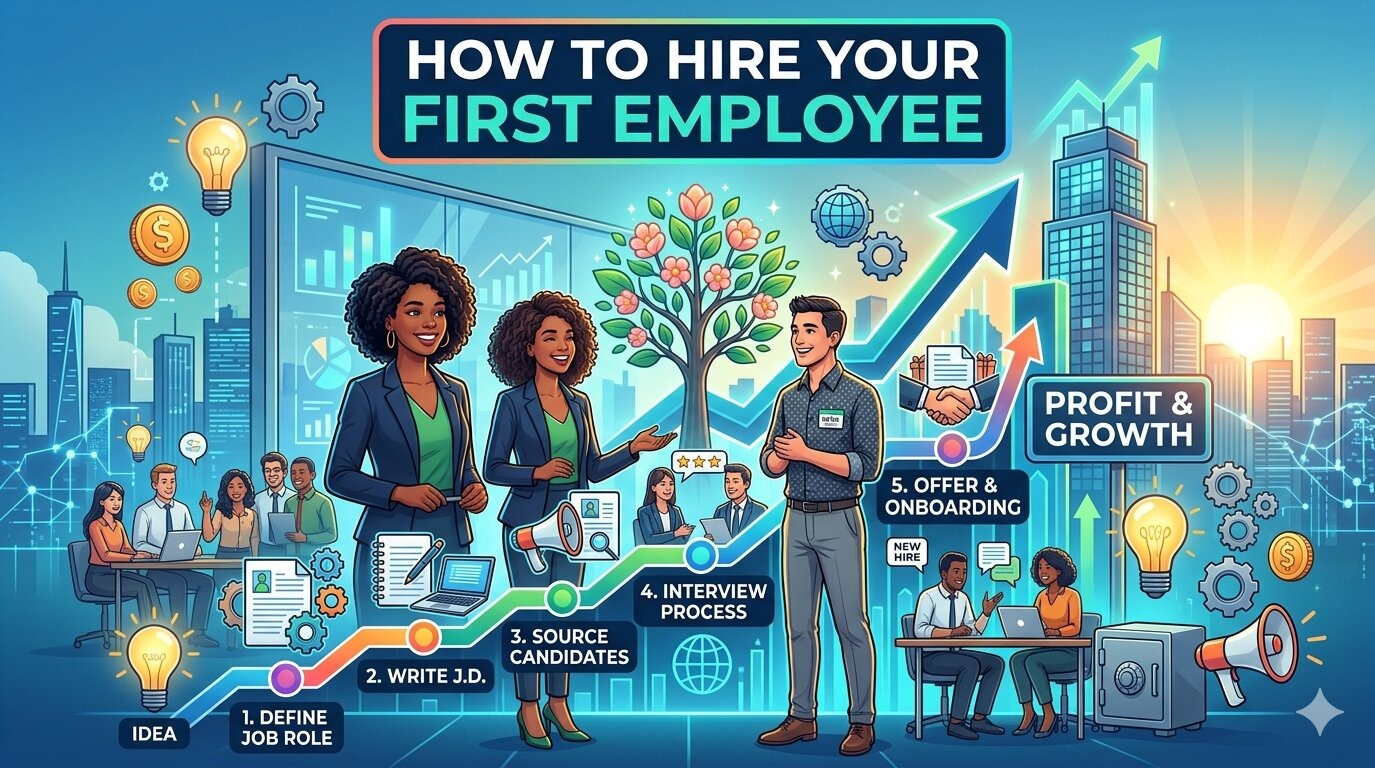
Hiring your first employee is a big milestone in your business journey. It means you’re growing, you’re getting more work than you can handle alone, and you’re ready to build a team.
But it can also feel risky and confusing. Who should you hire? When is the right time? What if it doesn’t work out?
The truth is, hiring is not just about finding someone—it’s about finding the right person at the right time for the right role.
In this guide, we’ll break down how to hire your first employee step by step, with practical advice and simple strategies.
When Should You Hire Your First Employee?
Don’t hire too early—and don’t wait too long.
You’re ready to hire when:
- You’re consistently getting more work than you can handle
- You’re spending time on low-value tasks
- Your revenue can support a salary
Simple rule:
Hire when it helps you grow—not when it creates pressure.
Step 1: Identify What You Need Help With
Before hiring, be clear about the role.
Ask yourself:
- What tasks take most of my time?
- What tasks can someone else handle?
- What skills do I need?
Example:
| Task | Role |
|---|---|
| Social media posts | Social media manager |
| Design work | Graphic designer |
| Admin work | Virtual assistant |
Clarity helps you hire the right person.
Step 2: Start with a Simple Role
Your first hire doesn’t need to be perfect.
Start with:
- A focused role
- Clear responsibilities
- Simple tasks
Avoid hiring for multiple roles at once.
Step 3: Decide Full-Time vs Freelance
You don’t always need a full-time employee.
Options:
| Type | Best For |
|---|---|
| Freelancer | Flexible work, low cost |
| Part-time | Limited workload |
| Full-time | Long-term growth |
Tip:
Start with freelancers if you’re unsure.
Step 4: Write a Clear Job Description
A good job description attracts the right candidates.
Include:
- Role and responsibilities
- Required skills
- Expected results
Example:
“Manage Instagram account and create 5 posts per week”
Step 5: Hire for Attitude, Not Just Skill
Skills can be learned—attitude is harder to change.
Look for:
- Willingness to learn
- Responsibility
- Communication
Example:
A beginner with the right mindset can outperform an experienced but careless person.
Step 6: Keep the Hiring Process Simple
You don’t need a complex process.
Basic steps:
- Shortlist candidates
- Take a quick interview
- Give a small test task
This helps you evaluate real performance.
Step 7: Start with a Trial Period
Before making a long-term commitment:
- Offer a trial period (1–2 weeks or a project)
This helps you:
- Check skills
- Evaluate communication
- Assess reliability
Step 8: Set Clear Expectations
Once hired, be clear about:
- Tasks
- Deadlines
- Communication
Example:
| Area | Expectation |
|---|---|
| Work | 5 tasks per week |
| Communication | Daily updates |
| Quality | Error-free work |
Clarity reduces confusion.
Step 9: Build Simple Systems
To manage your employee effectively:
- Create processes
- Use templates
- Standardize tasks
If you want to improve systems, read:
How to Build Systems in Your Business → https://statush.com/entrepreneur/how-to-build-systems-in-your-business
Step 10: Focus on Growth, Not Just Delegation
Hiring is not just about reducing your workload.
It’s about:
- Freeing your time
- Focusing on growth
- Scaling your business
If you want to grow further, read:
How to Scale a Small Business → https://statush.com/entrepreneur/how-to-scale-a-small-business
Hiring Framework (Simple Overview)
| Step | Action | Result |
|---|---|---|
| Identify | Define role | Clarity |
| Hire | Find right person | Support |
| Train | Guide properly | Efficiency |
| Manage | Set expectations | Consistency |
| Grow | Delegate more | Scale |
Real-World Example
Let’s say you’re handling everything alone:
- Workload increases
- You feel overwhelmed
You hire:
- A freelancer for ₹10,000/month
Result:
- You save time
- Focus on sales
- Increase revenue
Hiring becomes an investment, not a cost.
Avoid These Common Mistakes
- Hiring too early
- Hiring without clear role
- Choosing based only on low cost
- Not setting expectations
If you want to avoid mistakes, read:
Common Entrepreneur Mistakes to Avoid → https://statush.com/entrepreneur/common-entrepreneur-mistakes-to-avoid
Connect Hiring with Business Growth
Hiring is a key step toward scaling.
Once you build a team:
- You handle more work
- You grow faster
- You build a real business
Final Thoughts
Hiring your first employee is a big step—but it doesn’t have to be complicated.
Focus on:
- Hiring the right role
- Starting small
- Building systems
- Growing gradually
You don’t need a big team.
You need the right people.
Over time, your team will become one of your biggest strengths—and a key driver of your business success.