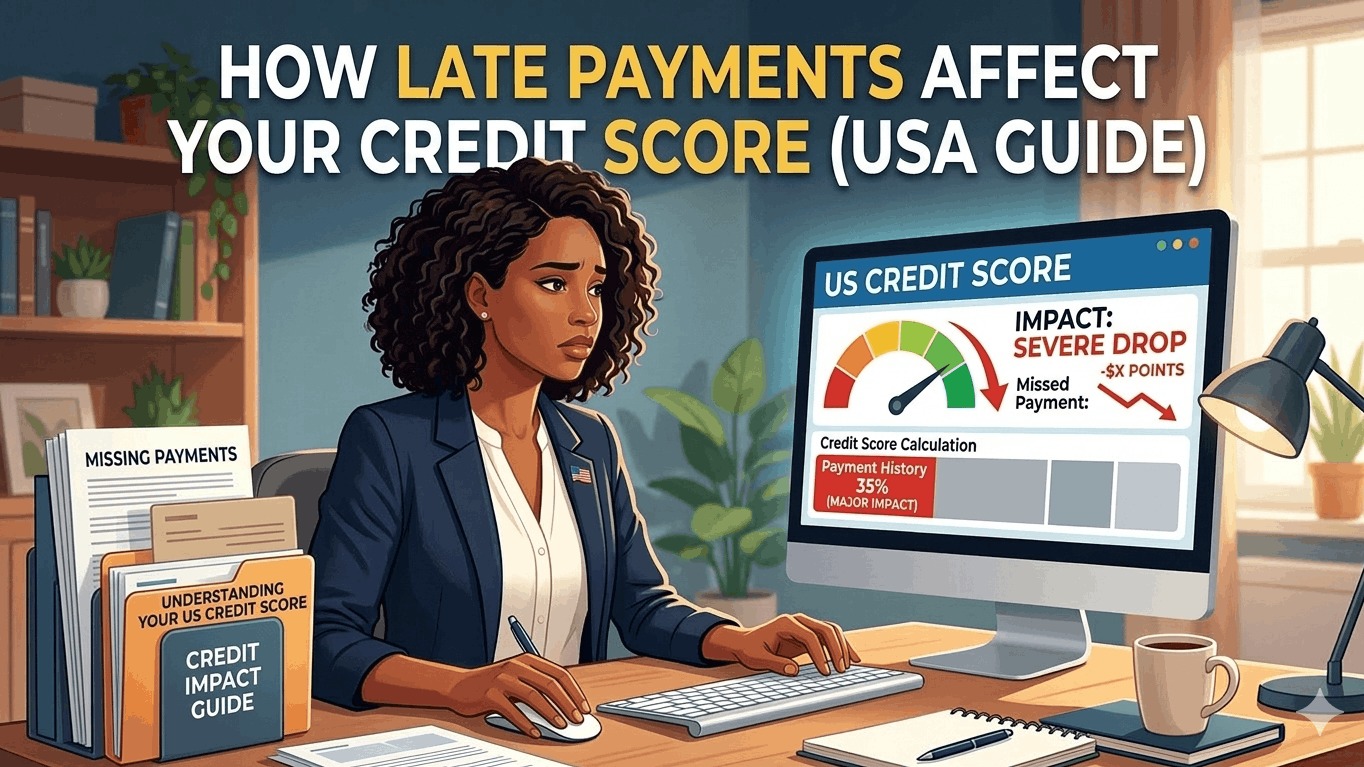
In the 2026 American credit landscape, "Payment History" remains the undisputed heavyweight champion of your financial profile. However, with the integration of real-time data streaming between major lenders and the three national bureaus (Equifax, Experian, and TransUnion), the window to correct a mistake before it becomes a permanent scar has narrowed.
Whether you're looking to buy a home or simply maintain your financial health, understanding the mechanics of late payments is vital.
1. The 35% Weight: Why It Matters
Under the FICO® Score model—the standard used by 90% of top U.S. lenders—Payment History accounts for 35% of your total score.
A single 30-day delinquency is viewed by the algorithm as a breakdown in financial character. Because the U.S. credit system is based on predictive modeling, one "miss" suggests a higher statistical probability of future defaults, causing the score to drop sharply to protect potential lenders.
2. The Penalty Ladder: 30 to 180 Days
In the USA, late payments are categorized by how many days they are past the billing due date. The impact compounds the longer the debt remains unpaid.
| Days Late | Impact on Credit Score | Long-term Consequences |
|---|---|---|
| 1–29 Days | Zero (Bureaus don't see this) | Late fee (~$30-$40) and loss of interest-free grace period. |
| 30 Days | Severe Drop (40–100+ points) | The mark appears on your report for 7 years. |
| 60–90 Days | Major Damage | High risk of "Penalty APR" (up to 29.99%) on the card. |
| 120 Days | Near Total Loss of Credit | Account is often "Charged Off" and sent to collections. |
3. The 2026 "Smart Monitoring" Effect
By 2026, most major U.S. credit card issuers have implemented "Trended Data" analysis.
- The Ripple Effect: If you are 30 days late on a Chase card, American Express or Capital One may see this via a "soft pull" and proactively lower your credit limits on their cards to reduce their risk. This increases your Credit Utilization Ratio, causing a second, indirect drop in your score.
4. Professional Recovery Strategies
If you have missed a payment, you must act before the 30-day reporting window closes.
The "29-Day" Rule
You have exactly 29 days from your due date to pay the minimum balance without it ever touching your credit report. You will pay a late fee to the bank, but your credit score will remain untouched.
The Goodwill Adjustment
If the 30-day mark has passed, your best tool is the Goodwill Letter.
- Why it works: In 2026, banks value "Customer Lifetime Value." If you have a 5-year history of on-time payments, writing an empathetic letter explaining a one-time hardship (e.g., medical emergency, technical glitch) often results in a "courtesy deletion."
"Pay for Delete" (Collections)
If the late payment has moved to a collection agency, do not pay until you negotiate. Ask for a "Pay for Delete" agreement in writing, where the agency agrees to remove the negative entry entirely in exchange for payment.