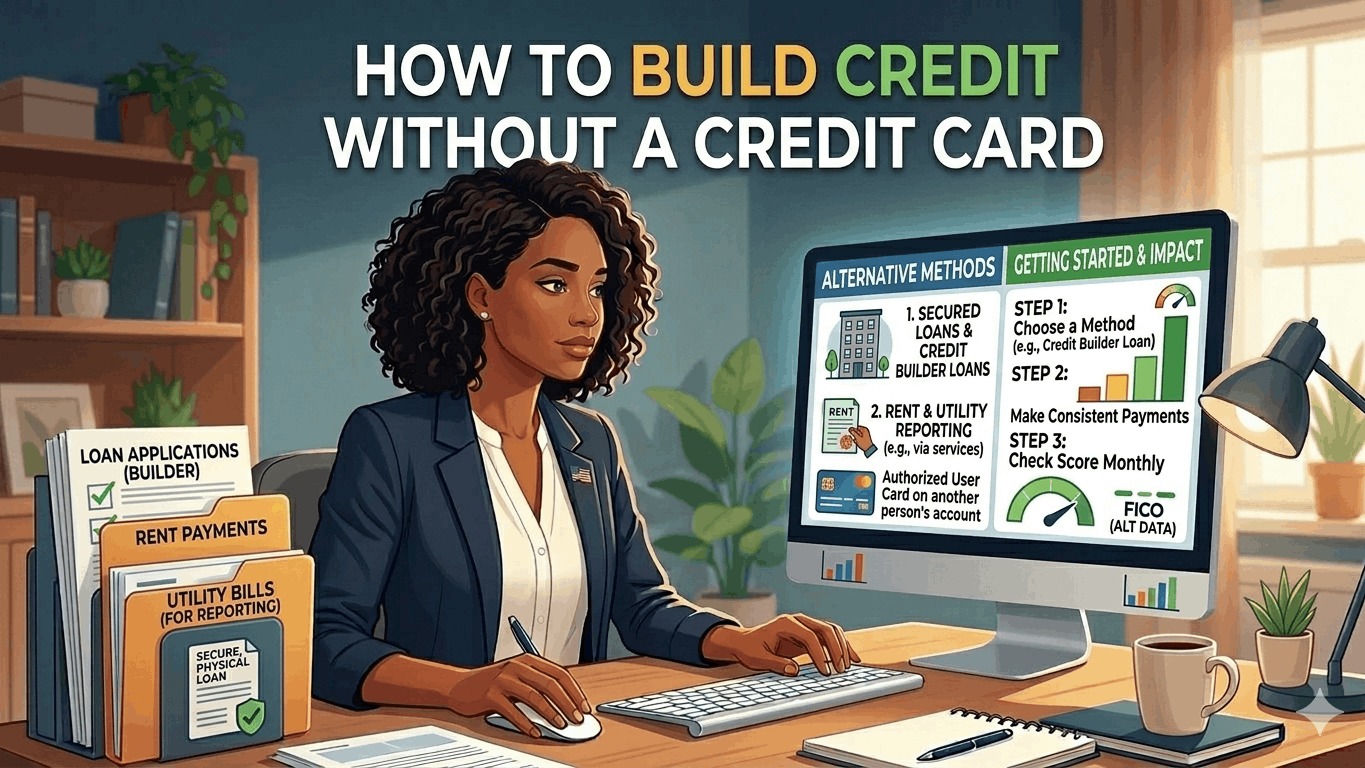
In 2026, the American financial landscape has shifted. While credit cards remain the most common tool for building credit, they are no longer the only path. With the rise of Credit-Builder Loans, Rent Reporting, and Alternative Data modeling, you can now construct a top-tier FICO® score without ever carrying a piece of plastic in your wallet.
This guide explores the most effective 2026 strategies for building a robust credit profile from scratch or after a financial setback.
1. Credit-Builder Loans: The "Savings Account" Hybrid
A credit-builder loan is designed specifically for people with little to no credit history. Unlike a traditional loan where you get the money upfront, this acts like a "forced savings" plan that reports to the bureaus.
How It Works:
- The Hold: A lender (usually a credit union or an app like Self) puts the loan amount (e.g., $1,000) into a locked savings account.
- The Payments: You make fixed monthly payments over 12–24 months.
- The Reporting: Each payment is reported to Equifax, Experian, and TransUnion as an "on-time payment."
- The Payout: Once the loan is paid off, the lender unlocks the funds and gives them to you (minus interest/fees).
2. Rent Reporting Services (The 2026 Standard)
By 2026, rent reporting has moved from a "niche perk" to a standard feature for many U.S. tenants. Since housing is often your largest monthly expense, it should count toward your creditworthiness.
- Services: Companies like RentTrack, LevelCredit, and Bilt allow you to report your monthly rent payments to the bureaus.
- The Impact: This adds "Payment History" to your report without taking on new debt.
- The 2026 Rule: Many VantageScore models now weigh rent payments heavily, making this one of the fastest ways to build a "thin" credit file.
3. Experian Boost & UltraFICO™
In the 2026 "Alternative Data" era, you can give the bureaus permission to look at your utility and streaming bills to boost your score.
- Experian Boost: Connects to your bank account to identify on-time payments for Netflix, Hulu, water, electricity, and even phone bills. These are then added to your Experian credit file.
- UltraFICO: Uses your banking history (savings habits and cash flow) to supplement your credit score. If you keep a healthy balance in savings and don't overdraw, it can raise your score for certain lenders.
4. Become an Authorized User
If you have a trusted family member or friend with a long history of perfect credit and a high-limit credit card, they can add you as an Authorized User.
- The Benefit: Their entire history with that specific card (years of on-time payments and a large credit limit) is "cloned" onto your credit report.
- The Catch: You don't even need to possess the physical card or spend a dime. Their good habits simply "piggyback" onto your score.
- The Risk: If they miss a payment or max out the card, it will hurt your score too. Choose your partner wisely.
5. Federal Student Loans & Personal Loans
If you already have student loans, you are already building credit. Every month you make a payment on your federal or private student loans, you are contributing to that 35% "Payment History" slice of your FICO score.
Similarly, a Credit Union Passbook Loan (where you borrow against your own existing savings) is a low-interest way to add "Credit Mix" to your profile without needing a revolving credit card line.