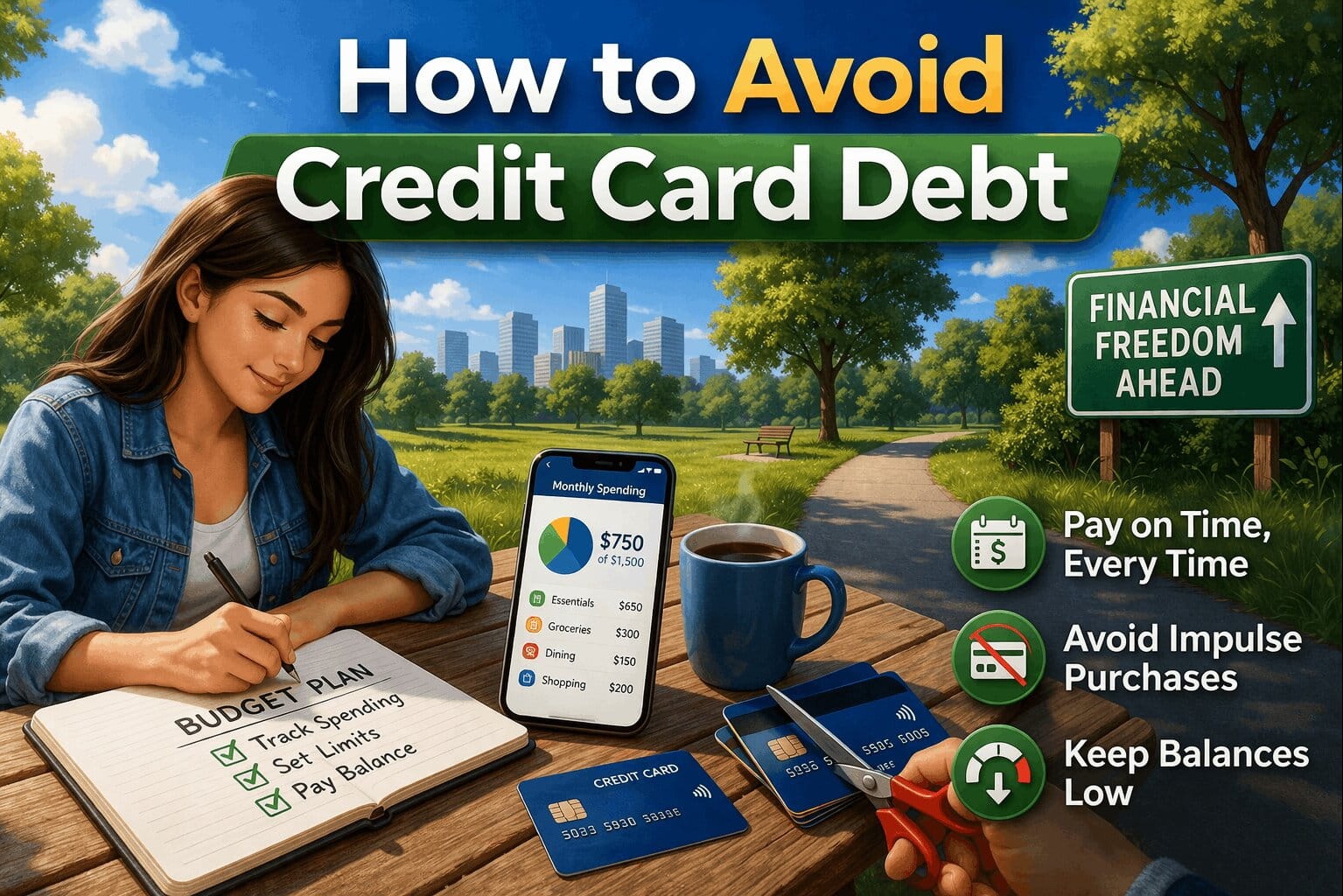
Credit cards can be incredibly useful—but they can also become one of the easiest ways to fall into debt. The difference comes down to how you use them.
In the United States, millions of people carry credit card balances month after month, often paying high interest without realizing how quickly it adds up. The good news is that avoiding credit card debt doesn’t require complicated strategies. It comes down to a few simple habits, applied consistently.
This guide will walk you through how to stay out of credit card debt, with practical tips, real-world examples, and tools you can actually use.
Why Credit Card Debt Happens
Credit card debt doesn’t usually happen overnight. It builds gradually through small decisions.
One of the biggest reasons is overspending. Since credit cards don’t immediately deduct money from your bank account, it’s easy to spend more than you actually have.
Another major factor is interest. Once you carry a balance, interest starts accumulating daily, making it harder to catch up.
To understand how this works:
How Credit Card Interest Works
https://statush.com/credit-cards-banking/how-credit-card-interest-works
There’s also the issue of minimum payments, which can make debt feel manageable while actually extending it for years.
Learn more:
How Minimum Payments Affect Credit Card Debt
https://statush.com/credit-cards-banking/how-minimum-payments-affect-credit-card-debt
Understand How Credit Cards Really Work
Before you can avoid debt, you need to understand how credit cards function.
A credit card is essentially a short-term loan. If you repay it in full each month, you pay no interest. But if you carry a balance, the cost of borrowing increases quickly.
For a complete breakdown:
How Credit Cards Work in the USA
https://statush.com/credit-cards-banking/how-credit-cards-work-in-the-usa
Once you understand this, your mindset shifts. You stop seeing credit as extra money and start seeing it as a responsibility.
The Golden Rule: Always Pay in Full
If there’s one rule that can completely eliminate credit card debt, it’s this:
Always pay your full statement balance every month.
When you do this:
- You avoid interest entirely
- Your debt never grows
- You stay in full control of your finances
Think of your credit card as a delayed debit card. You’re not spending borrowed money—you’re simply delaying payment for money you already have.
Real-World Example
Let’s compare two scenarios.
Scenario 1: Paying in Full
Amit spends $1,000 on his credit card and pays the full amount before the due date.
Result: $0 interest
Scenario 2: Carrying a Balance
Rahul spends $1,000 but pays only $200. The remaining $800 starts accruing interest.
Result: He may pay $150–$300 extra over time.
The difference is not in spending—but in repayment behavior.
Use Credit Cards Only for Planned Expenses
One of the easiest ways to avoid debt is to use your credit card only for expenses you’ve already budgeted for.
This includes things like:
- Groceries
- Utilities
- Subscriptions
- Gas
Avoid using your card for impulse purchases or things you wouldn’t normally buy with cash.
This simple habit keeps your spending aligned with your income.
Track Your Spending Regularly
Debt often builds because people don’t realize how much they’re spending.
Instead of waiting for your monthly statement, check your credit card activity every few days. This helps you stay aware and make adjustments before things get out of control.
Even a quick 2-minute check can prevent overspending.
Keep Your Credit Utilization Low
Credit utilization is the percentage of your credit limit you’re using.
For example:
- Limit: $5,000
- Balance: $2,000
- Utilization: 40%
High utilization not only increases risk of debt but can also lower your credit score.
Try to keep your usage below 30%, and ideally below 10% for the best financial health.
Avoid the Minimum Payment Trap
Minimum payments can be dangerous because they create the illusion of control.
When you pay only the minimum:
- Most of your payment goes toward interest
- Your balance decreases very slowly
- Debt lasts much longer
If you ever find yourself relying on minimum payments, it’s a sign to reassess your spending and repayment strategy.
Use Calculators to Stay in Control
One of the most effective ways to avoid debt is to actually see the numbers.
For example, using a debt calculator can show you:
- How long it will take to pay off your balance
- How much interest you’ll pay
- How increasing your payment can save money
Try this tool:
Debt Payoff Calculator
https://statush.com/debt-payoff-calculator
You can also use this to understand long-term growth and interest:
Compound Interest Calculator
https://statush.com/compound-interest-calculator
Seeing these projections often motivates better financial decisions.
Set Up Automatic Payments
Missing a payment can quickly lead to fees, higher interest rates, and credit score damage.
Setting up automatic payments ensures that you never miss a due date. Even if you only set it for the minimum amount as a backup, it adds a layer of protection.
Ideally, set auto-pay for the full statement balance.
Build an Emergency Fund
Many people fall into credit card debt because of unexpected expenses—medical bills, car repairs, or job loss.
An emergency fund helps you avoid relying on credit cards in these situations.
Even a small fund of $500–$1,000 can make a big difference.
You can estimate your needs here:
Emergency Fund Calculator
https://statush.com/emergency-fund-calculator
Choose the Right Credit Card
Not all credit cards are the same. Some encourage spending with high rewards, while others are designed for simplicity and control.
If you’re just starting out, a basic card with low fees and simple rewards is often the best choice.
Guide:
How to Choose the Right Credit Card
https://statush.com/credit-cards-banking/how-to-choose-the-right-credit-card
Avoid Lifestyle Inflation
As your income increases, it’s tempting to increase your spending as well.
But this can lead to higher credit card usage and potential debt.
Instead, try to maintain your spending habits and use extra income to:
- Save more
- Invest
- Pay off existing balances
This approach builds long-term financial stability.
Recognize Warning Signs Early
Avoiding debt also means catching problems early.
Some warning signs include:
- Carrying a balance month after month
- Relying on minimum payments
- Using credit for everyday essentials without a plan
If you notice these patterns, it’s time to take action before debt grows further.
A Simple Strategy That Works
If you want a simple system to avoid credit card debt, follow this:
- Spend only what you already have
- Track your spending weekly
- Pay your full balance every month
That’s it. No complicated tricks—just consistent habits.
Final Thoughts
Credit cards are not the problem—misuse is.
When used responsibly, they offer convenience, rewards, and even help build your credit score. But without discipline, they can quickly lead to long-term debt.
The key is staying intentional.
Use your card with a plan, monitor your spending, and always prioritize paying in full. Combine that with tools like calculators and budgeting habits, and you’ll not only avoid credit card debt—you’ll stay financially ahead.