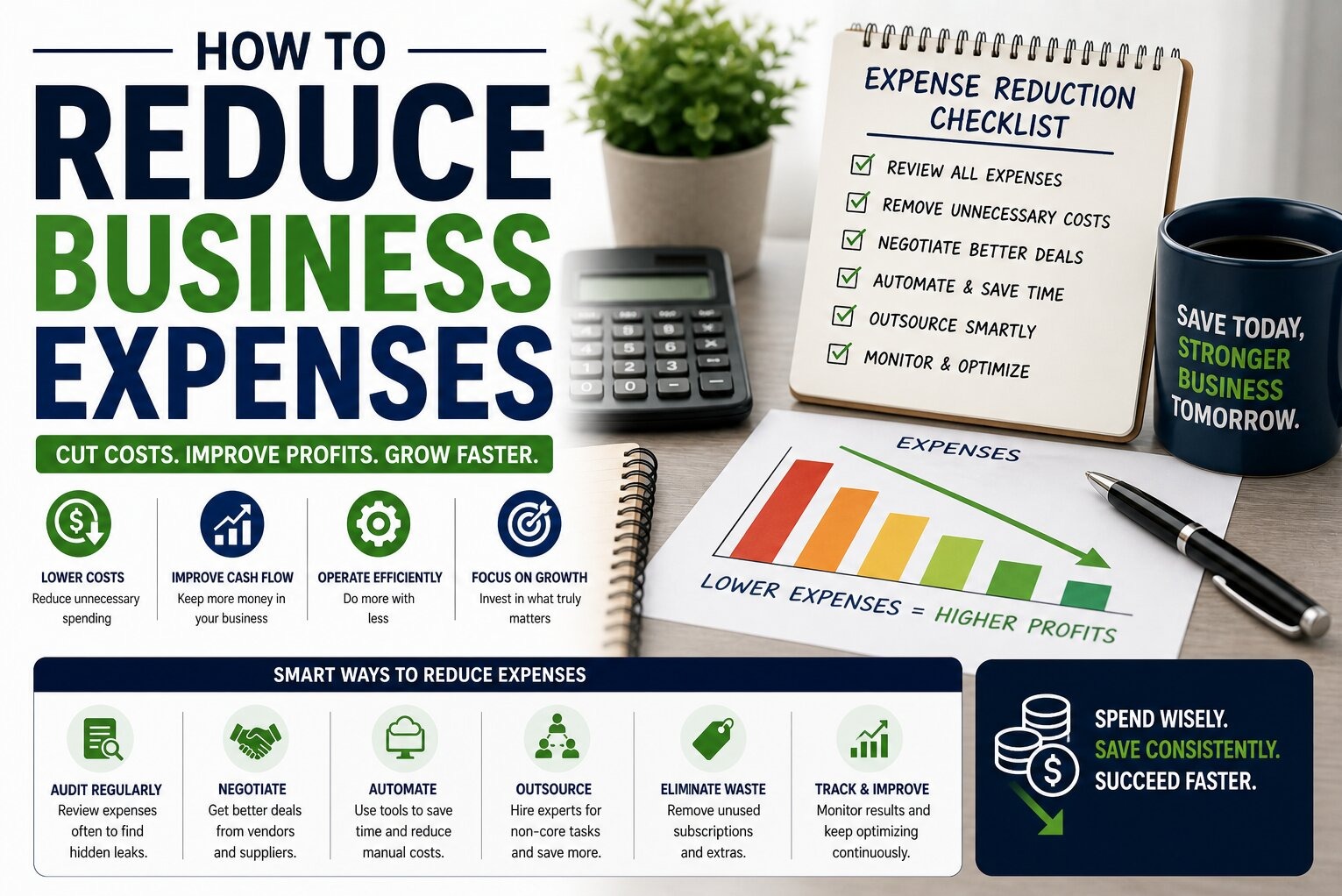
Reducing business expenses is one of the fastest ways to improve profitability—without needing more customers or higher sales. In the U.S., where operational costs like rent, labor, and compliance can be high, controlling expenses is not just smart—it’s necessary.
The key is not to cut blindly, but to optimize intelligently. Because the goal isn’t just to spend less—it’s to spend better.
Let’s break this down in a practical, real-world way.
Why Expense Management Matters
Lower expenses directly increase:
- Profit margins
- Cash flow stability
- Business sustainability
Real insight
A business that controls costs effectively can survive downturns better than one that only focuses on growth.
If your financial foundation isn’t strong yet, start here:
How to Manage Business Finances Effectively – https://statush.com/business/how-to-manage-business-finances-effectively
1. Track Every Expense
You can’t reduce what you don’t track.
Start by:
- Listing all monthly expenses
- Categorizing fixed vs variable costs
- Identifying unnecessary spending
Practical tip
Even small subscriptions or recurring payments can add up significantly over time.
2. Separate Essential vs Non-Essential Costs
Not all expenses are equal.
Essential:
- Rent
- Salaries
- Inventory
- Utilities
Non-essential:
- Unused tools or software
- Overpriced services
- Excess marketing spend
Real insight
Cutting the wrong expenses (like quality or customer experience) can hurt your business more than help it.
3. Negotiate with Vendors and Suppliers
In the U.S., many suppliers are open to negotiation—especially for long-term relationships.
You can negotiate:
- Pricing
- Payment terms
- Bulk discounts
Practical tip
Even a 5–10% reduction can make a big difference over time.
4. Optimize Labor Costs (Without Hurting Productivity)
Labor is often the biggest expense.
Ways to optimize:
- Hire only when necessary
- Use part-time or contract workers
- Improve productivity with systems
Important
Don’t cut staff blindly—focus on efficiency instead.
5. Reduce Overhead Costs
Overhead includes things like rent, utilities, and office expenses.
Ways to reduce:
- Shift to remote or hybrid work
- Use co-working spaces
- Downsize unused office space
Example
Many U.S. businesses reduced costs significantly by adopting remote work models.
6. Use Technology to Save Costs
Automation can reduce manual work and expenses.
Examples:
- Accounting software
- Marketing automation tools
- Customer support systems
Real insight
Investing in the right tools can reduce long-term costs.
7. Control Inventory Efficiently
Too much inventory = wasted money
Too little inventory = lost sales
Balance by:
- Tracking demand
- Avoiding overstocking
- Managing supply cycles
8. Review Marketing Spend
Marketing is essential—but not all spending is effective.
Focus on:
- High-performing channels
- ROI-driven campaigns
Cut:
- Underperforming ads
- Unclear campaigns
For better marketing strategy:
Customer Acquisition Strategies for Small Businesses – https://statush.com/business/customer-acquisition-strategies-for-small-businesses
9. Reduce Financial Costs
Financial expenses can quietly eat into profits.
Watch for:
- High-interest loans
- Late payment penalties
- Unnecessary fees
Practical tip
Refinance or restructure loans if possible.
10. Build a Cost-Control Culture
Expense management shouldn’t be a one-time activity.
Encourage:
- Cost awareness
- Efficient resource use
- Smart decision-making
Real insight
Businesses that consistently review expenses perform better long-term.
Expense Reduction Strategy Table
| Area | Impact Level | Difficulty | Best Action |
|---|---|---|---|
| Expense tracking | Very High | Low | Monitor monthly |
| Vendor negotiation | High | Medium | Renegotiate contracts |
| Labor optimization | High | Medium | Improve efficiency |
| Overhead reduction | High | Medium | Reduce fixed costs |
| Technology adoption | Medium | Medium | Automate processes |
| Inventory management | High | Medium | Optimize stock |
| Marketing optimization | High | Medium | Focus on ROI |
| Financial cost control | Medium | Medium | Reduce interest/fees |
Common Expense Mistakes (USA Businesses)
Let’s be honest—most businesses overspend without realizing it.
Avoid:
- Not tracking expenses
- Keeping unused subscriptions
- Overspending on marketing
- Hiring too early
- Ignoring small recurring costs
Connecting Expenses with Profitability
Reducing expenses directly improves profit—but it should be balanced with growth.
To increase revenue alongside cost control:
How to Increase Business Revenue – https://statush.com/business/how-to-increase-business-revenue
To manage cash flow better:
Cash Flow Management for Small Businesses – https://statush.com/business/cash-flow-management-for-small-businesses
To scale efficiently:
How to Build a Scalable Business Model – https://statush.com/business/how-to-build-a-scalable-business-model
Final Thoughts
Reducing business expenses isn’t about cutting everything—it’s about cutting wisely.
Focus on:
- Tracking your spending
- Eliminating waste
- Improving efficiency
Because in business, increasing profit doesn’t always require more sales—sometimes it just requires better control over your costs.
And the businesses that succeed long-term? They’re the ones that know exactly where their money is going—and make sure it’s working for them.