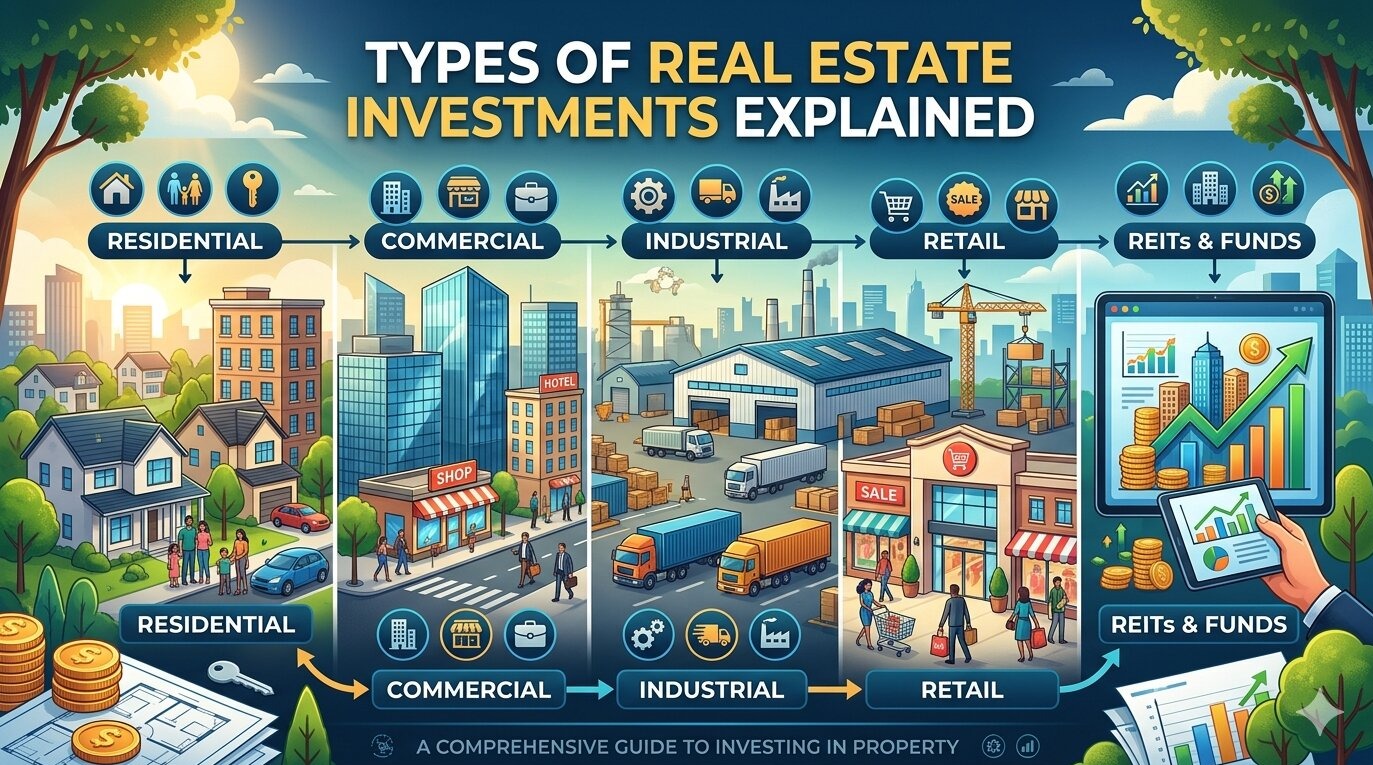
Real estate isn't a one-size-fits-all asset class. While many people immediately picture a "For Rent" sign on a suburban lawn, the reality of the U.S. market is much more diverse. Depending on your budget, your patience, and how much you enjoy dealing with people, your ideal investment could be anything from a massive warehouse to a digital share of a skyscraper.
Understanding the different types of real estate investments is the first step toward building a portfolio that actually matches your lifestyle. Let’s break down the primary categories you'll encounter in the current market.
The Big Four: Core Real Estate Categories
Most physical property falls into one of these four buckets. Each has its own rhythm, tax implications, and "headache factor."
1. Residential Real Estate
This is the most common entry point for investors. It includes single-family homes, townhouses, condominiums, and multi-family units like duplexes or small apartment buildings.
- The Draw: It is generally easier to understand and finance compared to commercial deals.
- The Reality: You are dealing with "tenants and toilets." It’s a high-touch investment that requires active management unless you hire a pro.
2. Commercial Real Estate (CRE)
Commercial property is used specifically for business purposes. This includes office buildings, retail spaces, and strip malls.
- The Draw: Leases are typically much longer (5 to 10 years) than residential leases, providing more stable long-term cash flow.
- The Reality: When a commercial space goes vacant, it can stay empty for a long time, and the build-out costs for a new tenant can be eye-watering. For a deeper comparison, see Residential vs Commercial Real Estate Investing.
3. Industrial Real Estate
Think warehouses, distribution centers, and manufacturing facilities. In the age of e-commerce, this has become one of the hottest sectors in the USA.
- The Draw: Maintenance is often lower because the tenants (businesses) usually handle most of the property upkeep.
- The Reality: These properties are often located in specific industrial zones, making location and highway access absolutely critical.
4. Land
This is the "raw" version of real estate. You buy a plot of land with the hope that it will appreciate in value or that you can develop it later.
- The Draw: No buildings to maintain and no tenants to manage.
- The Reality: Land usually produces zero income while you hold it, but you still have to pay property taxes every year.
Alternative and Passive Investment Types
If you don't want to own a physical building, the U.S. financial system offers several ways to play the real estate game from your computer.
| Investment Type | What You’re Actually Buying | Level of Effort |
|---|---|---|
| REITs | Shares in a company that owns a portfolio of properties. | Very Low (Passive) |
| Syndications | A partnership where you pool money with others for a specific large deal. | Low (Passive) |
| Crowdfunding | Small stakes in various real estate projects via online platforms. | Low (Passive) |
| Short-Term Rentals | Furnished properties rented by the night (e.g., Airbnb/VRBO). | Very High (Active) |
For those looking for a hands-off approach, learning How to Invest in REITs for Passive Income is often the best place to start.
Strategies: How You Make the Money
The "type" of property matters, but the strategy you apply to it is what determines your profit margin.
Buy and Hold
This is the classic wealth-builder. You buy a property, rent it out, and wait for the mortgage to be paid down while the value goes up. It’s the core of the Buy-and-Hold Real Estate Strategy.
Fix and Flip
This is a high-speed strategy. You find a "fixer-upper," renovate it quickly, and sell it for a profit. It’s great for generating large chunks of cash, but it’s more like a full-time job than an investment.
Wholesaling
Wholesalers find great deals under market value, get them under contract, and then "assign" that contract to another investor for a fee. You never actually own the house, but you need a massive network to make it work.
Practical Tips for Choosing Your "Type"
- Assess Your Time: If you have a 50-hour-a-week job, stay away from "Fix and Flips" or managing your own short-term rentals.
- Check Your Capital: Residential properties often require 20% down, while commercial deals might require 25-30% and higher interest rates.
- Understand the Cycle: Different types of real estate react differently to the economy. Offices might struggle during a remote-work boom, while warehouses thrive. See Real Estate Market Cycles Explained for more.
- Analyze the Math: Every property type uses different metrics. For rentals, you'll want to understand the Gross Rent Multiplier Explained to see if the price makes sense.
In my view, the best "type" of investment is the one you actually understand well enough to explain to a neighbor. Don't chase a trend in industrial warehouses if you don't know the first thing about logistics. Start with what's familiar, perhaps a Residential vs Commercial Real Estate Investing comparison, and grow from there.