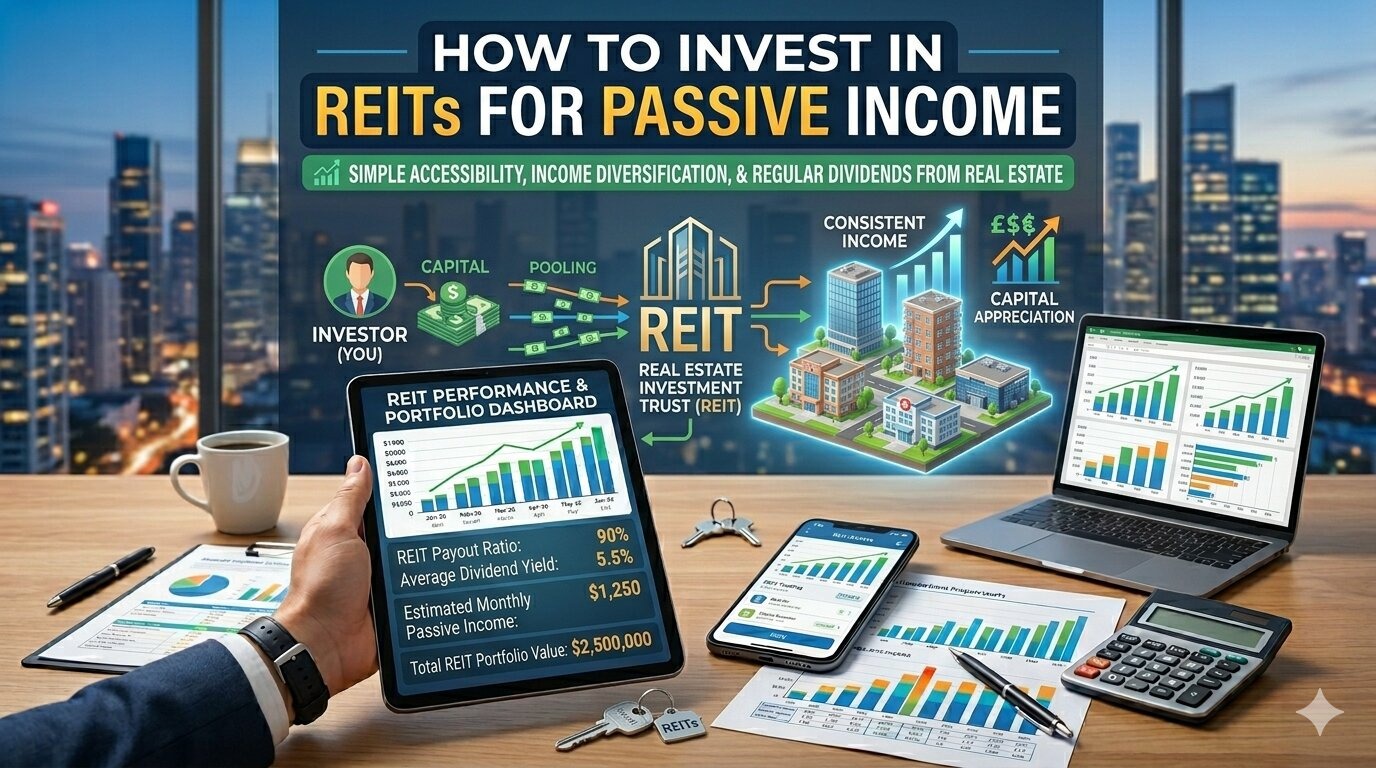
Real estate investing doesn’t always require buying property, dealing with tenants, or managing repairs. One of the easiest ways to earn passive income from real estate is through REITs (Real Estate Investment Trusts).
REITs allow you to invest in real estate just like stocks—making them ideal for beginners and passive investors.
If you're new to real estate, start here:
How Real Estate Investing Works
https://statush.com/real-estate/how-real-estate-investing-works
Let’s break down how REITs work, how to invest in them, and how to generate passive income effectively.
What Is a REIT?
A REIT (Real Estate Investment Trust) is a company that owns, operates, or finances income-producing real estate.
Instead of buying a property yourself, you buy shares in a REIT—and earn a portion of the income it generates.
Simple Example
- A REIT owns office buildings, apartments, or malls
- It earns rental income from tenants
- It distributes profits to investors as dividends
Most REITs are required to pay out a large portion of their income, making them attractive for passive income.
How REITs Generate Passive Income
REITs primarily generate income through:
1. Rental Income
Properties owned by the REIT generate rent from tenants.
2. Property Appreciation
REITs may benefit from rising property values over time.
3. Dividends
Investors receive regular dividend payments (monthly or quarterly).
To understand income vs growth strategies, read:
Cash Flow vs Appreciation in Real Estate
https://statush.com/real-estate/cash-flow-vs-appreciation-in-real-estate
Types of REITs
There are different types of REITs based on how they operate.
| Type | Description | Income Source |
|---|---|---|
| Equity REITs | Own and manage properties | Rental income |
| Mortgage REITs | Finance real estate loans | Interest income |
| Hybrid REITs | Mix of both | Rent + interest |
Each type offers different risk and return profiles.
How to Invest in REITs
Investing in REITs is simple compared to buying property.
Step-by-Step Process
- Open a brokerage account
- Research REIT options
- Choose REITs based on your goals
- Invest by purchasing shares
- Earn dividends over time
You can invest with relatively small amounts, making REITs highly accessible.
Real-World Examples
Example 1: Dividend Income
An investor buys $10,000 worth of REIT shares with a 6% annual dividend yield. This generates about $600 per year in passive income, paid quarterly—without managing any property.
Example 2: Growth + Income Strategy
Another investor invests in a REIT focused on commercial properties in growing cities. Over time, the REIT increases both its property value and rental income, leading to higher dividends and share price growth.
Benefits of Investing in REITs
REITs offer several advantages, especially for passive investors.
1. Low Capital Requirement
You can start with small investments.
2. Passive Income
No need to manage tenants or properties.
3. Liquidity
REIT shares can be bought and sold easily like stocks.
4. Diversification
Invest in multiple properties through a single investment.
Risks of REIT Investing
While REITs are convenient, they also have risks.
1. Market Volatility
REIT prices can fluctuate like stocks.
2. Interest Rate Sensitivity
Higher interest rates can impact REIT performance.
3. Lower Control
You don’t control investment decisions.
4. Dividend Variability
Dividends are not guaranteed.
Understanding broader market trends helps:
Real Estate Market Cycles Explained
https://statush.com/real-estate/real-estate-market-cycles-explained
REITs vs Direct Real Estate Investing
Here’s a simple comparison:
| Factor | REITs | Direct Ownership |
|---|---|---|
| Effort | Passive | Active |
| Capital Required | Low | High |
| Liquidity | High | Low |
| Control | None | Full |
| Returns | Moderate | Varies |
Both options have their place depending on your investment goals.
How to Choose the Right REIT
Not all REITs are the same. Here’s what to look for:
Key Factors
- Dividend yield
- Property type (residential, commercial, etc.)
- Growth potential
- Management quality
- Financial performance
Practical Tips for Beginners
1. Start with Established REITs
Look for companies with a strong track record.
2. Diversify
Invest in multiple REITs across different sectors.
3. Focus on Dividend Stability
Consistent dividends are key for passive income.
4. Think Long-Term
REITs perform best over time.
5. Reinvest Dividends
Compounding can significantly boost returns.
Common Mistakes to Avoid
Chasing High Yields
Very high yields may indicate higher risk.
Ignoring Fundamentals
Always analyze the REIT’s performance.
Lack of Diversification
Avoid investing in a single REIT.
Short-Term Thinking
REITs are better suited for long-term investing.
When REITs Make Sense
REITs are ideal when:
- You want passive income
- You have limited capital
- You prefer liquid investments
- You don’t want property management responsibilities
Final Thoughts
REITs provide a simple and accessible way to invest in real estate without owning physical property. They offer passive income, diversification, and liquidity—making them a great option for many investors.
However, like any investment, they require careful selection and a long-term mindset.
The key is to focus on quality REITs, diversify your investments, and stay consistent.
Because in real estate investing, sometimes the easiest path to passive income isn’t owning property—it’s owning a share of it.