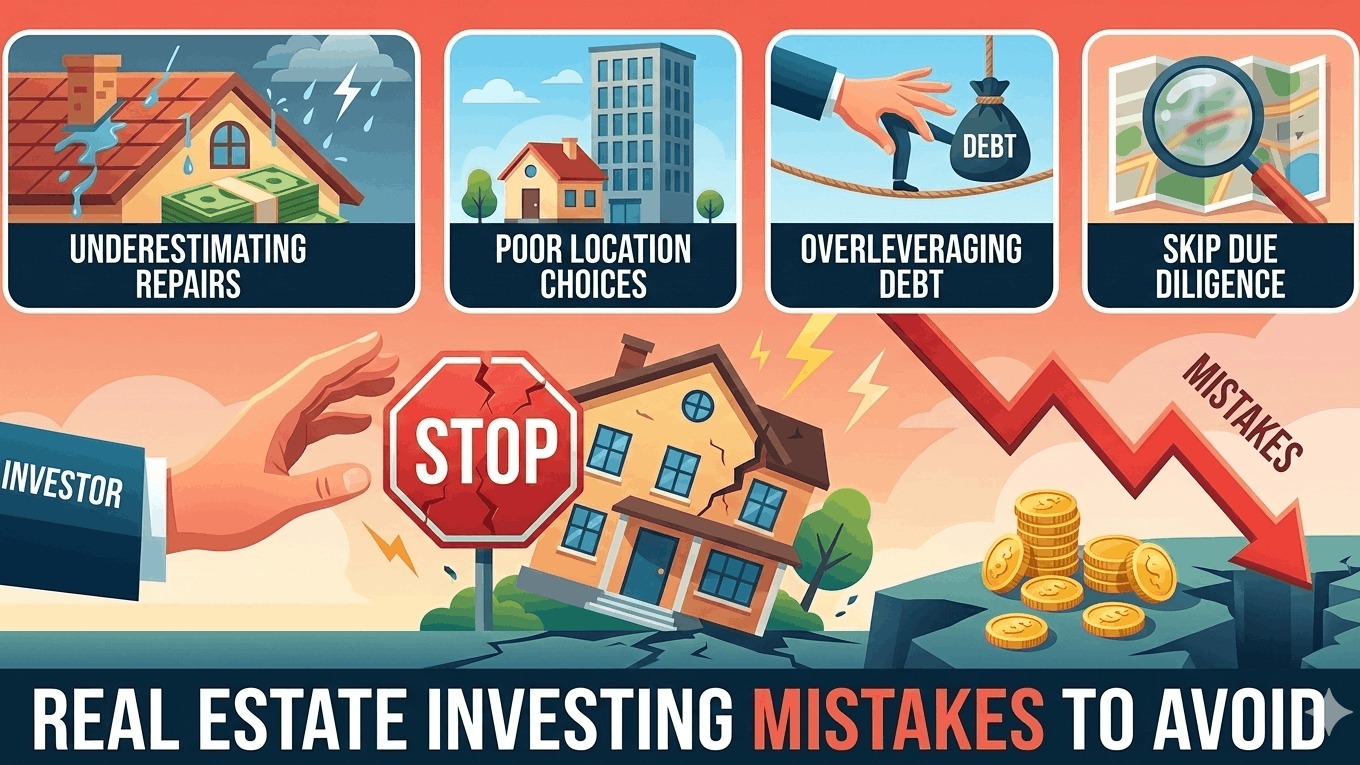
In the 2026 U.S. housing market, the "easy money" era of the pandemic has officially ended. With the market moving toward a more balanced equilibrium, the margin for error has shrunk. Today’s successful investors aren't just looking for deals; they are obsessively avoiding the pitfalls that can turn a profitable asset into a “money bleeder.”
Whether you are a first-time buyer or looking to scale your portfolio, avoiding these eight critical mistakes is essential for protecting your capital and ensuring long-term growth.
1. Overestimating Cash Flow (The "Optimism" Trap)
The most common mistake in 2026 is assuming a property will be occupied 100% of the time with zero maintenance issues.
- The Reality: Rent growth has moderated to 0.3% – 3% in many regions. If you don't factor in a 5-10% vacancy rate and a 10% maintenance reserve, a single $2,000 HVAC repair can wipe out an entire year’s profit.
- The Fix: Run your numbers conservatively. If the deal only "works" if everything goes perfectly, it’s not a good deal.
2. Ignoring Rising Operating Expenses (OpEx)
In 2026, insurance premiums and property taxes are the silent “cash flow killers.”
- The Reality: Insurance costs in high-risk zones (fire, flood, hurricane) have spiked by 8% to 15% annually. Failing to call for a fresh insurance quote during your due diligence period is a catastrophic error.
- The Fix: Budget for a 10-15% annual increase in insurance and taxes in your multi-year projections.
3. "Speculating" on Appreciation Alone
Betting that a property will simply "go up in value" is gambling, not investing.
- The Reality: J.P. Morgan research suggests national home prices may stall at 0% growth in 2026 as inventory increases. If your property has negative monthly cash flow, you are paying for the "privilege" of hoping the market saves you.
- The Fix: Follow the "Cash Flow First" rule. Ensure the property pays for itself today so you can afford to hold it until the appreciation eventually happens.
4. Over-Leveraging in a 6% Interest Rate Environment
While leverage is a powerful tool, taking on too much debt makes you vulnerable to even minor market shifts.
- The Reality: In 2026, with mortgage rates stabilized around 6.1%, many investors are finding that a 25% down payment is the "sweet spot" to ensure the rent comfortably covers the debt service.
- The Fix: Maintain a healthy Debt Service Coverage Ratio (DSCR) of at least 1.20. This means your net income is 20% higher than your mortgage payment.
5. Poor Tenant Screening (The "Haste" Mistake)
A bad tenant is more expensive than a vacant unit.
- The Reality: Eviction costs and property damage can reach into the tens of thousands. In 2026's tighter economy, "gut feeling" is not a screening tool.
- The Fix: Use a professional screening service to verify credit (700+ preferred), income (3x rent), and criminal history. It is always better to wait two extra weeks for the right tenant.
6. Buying in a "Dead" Location
The "Location, Location, Location" mantra is even more vital in 2026 as the geographic focus shifts.
- The Reality: Markets that were "hot" in 2022 (parts of the Sun Belt) are now seeing a glut of new construction. Buying in an oversupplied area where prices are falling is a common rookie mistake.
- The Fix: Follow the "Path of Progress." Focus on Midwest "powerhouses" like Columbus, OH, or Kansas City, MO, where job growth and affordability are driving high demand.
7. Skipping the Professional Inspection
In a balanced market, you have the leverage to demand an inspection—don't waive it.
- The Reality: Older properties may have "environmental obsolescence" or structural issues that aren't visible to the naked eye. In 2026, buyers are more selective; if you skip the inspection, you may inherit a "lemon" that you'll struggle to sell later.
- The Fix: Hire a certified inspector and a specialized professional (like a sewer scope or mold expert) if the house is more than 30 years old.
8. Lacking a Clear Exit Strategy
Investors often focus on the buy and forget the sell.
- The Reality: Not every property is easy to offload. If you buy a highly specialized property (like a luxury short-term rental) in a town that later bans Airbnbs, you could be stuck.
- The Fix: Always have at least two exit strategies. For example: "If I can't sell this as a flip, can I rent it out as a long-term rental and still break even?"