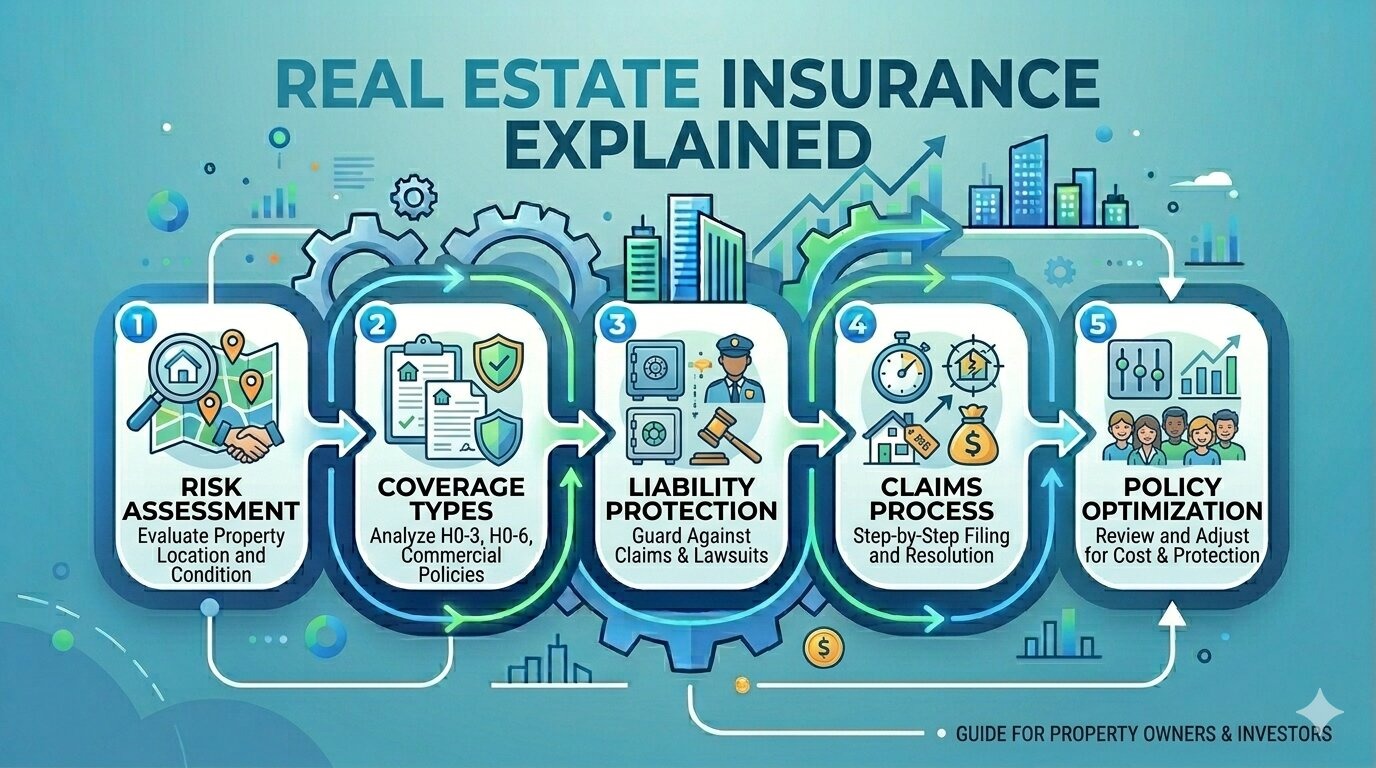
Real estate insurance is one of the most important—and often overlooked—parts of property investing in the United States. While investors focus heavily on buying the right property and maximizing returns, protecting that investment is just as critical.
A single unexpected event—like a fire, natural disaster, or liability claim—can wipe out years of profits if you’re not properly insured. The right insurance coverage doesn’t just protect your property; it protects your financial future.
This guide explains how real estate insurance works, the types of coverage available, and how to choose the right policy for your investment.
What Is Real Estate Insurance?
Real estate insurance is a policy that protects your property and investment from financial loss due to damage, accidents, or liability.
For rental property owners, insurance typically covers:
- Property damage
- Liability claims
- Loss of rental income
It’s different from standard homeowners insurance because rental properties involve additional risks.
If you're new to real estate investing, start here:
How Real Estate Investing Works — https://statush.com/real-estate/how-real-estate-investing-works
Why Real Estate Insurance Matters
Insurance is not just a formality—it’s a financial safety net.
Key Benefits:
- Protects against major losses
- Covers unexpected repair costs
- Shields you from liability claims
- Ensures income continuity
Real-World Example:
A rental property in California suffers fire damage:
- Repair cost: $80,000
- Lost rent: $10,000
Without insurance → Total loss: $90,000
With insurance → Majority of costs covered
This is why insurance is essential—not optional.
Types of Real Estate Insurance Coverage
Understanding different types of coverage helps you choose the right policy.
| Coverage Type | What It Covers | Why It Matters |
|---|---|---|
| Dwelling Coverage | Structure of the property | Protects physical asset |
| Liability Coverage | Injuries or accidents | Protects against lawsuits |
| Loss of Rental Income | Missed rent due to damage | Maintains cash flow |
| Personal Property | Appliances, furnishings | Covers landlord-owned items |
| Additional Coverage | Flood, earthquake, etc. | Protects against specific risks |
Not all policies include everything—you may need add-ons.
Landlord Insurance vs Homeowners Insurance
This is a common mistake among new investors.
| Feature | Homeowners Insurance | Landlord Insurance |
|---|---|---|
| Primary Use | Owner-occupied home | Rental property |
| Liability Coverage | Basic | Expanded |
| Rental Income Protection | No | Yes |
| Tenant-Related Risks | Limited | Covered |
If you rent out your property, landlord insurance is usually required.
What Real Estate Insurance Typically Covers
A standard landlord insurance policy usually includes:
1. Property Damage
Covers damage from:
- Fire
- Storms
- Vandalism
2. Liability Protection
Covers legal and medical costs if:
- A tenant or guest is injured
- You’re found responsible
3. Loss of Rental Income
If your property becomes uninhabitable due to damage, insurance may cover lost rent.
What Insurance Does NOT Cover
Understanding exclusions is just as important.
Typical exclusions include:
- Flood damage (requires separate policy)
- Earthquakes (optional coverage)
- Normal wear and tear
- Tenant negligence (in some cases)
Always review policy details carefully.
How Much Insurance Do You Need?
The goal is to fully protect your investment—not just meet minimum requirements.
Key Factors:
- Property value
- Replacement cost (not market value)
- Location risks (flood zones, weather)
- Rental income
Example:
- Property value: $300,000
- Replacement cost: $280,000
Your coverage should be based on replacement cost, not purchase price.
Cost of Real Estate Insurance
Insurance costs vary based on several factors:
- Property location
- Property condition
- Coverage amount
- Deductible level
Typical Range (U.S.):
- $800 to $2,000 per year per property
While this may seem like an expense, it’s actually protection against much larger losses.
Ways to Reduce Insurance Costs
Insurance is necessary—but you can optimize it.
Practical Tips:
- Compare multiple providers
- Bundle policies
- Increase deductible (carefully)
- Install safety features (smoke detectors, security systems)
- Maintain property condition
Reducing risk often lowers premiums.
Insurance and Risk Management
Insurance is just one part of protecting your investment.
Good investors combine:
- Insurance coverage
- Preventive maintenance
- Tenant screening
- Legal compliance
For tenant-related risk reduction:
How to Screen Rental Tenants — https://statush.com/real-estate/how-to-screen-rental-tenants
Common Mistakes to Avoid
Underinsuring the Property
Trying to save money can lead to major losses later.
Choosing the Cheapest Policy
Lower premiums often mean less coverage.
Ignoring Policy Details
Not all damages or situations are covered.
Not Updating Coverage
As property value increases, your insurance should too.
For broader mistakes:
Real Estate Investing Mistakes to Avoid in USA — https://statush.com/real-estate/real-estate-investing-mistakes-to-avoid-in-usa
Insurance and Portfolio Growth
As your portfolio grows, insurance becomes more complex.
You may need:
- Multiple property policies
- Umbrella liability insurance
- Specialized coverage for different property types
This is why many investors work with insurance professionals as they scale.
To understand portfolio growth:
How to Build a Rental Property Portfolio — https://statush.com/real-estate/how-to-build-a-rental-property-portfolio
When Insurance Matters Most
Insurance becomes especially critical when:
- You own multiple properties
- You rely on rental income
- Properties are in high-risk areas
- You use leverage (loans)
In these cases, risk exposure is significantly higher.
Final Thoughts
Real estate insurance is not just an expense—it’s a safeguard for your entire investment strategy. It allows you to:
- Protect your assets
- Reduce financial risk
- Maintain stable income
While it may seem like a background detail, the right insurance coverage can make the difference between a temporary setback and a major financial loss.
Smart investors don’t just focus on returns—they focus on protection as well.
To see how insurance fits into a broader strategy:
Best Real Estate Investment Strategies — https://statush.com/real-estate/best-real-estate-investment-strategies