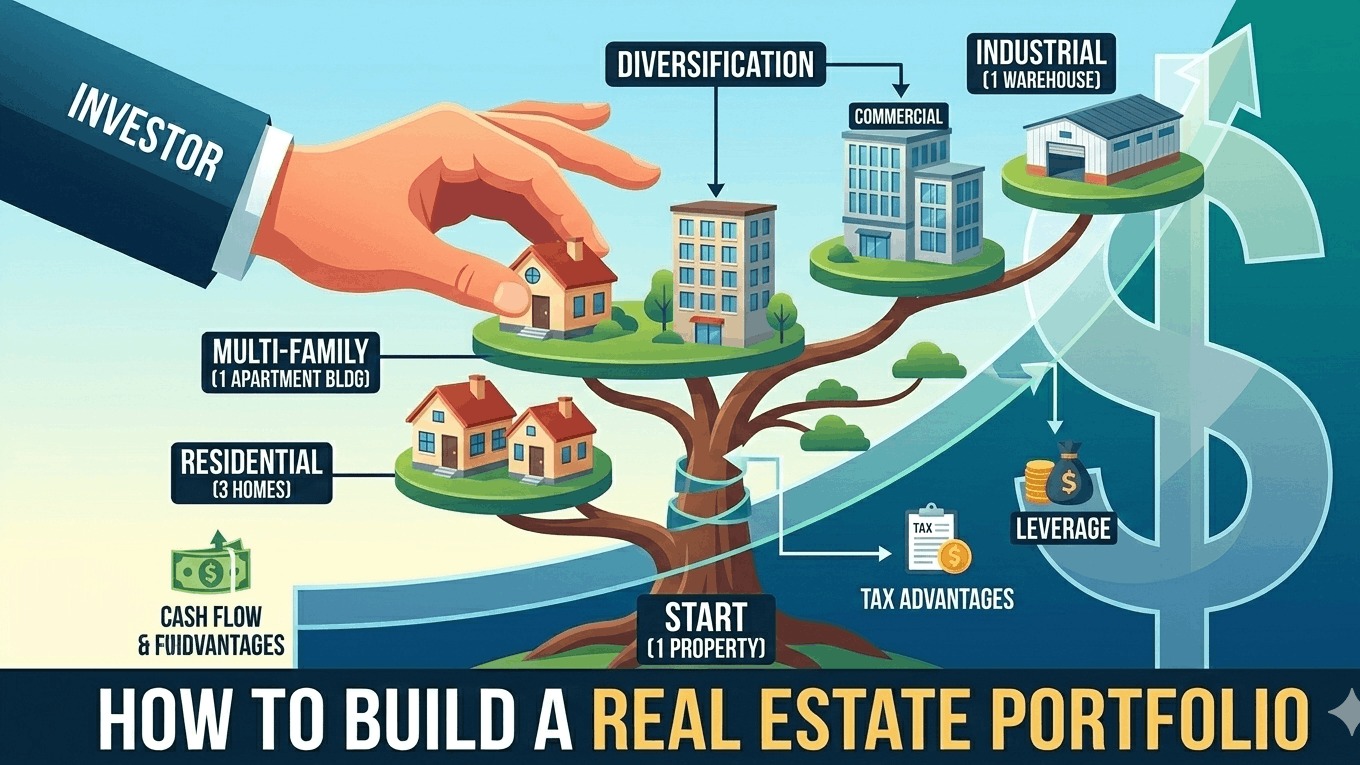
In the 2026 housing market, building a real estate portfolio is less about "timing the market" and more about "time in the market." With mortgage rates stabilized and inventory gradually increasing, the path to a multi-property portfolio requires a transition from a "one-off buyer" mindset to that of a strategic asset manager.
A successful portfolio provides three things: Diversification, Scalability, and compounding Wealth. Here is the step-by-step blueprint for scaling from your first door to a sustainable real estate empire.
1. The Foundation: The "First Door" Strategy
Your first property is your proof of concept. In 2026, the most effective way to start a portfolio is through House Hacking.
- The Strategy: Buy a 2–4 unit property with an FHA loan (3.5% down).
- The Goal: Live in one unit while the other units pay the majority of your mortgage.
- The Portfolio Impact: This allows you to preserve your capital for Property #2 while gaining hands-on experience in property management and tenant relations.
2. The Scaling Engine: The BRRRR Method
To build a portfolio quickly without running out of cash, 2026 investors rely on the BRRRR Method (Buy, Rehab, Rent, Refinance, Repeat).
- Buy: Purchase a distressed property at a discount (often using Hard Money).
- Rehab: Renovate the property to "force" appreciation.
- Rent: Place a high-quality tenant to generate cash flow.
- Refinance: Use a DSCR Loan to pull your initial capital back out based on the new, higher value.
- Repeat: Use that same "recycled" cash to buy your next property.
3. Diversification: Protecting Your Gains
As you move toward 5+ properties, concentration risk becomes a factor. In 2026, a "bulletproof" portfolio is diversified across two planes:
A. Geographic Diversification
Don't put all your houses in one city. If a major local employer leaves or property taxes spike in one county, your entire income is at risk.
- 2026 Play: Balance a "Growth Market" (like Charlotte, NC) with a "Cash Flow Market" (like Indianapolis, IN).
B. Asset Class Diversification
Mixing your rental types helps balance the portfolio’s volatility.
- Long-Term Rentals: Provide the "boring" stability and bankability.
- Short-Term/Medium-Term Rentals: Provide the "boost" in monthly cash flow.
- REITs: Provide liquid real estate exposure without the management overhead.
4. Systems and Professional Management
You cannot manage 10 properties effectively while working a 9-to-5. Building a portfolio is a team sport. By your 3rd or 4th property, you must assemble your "Core Four":
- Investor-Friendly Realtor: Someone who understands CAP rates, not just granite countertops.
- Property Manager: To handle the "3 T's" (Tenants, Toilets, Trash).
- Lender: A specialist in DSCR and portfolio loans who can help you scale beyond the 10-loan conventional limit.
- Contractor: A reliable partner for quick turnovers and "value-add" renovations.