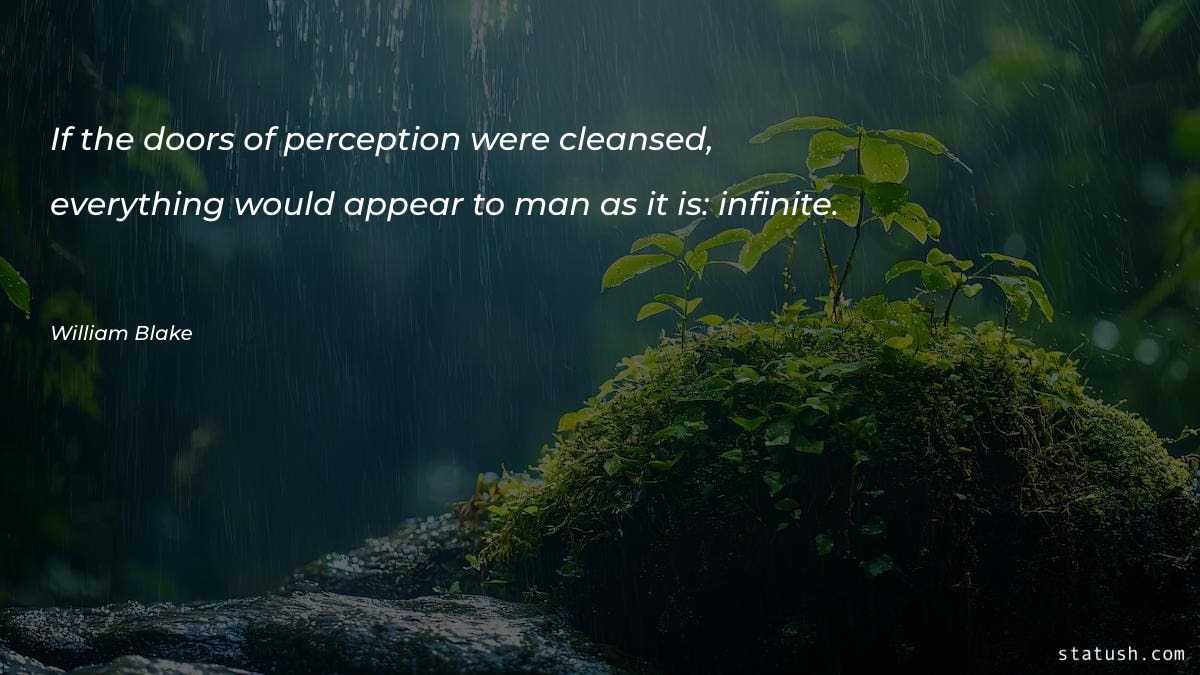
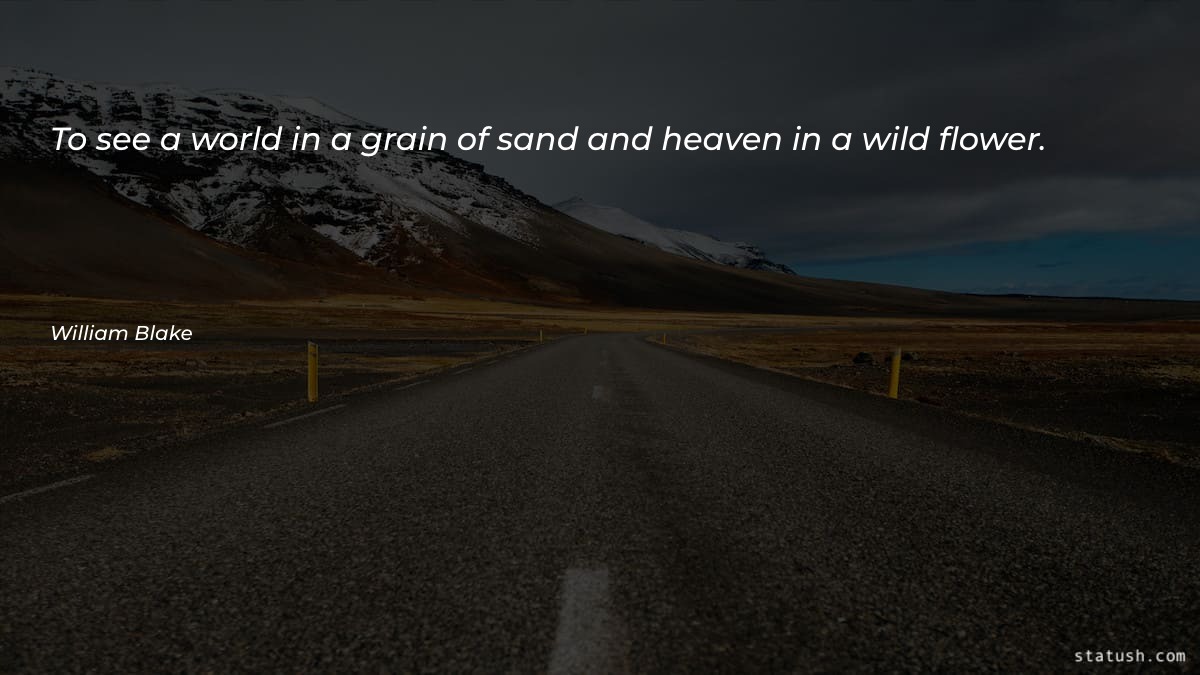
Here are 10 of the most insightful quotes attributed to William Blake, and the logic behind them.
1. On Learning
Little Lamb, who made thee? Dost thou know who made thee? Gave thee life and bid thee feed By the stream and o'er the mead; Gave thee clothing of delight, Softest clothing, woolly bright.
The Meaning: Knowledge is framed as something that changes behavior, not something you collect like trophies. If a sentence is true but does not shift what you notice or do, it has not finished its work.
2. On Faith and Meaning
The reason Milton wrote in fetters when he wrote of Angels and God, and at liberty when of Devils and Hell, is because he was a true poet and of the Devils' party without knowing it.
The Meaning: Knowledge is framed as something that changes behavior, not something you collect like trophies. If a sentence is true but does not shift what you notice or do, it has not finished its work.
3. On Faith and Meaning
The pride of the peacock is the glory of God. The lust of the goat is the bounty of God. The wrath of the lion is the wisdom of God. The nakedness of woman is the work of God.
The Meaning: Knowledge is framed as something that changes behavior, not something you collect like trophies. If a sentence is true but does not shift what you notice or do, it has not finished its work.
4. On Love and Devotion
I'll shade him from the heat till he can bear To lean in joy upon our Father's knee; And then I'll stand and stroke his silver hair, And be like him and he will then love me.
The Meaning: This line treats emotion as something that steers decisions more than arguments do. The meaning is practical: if you ignore what you feel, you may still act—but often on autopilot. Naming the feeling is the first step toward choosing it, rather than being dragged by it.
5. On Discipline
When my mother died I was very young, And my father sold me while yet my tongue Could scarcely cry 'weep! 'weep! 'weep!'weep! So your chimneys I sweep, and in soot I sleep.
The Meaning: This line from William Blake compresses a lived tension into a single readable moment. Read it slowly: it is not asking you to agree, but to notice where the same pattern shows up in your own life. If you take it seriously, it becomes a test—what would you change if this were reliably true for you?
6. On Love and Devotion
And we are put on earth a little space, That we may learn to bear the beams of love, And these black bodies and this sunburnt face Is but a cloud, and like a shady grove.
The Meaning: This line treats emotion as something that steers decisions more than arguments do. The meaning is practical: if you ignore what you feel, you may still act—but often on autopilot. Naming the feeling is the first step toward choosing it, rather than being dragged by it.
7. On Time and Memory
If you trap the moment before it's ripe, The tears of repentance you'll certainly wipe; But if once you let the ripe moment go You can never wipe off the tears of woe.
The Meaning: Time is treated as something you cannot store—only spend. The meaning is that urgency and patience are both strategies; the quote asks which one matches the stakes. If you feel rushed, check whether the deadline is real or inherited.
8. On Action
Like a fiend in a cloud, With howling woe, After night I do crowd, And with night will go; I turn my back to the east, From whence comforts have increased; For light doth seize my brain With frantic pain.
The Meaning: This line from William Blake compresses a lived tension into a single readable moment. Read it slowly: it is not asking you to agree, but to notice where the same pattern shows up in your own life. If you take it seriously, it becomes a test—what would you change if this were reliably true for you?
9. On Love and Devotion
My silks and fine array, My smiles and languished air, By love are driv'n away; And mournful lean Despair Brings me yew to deck my grave:Such end true lovers have.
The Meaning: This line treats emotion as something that steers decisions more than arguments do. The meaning is practical: if you ignore what you feel, you may still act—but often on autopilot. Naming the feeling is the first step toward choosing it, rather than being dragged by it.
10. On Faith and Meaning
My mother bore me in the southern wild, And I am black, but O! my soul is white; White as an angel is the English child, But I am black as if bereaved of light.
The Meaning: This line from William Blake compresses a lived tension into a single readable moment. Read it slowly: it is not asking you to agree, but to notice where the same pattern shows up in your own life. If you take it seriously, it becomes a test—what would you change if this were reliably true for you?