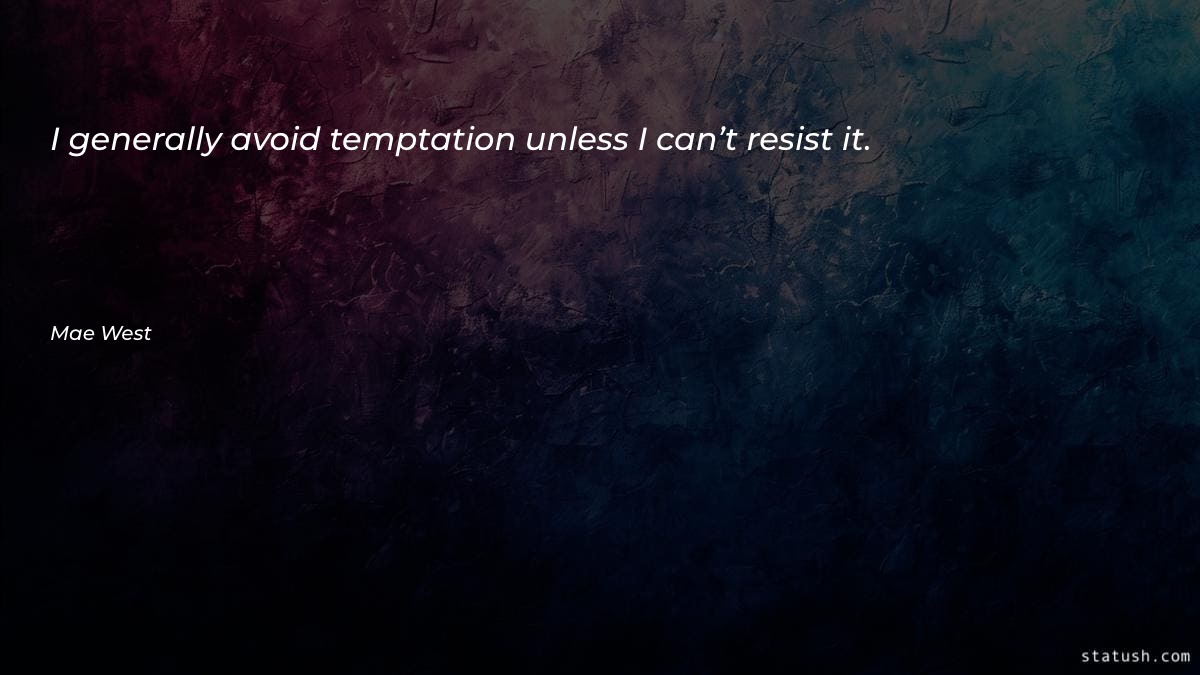
Here are 10 of the most insightful quotes attributed to Mae West, and the logic behind them.
1. On Love and Devotion
To her British lover about to climb in bed with 80-something Mae: She said that she hoped soon to be able to say what Paul Revere said — 'The British are coming'. This was the last one-liner Mae ever uttered on film.
The Meaning: This line treats emotion as something that steers decisions more than arguments do. The meaning is practical: if you ignore what you feel, you may still act—but often on autopilot. Naming the feeling is the first step toward choosing it, rather than being dragged by it.
2. On Learning
You take one thing and add it to another and you get two. Two and two is four; and five'll get you ten if you know how to work it!
The Meaning: Knowledge is framed as something that changes behavior, not something you collect like trophies. If a sentence is true but does not shift what you notice or do, it has not finished its work.
3. On Courage
When I'm caught between two evils, I generally like to take the one I never tried.
The Meaning: This line from Mae West compresses a lived tension into a single readable moment. Read it slowly: it is not asking you to agree, but to notice where the same pattern shows up in your own life. If you take it seriously, it becomes a test—what would you change if this were reliably true for you?
4. On Time and Memory
Why don't you come up sometime and see me? … Come on up, I'll tell your fortune.
The Meaning: Time is treated as something you cannot store—only spend. The meaning is that urgency and patience are both strategies; the quote asks which one matches the stakes. If you feel rushed, check whether the deadline is real or inherited.
5. On Success and Effort
She's the kind of girl who climbed the ladder of success wrong by wrong.
The Meaning: This reframes outcomes as feedback rather than verdicts. Success can hide weak processes; failure can reveal strong ones—if you study it. The meaning is to keep your identity separate from any single result.
6. On Relationships
Marriage is a fine institution, but I'm not ready for an institution.
The Meaning: This line from Mae West compresses a lived tension into a single readable moment. Read it slowly: it is not asking you to agree, but to notice where the same pattern shows up in your own life. If you take it seriously, it becomes a test—what would you change if this were reliably true for you?
7. On Time
It's not the men in your life that count, it's the life in your men.
The Meaning: This line from Mae West compresses a lived tension into a single readable moment. Read it slowly: it is not asking you to agree, but to notice where the same pattern shows up in your own life. If you take it seriously, it becomes a test—what would you change if this were reliably true for you?
8. On Action
I'm the kinda girl who works for Paramount by day, and Fox all night
The Meaning: This line from Mae West compresses a lived tension into a single readable moment. Read it slowly: it is not asking you to agree, but to notice where the same pattern shows up in your own life. If you take it seriously, it becomes a test—what would you change if this were reliably true for you?
9. On Creativity
You ought to get out of those wet clothes and into a dry martini.
The Meaning: This line from Mae West compresses a lived tension into a single readable moment. Read it slowly: it is not asking you to agree, but to notice where the same pattern shows up in your own life. If you take it seriously, it becomes a test—what would you change if this were reliably true for you?
10. On Growth
Is that a gun in your pocket, or are you just happy to see me?
The Meaning: This line from Mae West compresses a lived tension into a single readable moment. Read it slowly: it is not asking you to agree, but to notice where the same pattern shows up in your own life. If you take it seriously, it becomes a test—what would you change if this were reliably true for you?