Billy Graham, known as "America’s Pastor," was one of the most influential religious figures of the 20th century. His oratory reached millions worldwide, focusing on themes of faith, integrity, and the transition from the temporary to the eternal. His quotes often strip away complex theology to focus on simple, lived Christian principles.
Here are 10 of his most enduring quotes and the meanings behind them.
1. On Integrity
"Integrity is the glue that holds our way of life together. We must constantly strive to keep our integrity intact."
The Meaning: Graham believed that without honesty and moral consistency, society and individual lives crumble. Success without integrity is a hollow victory; he argued that protecting your character is more important than protecting your reputation.
2. On Growing Older
"A billboard in Florida said, 'I'm not getting older, I'm getting better.' I don't know about that. I'm getting older, and parts of me are wearing out. But the inner man is being renewed day by day."
The Meaning: This reflects his perspective on aging. While he was realistic about physical decline, he emphasized that spiritual growth is limitless. It’s a reminder to focus on the "internal" self that improves with wisdom and faith, rather than just the "external" body.
3. On the Influence of Mothers
"The influence of a mother upon the lives of her children cannot be measured. They may leave the home, but they never leave her heart or outgrow her prayers."
The Meaning: Graham often spoke about the foundational power of family. He believed that a mother’s quiet, persistent support and spiritual guidance create a lifelong safety net for children, regardless of how far they wander.
4. On True Happiness
"The world says that the way to be happy is to have more. Jesus says that the way to be happy is to give more."
The Meaning: This is a classic critique of consumerism. Graham argued that the "hole" people try to fill with money or possessions can only be filled by service and generosity. True fulfillment is found in what you release, not what you accumulate.
5. On Courage
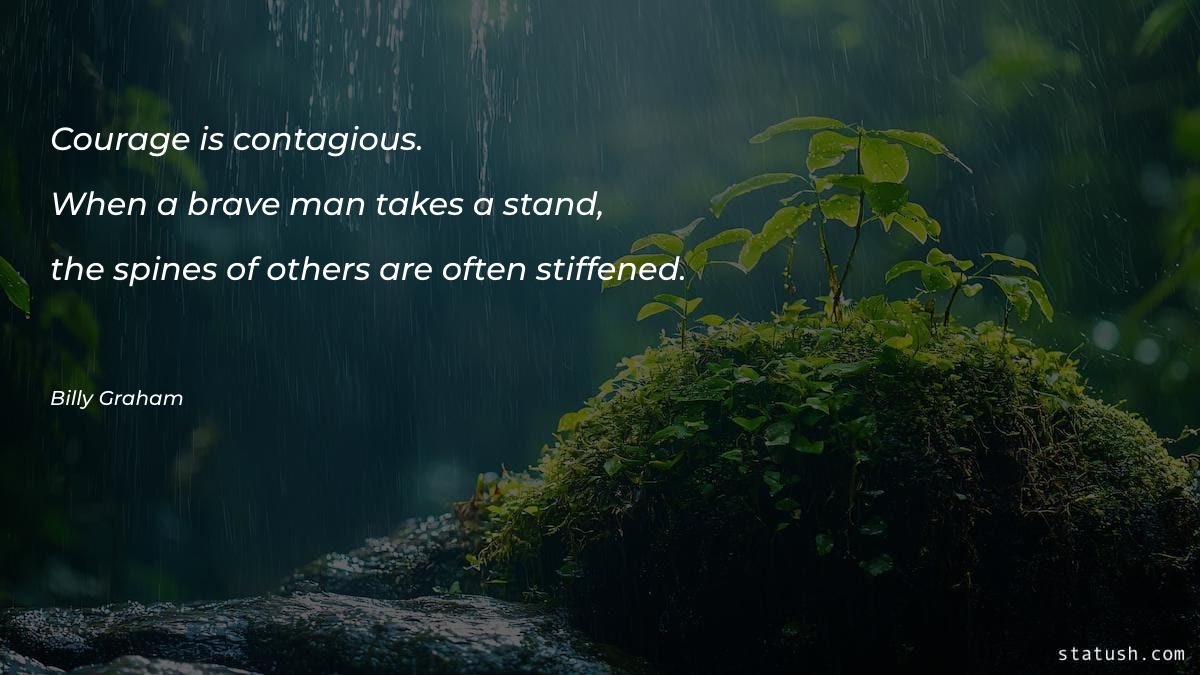
"Courage is contagious. When a brave man takes a stand, the spines of others are often stiffened."
The Meaning: Much like a ripple effect, leadership and bravery empower those who are watching. Graham believed that one person’s willingness to do the right thing—even when it's unpopular—gives everyone else the "permission" they were looking for to be brave too.
6. On Preparation for the End
"My home is in Heaven. I'm just traveling through this world."
The Meaning: This quote defines Graham's "pilgrim" mindset. He viewed earthly life as a temporary journey or a "hotel stay." This perspective allowed him to stay detached from material greed and focused on what he believed were eternal values.
7. On Knowledge vs. Wisdom
"We are suffering from a 'poverty of spirit' that stands in glaring contrast to our scientific and technological abundance."
The Meaning: Graham warned that humanity was becoming smarter (technologically) but not necessarily better (morally). He cautioned that all the "gadgets" in the world cannot solve the fundamental human problems of hatred, loneliness, or lack of purpose.
8. On Hardship
"Mountaintops are for views and inspiration, but fruit is grown in the valleys."
The Meaning: Everyone loves the "peaks" of life—the success and the joy. However, Graham pointed out that character, patience, and "fruit" (spiritual growth) only develop during the low points and the struggles of the "valley."
9. On Divine Love
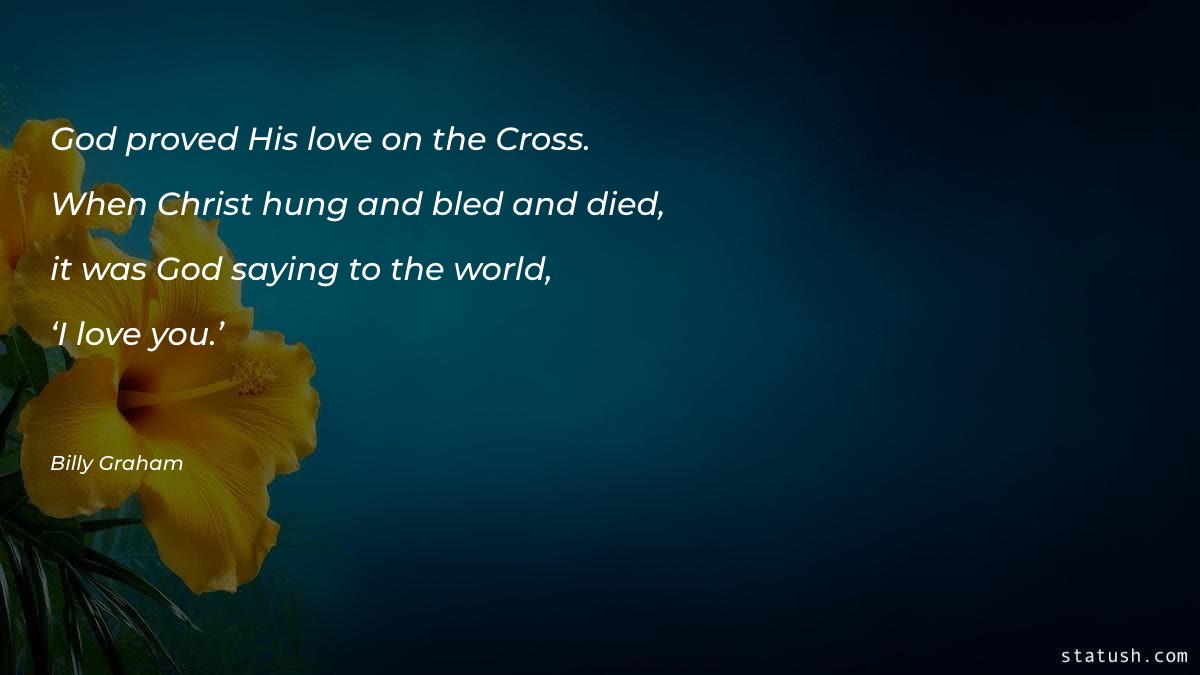
"God proved His love on the Cross. When Christ hung, and bled, and died, it was God saying to the world, 'I love you.'"
The Meaning: For Graham, love wasn't just a feeling; it was a historical action. He taught that the ultimate proof of love is sacrifice. It’s a reminder that true love is measured by what one is willing to give up for the sake of another.
10. On Legacy
"The greatest legacy one can pass on to one's children and grandchildren is not money or other material things accumulated in one's life, but rather a legacy of character and faith."
The Meaning: Financial inheritance is temporary and can be easily spent. However, an inheritance of values—honesty, faith, and kindness—provides a compass that helps future generations navigate life long after the money is gone.