Blaise Pascal was a 17th-century French mathematician, physicist, and philosopher who balanced a brilliant scientific mind with deep spiritual inquiry. His most famous work, Pensées, is a collection of fragments that explore the human condition, the limits of reason, and the necessity of faith.
Here are 10 of his most profound quotes and the meanings behind them.
1. On Human Restlessness
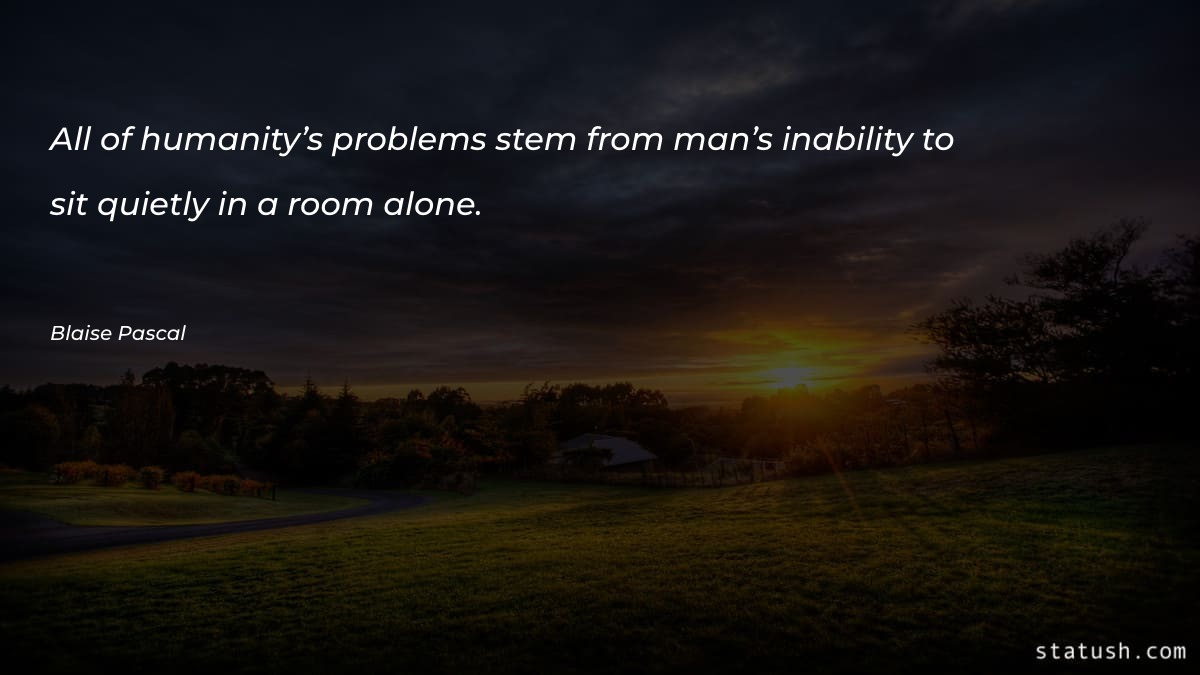
"All of humanity's problems stem from man's inability to sit quietly in a room alone."
The Meaning: Pascal observed that people are constantly seeking "diversion"—noise, work, or entertainment—to avoid facing their own internal anxieties and the reality of their mortality. True self-awareness and peace can only be found when we stop running from our own thoughts.
2. On the Limits of Logic
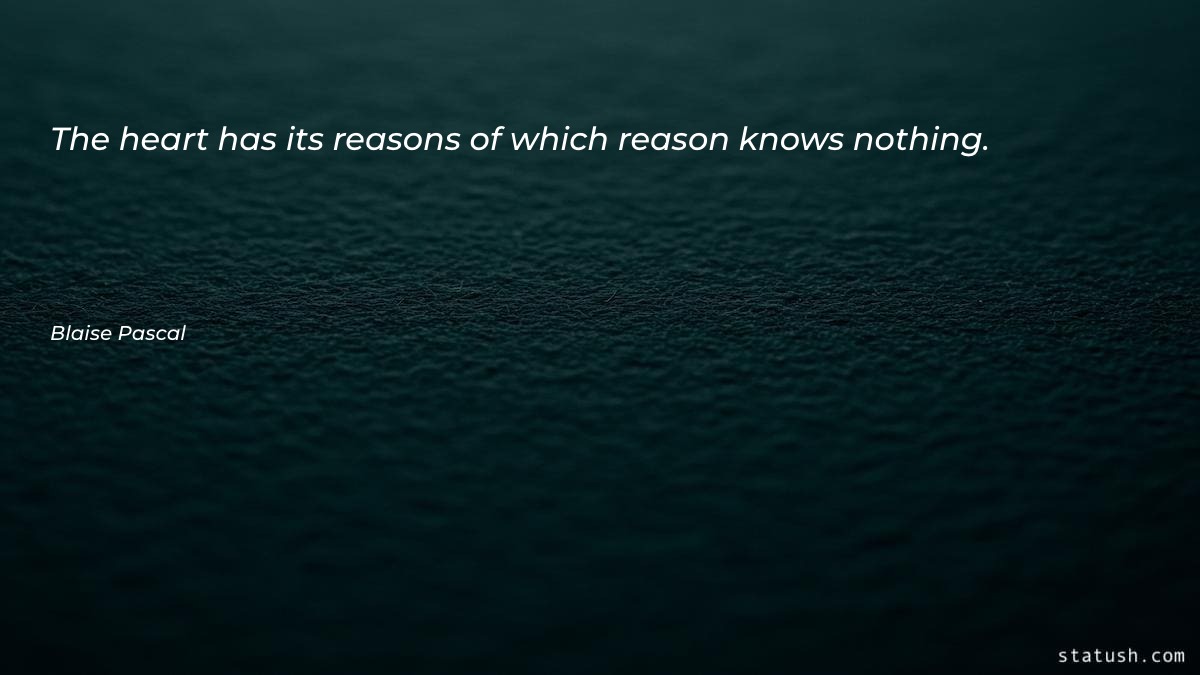
"The heart has its reasons which reason knows nothing of."
The Meaning: As a world-class mathematician, Pascal understood logic better than most, yet he argued that it has boundaries. There are fundamental truths—like love, intuition, and faith—that cannot be proven with an equation but are felt deeply and authentically by the "heart."
3. On Persuasion
"People are generally better persuaded by the reasons which they themselves have discovered than by those which have come into the mind of others."
The Meaning: This is a masterclass in psychology. If you want to change someone's mind, you shouldn't lecture them. Instead, guide them with questions so they reach the conclusion on their own. We value our own "discoveries" far more than someone else's "advice."
4. On Perspective
"Justice and truth are two such subtle points that our instruments are too blunt to touch them exactly."
The Meaning: Pascal was humble about human capability. He believed that while absolute truth and perfect justice exist, humans are flawed and biased. Our "instruments"—our senses and our laws—are often too clumsy to capture the full, complex reality of the world.
5. On Intellectual Humility
"Since we cannot be universal and know all that is to be known of everything, we ought to know a little about everything."
The Meaning: This is a defense of the "Renaissance Man" ideal. Pascal argues against over-specialization. Because we can never be "god-like" in our knowledge of a single subject, it is better to have a broad, well-rounded understanding of the world to better navigate life.
6. On Human Contradiction
"What a chimera then is man! What a novelty! What a monster, what a chaos, what a contradiction, what a prodigy!"
The Meaning: Pascal viewed humans as being suspended between "nothingness" and "infinity." We are capable of great kindness and great cruelty; we are both "the glory and the scum of the universe." To understand yourself, you must accept your own inherent contradictions.
7. On Brevity and Clarity
"I have made this letter longer than usual because I have not had time to make it shorter."
The Meaning: This is a famous commentary on the difficulty of editing. It takes very little effort to be wordy, but it takes significant time and mental discipline to be concise. True mastery of communication is the ability to strip away the unnecessary.
8. On Vanity
"We are so presumptuous that we should like to be known by all the world, even by people who will come after us when we are no more."
The Meaning: Pascal critiqued the human desire for "fame" and "legacy." He saw it as a form of vanity—an attempt to achieve a false kind of immortality. He suggests that we should focus more on being virtuous in the present than being remembered in the future.
9. On True Greatness
"The more intellect one has, the more one finds that there are many original men. Commonplace people see no difference between men."
The Meaning: As your own intelligence and sensitivity grow, you begin to see the unique brilliance in every person you meet. Only the "commonplace" or unobservant mind thinks that everyone is the same. Wisdom allows you to see the "originality" in others.
10. On Sincerity
"Do you wish people to believe good of you? Don't speak."
The Meaning: This is a warning against self-promotion. If you tell people how great or virtuous you are, they will instinctively doubt you. If you simply act with virtue and say nothing, your actions will eventually speak for you with a far greater authority.