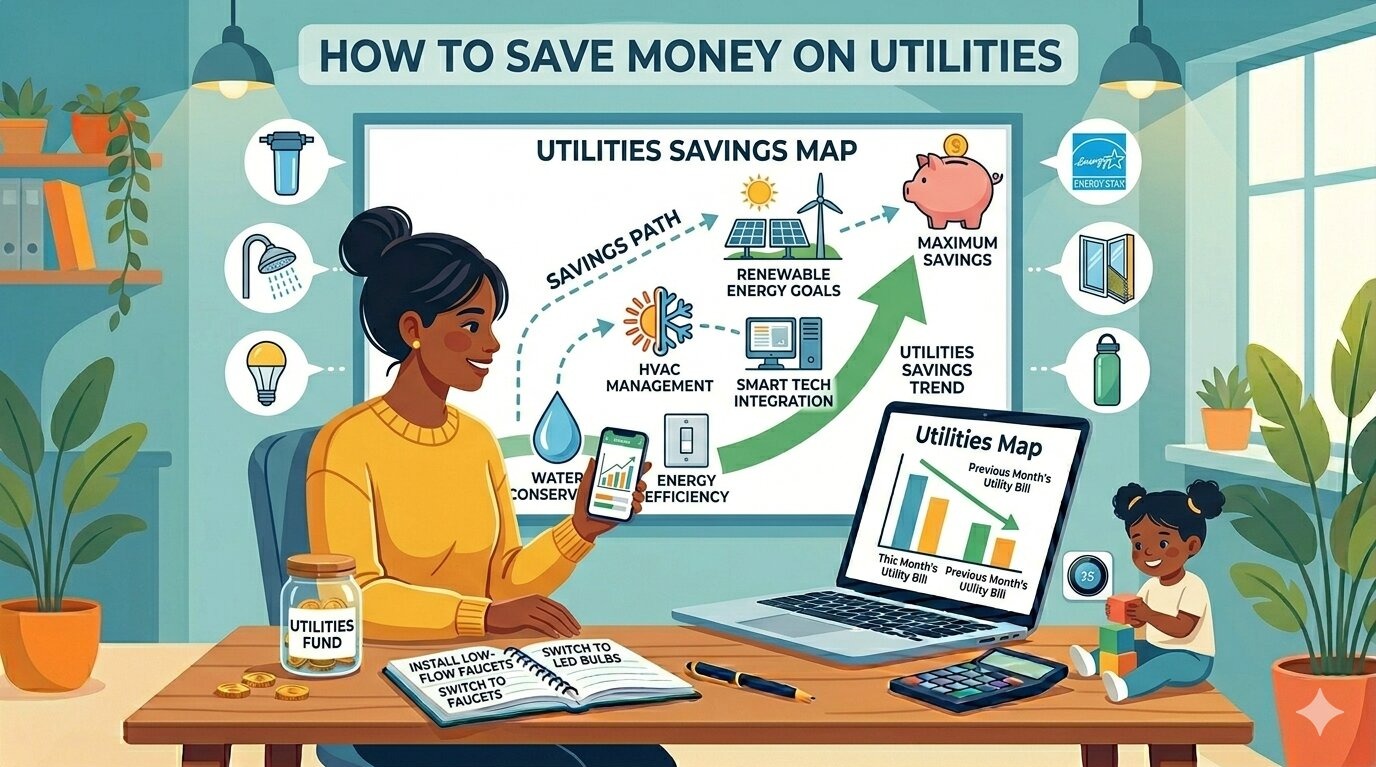
Utility bills are one of those expenses that feel unavoidable.
Electricity, water, gas, internet—these are essentials. You can’t eliminate them, but you can definitely reduce how much you spend on them.
The problem is, most people don’t pay attention to these costs because they seem fixed. But small changes in usage habits can lead to significant savings over time.
Let’s break down practical ways to save money on utilities without compromising your lifestyle.
Why Utility Costs Add Up Quickly
Utility expenses may seem small individually, but together they form a large portion of monthly spending.
Typical utility costs include:
- Electricity
- Water
- Gas
- Internet and mobile bills
Here’s a simple example:
| Utility | Monthly Cost | Yearly Cost |
|---|---|---|
| Electricity | ₹3,000 | ₹36,000 |
| Internet | ₹800 | ₹9,600 |
| Gas | ₹1,000 | ₹12,000 |
| Water | ₹500 | ₹6,000 |
| Total | ₹5,300 | ₹63,600 |
That’s a significant amount—especially when there’s room to reduce it.
If you want to improve overall spending, read
How to Reduce Monthly Expenses Quickly
https://statush.com/money/how-to-reduce-monthly-expenses-quickly
Step 1: Track Your Utility Usage
You can’t reduce what you don’t measure.
Start by reviewing your last 3–6 months of utility bills:
- Identify patterns
- Notice seasonal changes
- Spot unusual spikes
For example:
A sudden increase in electricity bills could mean inefficient appliances or excessive usage.
To build better awareness, read
How to Track Your Spending Effectively
https://statush.com/money/how-to-track-your-spending-effectively
Step 2: Reduce Electricity Consumption
Electricity is usually the biggest utility expense.
Simple ways to reduce usage:
- Turn off lights and appliances when not in use
- Use LED bulbs instead of traditional ones
- Limit air conditioner usage or optimize settings
- Unplug devices when idle
Real-world example:
Switching to LED bulbs can reduce lighting costs by up to 50–70% over time.
Step 3: Optimize Air Conditioner Usage
In many homes, air conditioning is the main reason for high electricity bills.
Practical tips:
- Set AC temperature to 24–26°C
- Use fans along with AC
- Keep doors and windows closed
- Service your AC regularly
Even small adjustments can significantly reduce power consumption.
Step 4: Save Water Efficiently
Water bills may not be as high, but waste adds up.
Simple changes:
- Fix leaks immediately
- Use water-efficient fixtures
- Avoid running taps unnecessarily
- Use washing machines with full loads
Saving water also reduces energy usage (especially for heating).
Step 5: Reduce Gas Consumption
Cooking gas is another area where small habits matter.
Tips to save gas:
- Use pressure cookers when possible
- Keep burners clean
- Cover pots while cooking
- Plan meals to reduce cooking time
These small changes can lower gas usage without affecting your routine.
Step 6: Review Internet and Mobile Plans
Many people overpay for internet and mobile services.
Ask yourself:
- Am I using the full data plan?
- Can I switch to a cheaper plan?
- Are there better offers available?
Switching plans or providers can lead to instant savings.
Step 7: Avoid Standby Power Consumption
Many devices consume electricity even when not in use.
Examples:
- TVs
- Chargers
- Set-top boxes
This is called “phantom power” or standby consumption.
Solution:
- Turn off devices completely
- Use power strips to disconnect multiple devices
Over time, this can reduce your electricity bill noticeably.
Step 8: Invest in Energy-Efficient Appliances
While this requires upfront cost, it saves money long-term.
Look for:
- 5-star rated appliances
- Energy-efficient refrigerators
- Inverter ACs
Example:
An energy-efficient refrigerator may cost more initially but can save thousands of rupees annually.
Step 9: Build Utility-Saving Habits
Consistency is key.
Here are simple habits:
| Habit | Impact |
|---|---|
| Turning off unused devices | Reduces electricity bills |
| Fixing leaks quickly | Saves water and money |
| Monitoring monthly bills | Prevents overspending |
| Choosing efficient appliances | Long-term savings |
If you want to strengthen money habits overall, read
Simple Money Habits That Improve Finances
https://statush.com/money/simple-money-habits-that-improve-finances
Real-Life Example: Small Changes, Big Savings
A family spends ₹6,000/month on utilities.
After making simple changes:
- Reduced AC usage
- Switched to LED bulbs
- Optimized internet plan
New monthly cost: ₹4,500
Savings: ₹1,500/month
Yearly savings: ₹18,000
The lifestyle didn’t change—just the habits did.
Common Mistakes to Avoid
While trying to save on utilities, avoid these mistakes:
- Ignoring small usage habits
- Not reviewing bills regularly
- Using outdated appliances
- Assuming costs are fixed
Every small improvement counts.
Final Thoughts
Utility bills may seem unavoidable—but they are controllable.
With simple changes:
- You reduce monthly expenses
- You build better habits
- You increase overall savings
Start with one or two changes and build from there.
Because saving on utilities isn’t about sacrifice—it’s about smart usage.