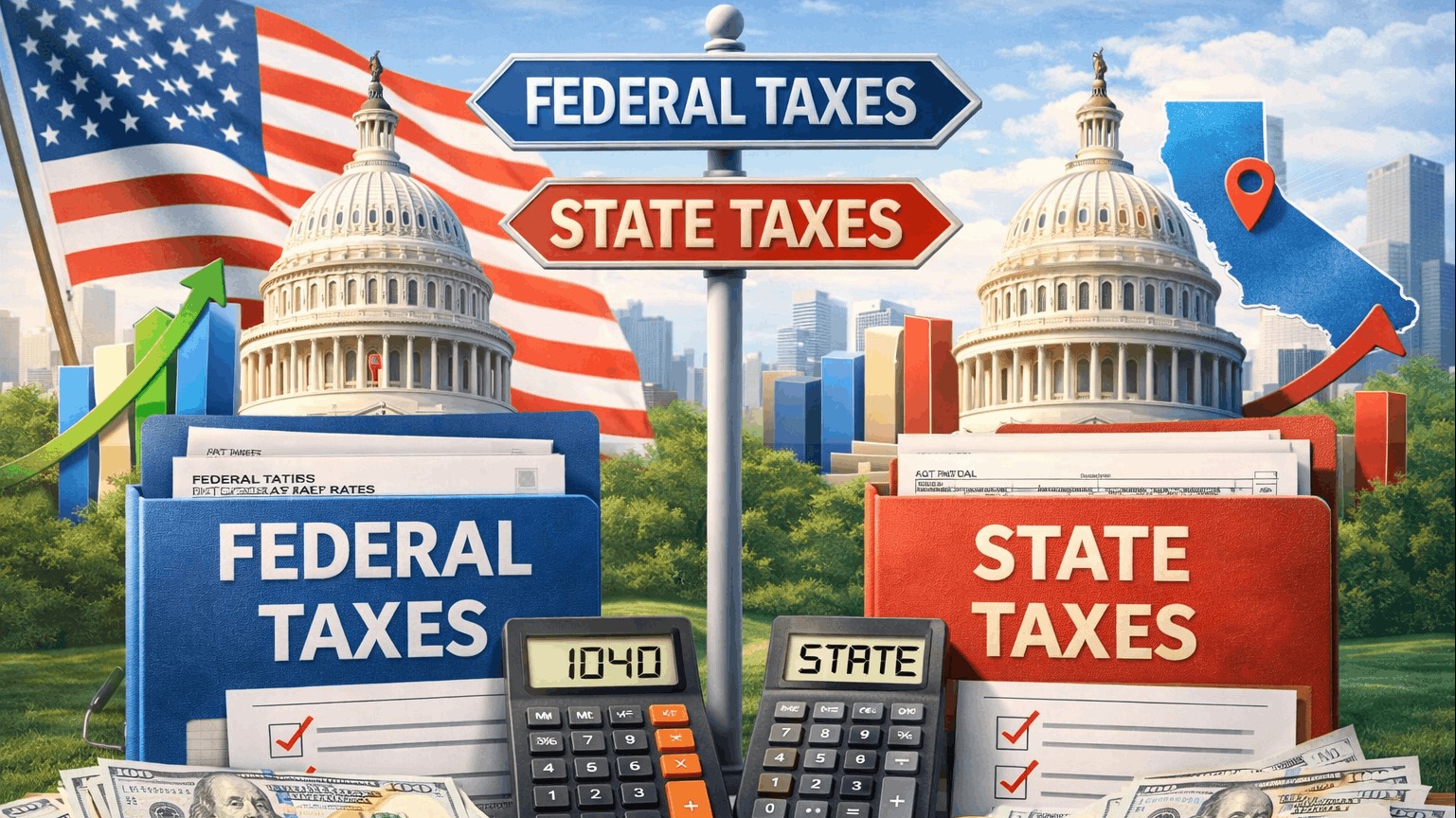
f you're trying to understand federal vs state taxes, you're not alone. Many taxpayers in the U.S. get confused about why they pay taxes to multiple levels of government.
In simple terms:
- Federal taxes go to the national government
- State taxes go to individual state governments
Both play a crucial role in funding public services—but they work differently.
What Are Federal Taxes?
Federal taxes are imposed by the U.S. government and collected by the Internal Revenue Service (IRS).
Key Features of Federal Taxes:
- Apply to all U.S. taxpayers
- Based on a progressive tax system
- Same rules across all states
What Federal Taxes Fund:
- National defense
- Social Security & Medicare
- Federal infrastructure
- Government programs
What Are State Taxes?
State taxes are imposed by individual states, and rules vary depending on where you live.
Key Features of State Taxes:
- Not all states have income tax
- Tax rates and rules vary widely
- Some states use flat tax rates
States With No Income Tax:
- Texas
- Florida
- Nevada
- Washington
Federal vs State Taxes: Key Differences
| Feature | Federal Taxes | State Taxes |
|---|---|---|
| Authority | U.S. Government | State Government |
| Applies To | All taxpayers | Depends on state |
| Tax Rates | Progressive (10%–37%) | Flat or progressive |
| Uniformity | Same nationwide | Varies by state |
| Filing | IRS | State tax agency |
Tax Rates Comparison
Federal Tax Rates
- Range from 10% to 37%
- Based on income brackets
State Tax Rates
- Can range from 0% to 13%+
- Some states use flat rates
Do You Have to Pay Both?
Yes, in most cases.
If you live in a state with income tax:
- You must file federal tax return
- You must file state tax return
If your state has no income tax:
- You only pay federal income tax
How Federal and State Taxes Work Together
Your total tax burden =
Federal tax + State tax + (sometimes local tax)
Example:
- Salary: $70,000
- Federal tax applied
- State tax applied (if applicable)
Key Similarities
Despite differences, both systems:
- Tax income based on earnings
- Require annual filing
- Offer deductions and credits
- Penalize late filing or non-payment
Common Mistakes to Avoid
- Ignoring state tax obligations
- Assuming all states have the same rules
- Missing deadlines for either return
- Not claiming available deductions
Which One Impacts You More?
- Federal taxes usually take a larger share
- State taxes depend on where you live
For example:
- California → higher taxes
- Texas → no state income tax
Why Understanding This Matters
Knowing the difference helps you:
- Plan your finances better
- Choose tax-friendly states
- Reduce overall tax liability
- Avoid penalties
Final Thoughts
Understanding federal vs state taxes is key to managing your income effectively.
- Federal taxes are consistent nationwide
- State taxes vary widely
- Together, they determine your total tax burden
Being aware of both ensures smarter financial and investment decisions.