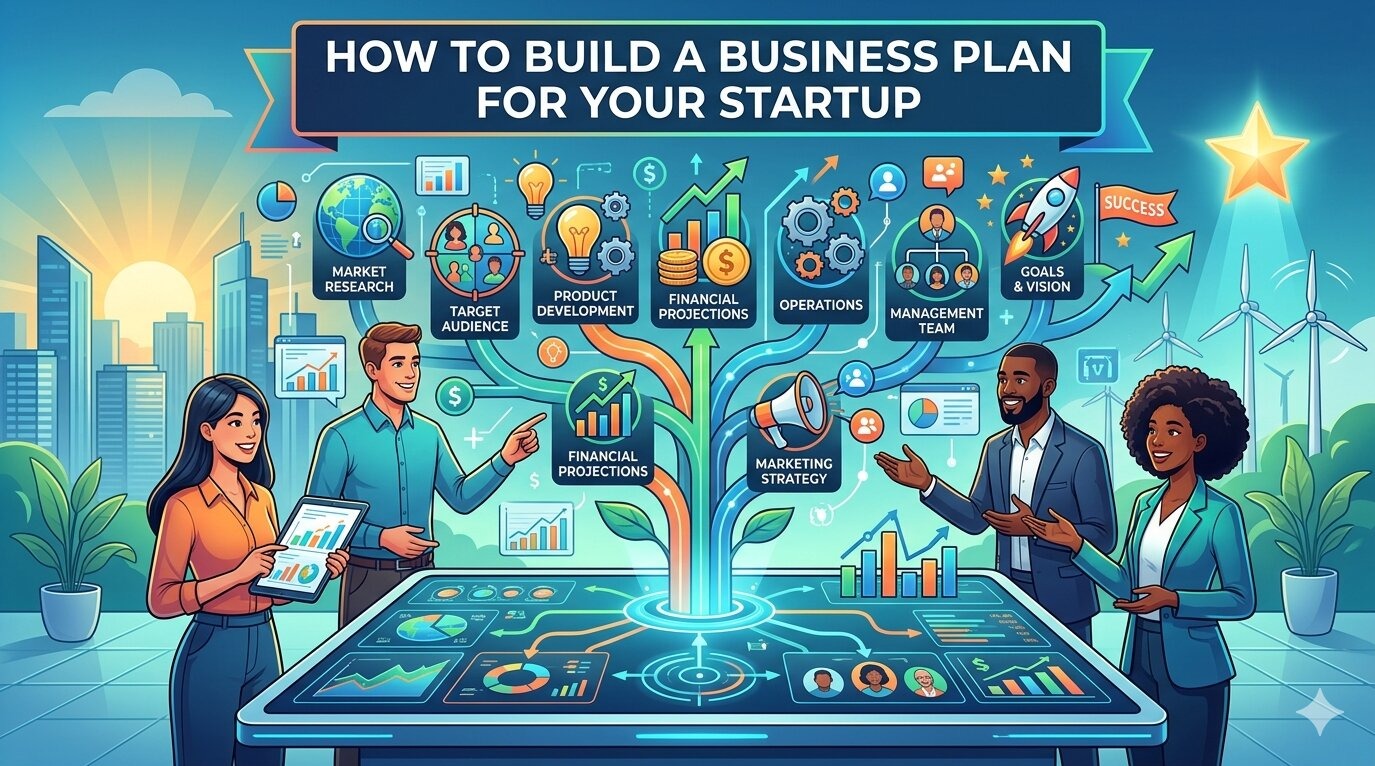
Starting a business without a plan is like building a house without a blueprint. You might make progress, but you’ll likely face confusion, delays, and costly mistakes.
A business plan doesn’t need to be complicated or formal. It just needs to give you clarity—on your idea, your customers, your strategy, and your finances.
In this guide, we’ll break down how to build a practical business plan step by step, using simple language and real-world thinking.
What Is a Business Plan?
A business plan is a clear outline of:
- What your business does
- Who your customers are
- How you will make money
- How you will grow
Simple idea:
A business plan turns your idea into a clear direction.
Why You Need a Business Plan
A good business plan helps you:
- Stay focused
- Make better decisions
- Avoid unnecessary risks
- Plan growth effectively
It’s not just for investors—it’s for you.
Step 1: Define Your Business Idea Clearly
Start with a simple explanation of your idea.
Ask:
- What am I offering?
- Who is it for?
- What problem does it solve?
Example:
“Helping small businesses get more customers through Instagram marketing”
If you’re still exploring ideas, read:
How to Find a Profitable Business Idea → https://statush.com/entrepreneur/how-to-find-a-profitable-business-idea
Step 2: Identify Your Target Audience
You can’t serve everyone.
Define:
- Age group
- Profession
- Needs and problems
Example:
| Factor | Example |
|---|---|
| Audience | Local business owners |
| Need | More customers |
| Problem | Low online visibility |
Clear audience = better strategy.
Step 3: Define Your Business Model
Your business model explains how you make money.
Examples:
- Service-based
- Product-based
- Subscription
To choose the right model, read:
How to Choose the Right Business Model → https://statush.com/entrepreneur/how-to-choose-the-right-business-model
Step 4: Outline Your Offer
Your offer is what customers will buy.
Make it clear:
- What you provide
- What result they get
- Why it’s valuable
Example:
| Weak Offer | Strong Offer |
|---|---|
| Marketing service | Get 20+ leads in 30 days |
Clarity increases sales.
Step 5: Plan Your Revenue Strategy
How will you earn money?
Define:
- Pricing
- Sales channels
- Expected income
If you need help, read:
How to Price Your Products for Profit → https://statush.com/entrepreneur/how-to-price-your-products-for-profit
Step 6: Estimate Your Costs
Understand your expenses early.
Include:
- Tools and software
- Marketing costs
- Operational expenses
Example:
| Expense | Amount |
|---|---|
| Tools | ₹2,000 |
| Marketing | ₹5,000 |
| Misc | ₹3,000 |
Total = ₹10,000
If you want to reduce costs, read:
How to Reduce Costs in Your Business → https://statush.com/entrepreneur/how-to-reduce-costs-in-your-business
Step 7: Plan Your Marketing Strategy
How will customers find you?
Options:
- Social media
- Content marketing
- Direct outreach
Start simple and focus on what works.
Step 8: Set Clear Goals
Your plan should include goals.
Examples:
- First 10 customers
- ₹50,000 revenue in 3 months
- Launch within 30 days
Clear goals create direction and motivation.
Step 9: Create a Simple Execution Plan
Break your plan into actions:
| Week | Task |
|---|---|
| Week 1 | Finalize idea + offer |
| Week 2 | Start outreach |
| Week 3 | Get first customers |
| Week 4 | Improve and scale |
Action turns planning into results.
Step 10: Keep It Flexible
Your business plan is not fixed.
You should:
- Adjust based on feedback
- Improve your strategy
- Adapt to market needs
If you’re turning your idea into action, read:
How to Turn Your Idea into a Business → https://statush.com/entrepreneur/how-to-turn-your-idea-into-a-business
Simple Business Plan Structure
Here’s a quick overview:
| Section | Focus |
|---|---|
| Idea | What you offer |
| Audience | Who you serve |
| Model | How you earn |
| Offer | What you sell |
| Finance | Costs + revenue |
| Marketing | How you grow |
Real-World Example
Let’s say someone creates a plan:
- Idea → Social media services
- Audience → Local shops
- Model → Monthly service
- Pricing → ₹5,000/month
- Goal → 10 clients
Result:
- ₹50,000/month business
Simple plan → clear execution.
Common Mistakes to Avoid
- Overcomplicating the plan
- Not taking action
- Ignoring customer feedback
- Not updating the plan
If you want to avoid mistakes, read:
Common Entrepreneur Mistakes to Avoid → https://statush.com/entrepreneur/common-entrepreneur-mistakes-to-avoid
Connect Planning with Execution
A business plan is only useful if you act on it.
To get started, read:
How to Start Your First Business Step-by-Step → https://statush.com/entrepreneur/how-to-start-your-first-business-step-by-step
Final Thoughts
A business plan doesn’t need to be perfect—it needs to be practical.
Focus on:
- Clarity over complexity
- Action over planning
- Improvement over perfection
You don’t need a 50-page document.
You need a clear direction and consistent execution.
Over time, your plan will evolve—and your business will grow with it.