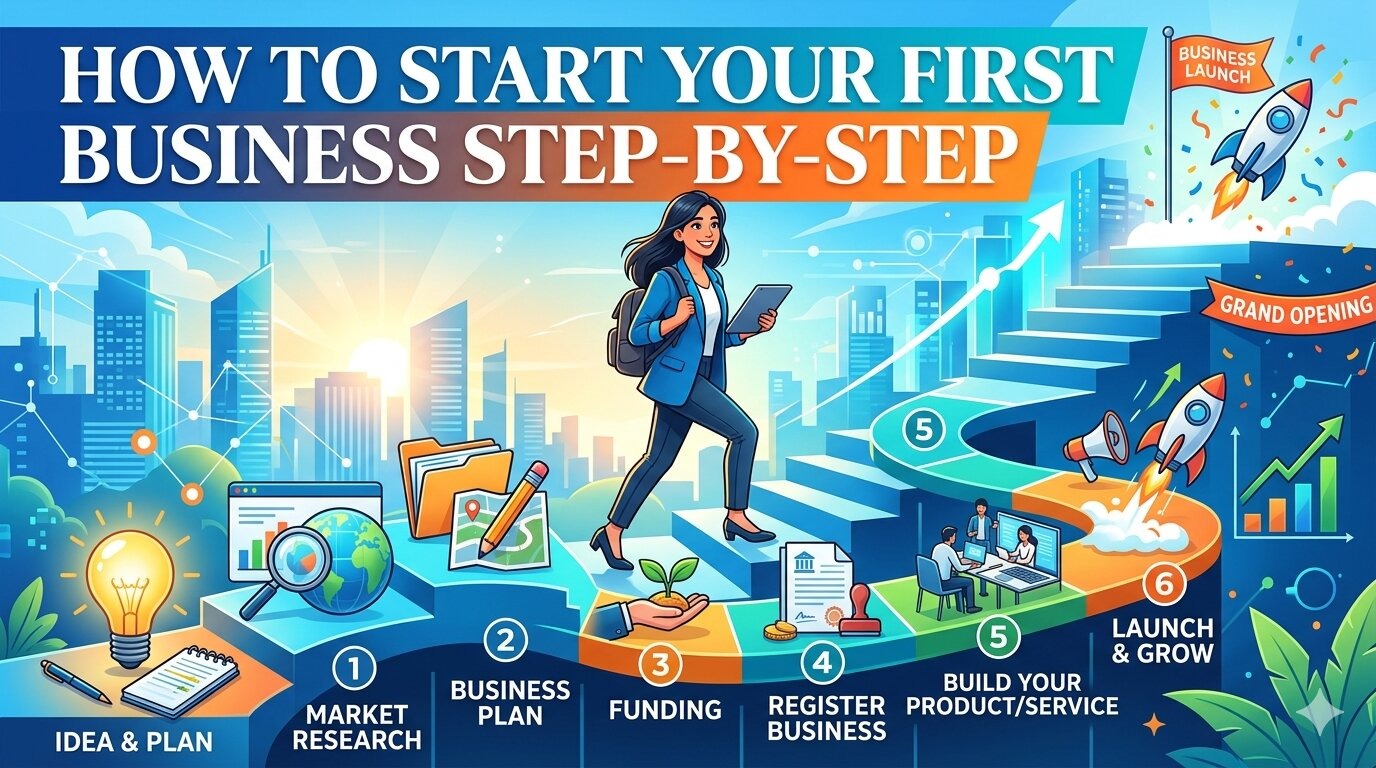
Starting your first business can feel exciting—and honestly, a bit intimidating too. There are so many things to think about: ideas, money, customers, marketing… it’s easy to feel stuck before you even begin.
The good news? You don’t need to figure everything out at once. The best way to start a business is to follow a simple, practical process—one step at a time.
Let’s break it down in a way that actually makes sense and is easy to follow.
Step 1: Start with a Clear Idea
Every business begins with an idea, but not every idea becomes a business. The key is to focus on solving a real problem.
Ask yourself:
- What problem can I solve?
- Who is facing this problem?
- Why would they pay for a solution?
Example:
Instead of saying “I want to start a clothing brand,” think:
“People want affordable, stylish oversized t-shirts with fast delivery.”
That’s a clearer, more actionable idea.
If you’re unsure about your idea, this guide can help:
How to Find a Profitable Business Idea → https://statush.com/entrepreneur/how-to-find-a-profitable-business-idea
Step 2: Validate Your Idea Before Investing
One of the biggest beginner mistakes is investing too early without testing the idea.
Validation simply means checking if people actually want what you’re offering.
Here’s how you can do it:
- Talk to potential customers
- Post about your idea on social media
- Offer a pre-order or trial version
Real-world example:
Before launching a full bakery, someone might start by selling homemade cakes through Instagram. If people buy, the idea is validated.
Step 3: Define Your Target Audience
You can’t sell to everyone. Trying to do that usually leads to weak results.
Instead, focus on a specific group:
- Age group
- Location
- Interests
- Income level
Example:
Instead of “fitness services,” target:
“Busy professionals in their 30s who want home workout plans.”
This clarity makes your marketing much easier.
Step 4: Choose a Simple Business Model
You don’t need something complex to get started. Keep it simple.
Here are a few beginner-friendly models:
| Model | How It Works | Example |
|---|---|---|
| Service-based | Sell your skills | Freelancing, consulting |
| Product-based | Sell physical/digital products | T-shirts, ebooks |
| Reselling | Buy and sell products | Dropshipping |
| Commission-based | Earn via referrals | Affiliate marketing |
Start with one model. You can expand later.
Step 5: Start Small (Minimum Viable Version)
Instead of building a perfect business, create a basic version—often called an MVP (Minimum Viable Product).
This means:
- Basic website or even just WhatsApp/Instagram
- Limited products/services
- Small customer base
Example:
You don’t need a full app to start a food business. A WhatsApp menu and local delivery is enough to begin.
Step 6: Set Up Basic Online Presence
In today’s world, your online presence is your storefront.
Start with:
- Instagram page
- Google listing (if local)
- Simple website (optional at start)
Focus on clarity:
- What you offer
- Who it’s for
- How to buy/contact
Step 7: Get Your First Customers
This is the most important step—and where most beginners hesitate.
Start with:
- Friends and family
- Social media posts
- Direct outreach (DMs, WhatsApp)
Practical tip:
Don’t wait for customers to come to you. Go to them.
Your first 10 customers matter more than your first 1,000 followers.
Step 8: Learn Sales and Communication
You don’t need to be a “salesperson,” but you do need to communicate value clearly.
Focus on:
- Explaining benefits (not just features)
- Understanding customer needs
- Handling objections confidently
Example:
Instead of saying “This is a premium product,” say:
“This saves you time and lasts longer, so you don’t need to replace it often.”
Step 9: Manage Money Smartly
Even a small business needs basic financial discipline.
Keep track of:
- Income
- Expenses
- Profit
Simple rule:
Don’t mix personal and business money.
You don’t need complex tools—Excel or a notebook works fine in the beginning.
Step 10: Improve Based on Feedback
Your first version won’t be perfect—and that’s okay.
Ask customers:
- What did they like?
- What can improve?
- Would they recommend you?
Then refine your product or service.
If you’re still shaping your idea into something bigger, read:
How to Turn Your Idea into a Business → https://statush.com/entrepreneur/how-to-turn-your-idea-into-a-business
Step 11: Scale Gradually (Not Too Fast)
Once you see consistent demand:
- Increase production
- Improve marketing
- Automate small tasks
Avoid scaling too early—it can create unnecessary pressure and losses.
Step 12: Stay Consistent and Patient
This is where most people fail—not because their idea is bad, but because they quit too soon.
Business growth takes time.
Real-world truth:
Many businesses take 6–12 months just to become stable.
Stay consistent with:
- Marketing
- Customer service
- Improvement
Final Thoughts
Starting your first business doesn’t require perfection—it requires action.
Focus on:
- Solving real problems
- Starting small
- Learning as you go
You’ll make mistakes. That’s part of the process. What matters is that you keep moving forward.
If you’re just starting and worried about money, this will help:
How to Start a Business with No Money → https://statush.com/entrepreneur/how-to-start-a-business-with-no-money