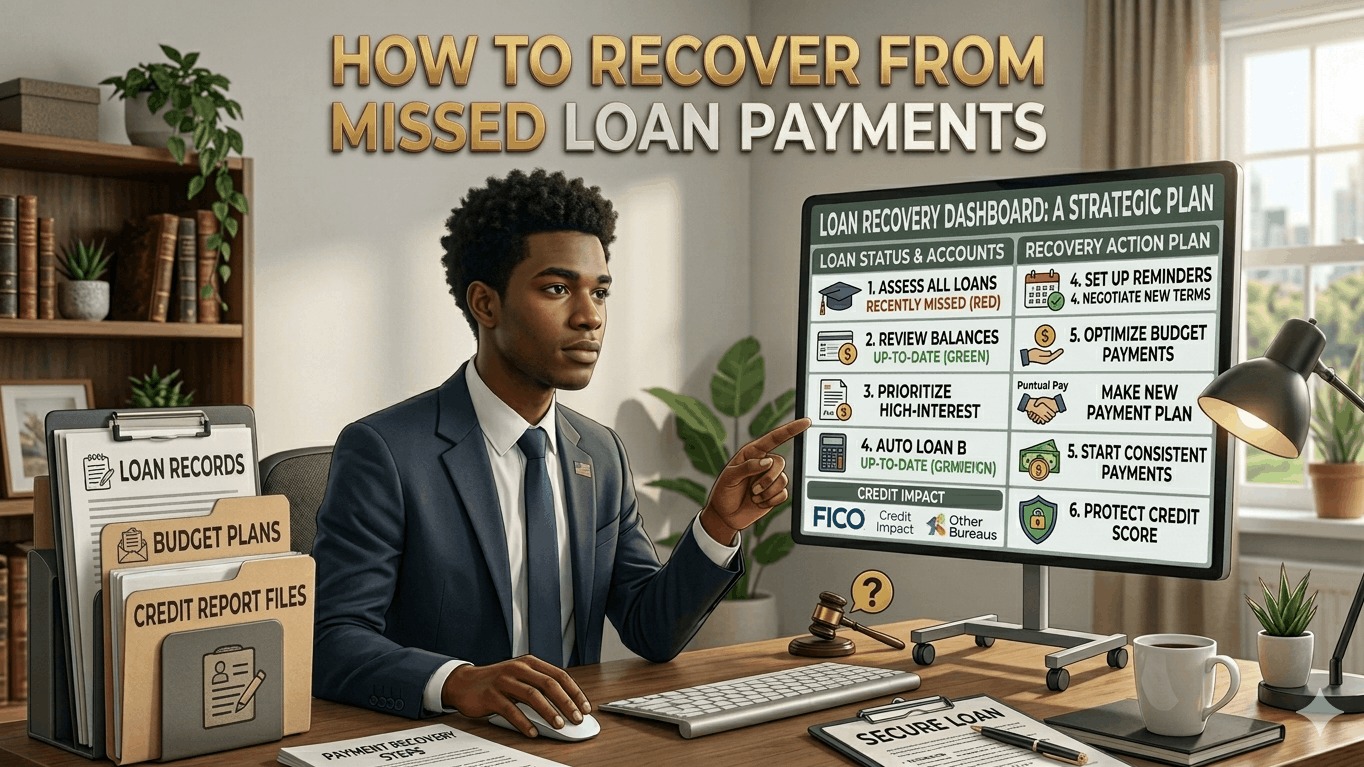
In 2026, missing a loan payment can feel like a financial emergency, but it is a situation with a clear recovery path. With the 2026 implementation of the Working Families Tax Cuts Act and new CFPB consumer protections, borrowers have more tools than ever to bounce back.
Whether you are 24 hours late or 60 days behind, the following steps will help you minimize damage to your credit and regain control of your debt.
1. The Immediate Response (Days 1–29)
In the U.S., a payment is generally not reported to credit bureaus until it is 30 days past due. This is your "Golden Window" to fix the mistake without long-term credit damage.
- Pay the Principal Immediately: Even if you can't pay the late fee, getting the base payment in stops the clock on delinquency.
- The "First-Time" Waiver: If this is your first missed payment, call your lender immediately. In 2026, most major banks use automated systems that will waive the late fee (often $25–$40) just for asking.
- Check the Grace Period: Many 2026 loan contracts (especially for autos and mortgages) have a built-in 10-to-15 day grace period where no late fees are assessed at all.
2. Damage Control (Days 30–90)
Once a payment crosses the 30-day mark, it will likely appear on your credit report, potentially dropping your score by 50 to 100 points.
- Request "Re-aging": If you can bring the account current, ask your lender to "re-age" the account. This essentially "restarts" your on-time streak, though the past late mark may stay.
- Forbearance & Deferment: In 2026, updated federal guidelines encourage lenders to offer short-term "hardship pauses." This allows you to skip 1–3 payments and move them to the end of the loan term, preventing further delinquency marks.
- Goodwill Letters: Write a formal letter explaining the hardship (medical, job loss, etc.). With the shift toward more "empathetic" AI-driven credit scoring in 2026, lenders are increasingly willing to remove a single 30-day late mark for loyal customers.
3. Student Loan Specifics (2026 Reforms)
If your missed payment is on a federal student loan, 2026 brings major relief under the "Fresh Start" and RAP (Repayment Assistance Plan) programs:
- The 2026 Collection Pause: As of early 2026, the Department of Education has temporarily delayed involuntary collections (like wage garnishment) to allow borrowers to move into the new RAP plan.
- Rehabilitation 2.0: You now have a second chance to "rehabilitate" a defaulted loan by making nine on-time payments, which removes the default status from your credit report.
4. Preventing Future Misses: The 2026 Setup
- Align Due Dates with Payday: Most 2026 lending apps allow you to change your due date. If you get paid on the 1st and 15th, move your largest loan payment to the 3rd.
- The "Loan Buffer" Account: Open a high-yield savings account specifically for loan payments. Set an auto-transfer for 1/4 of your total monthly debt payments every week.
- Push Notifications: Enable "Low Balance" alerts in your banking app so you know before an autopay is about to fail due to insufficient funds.