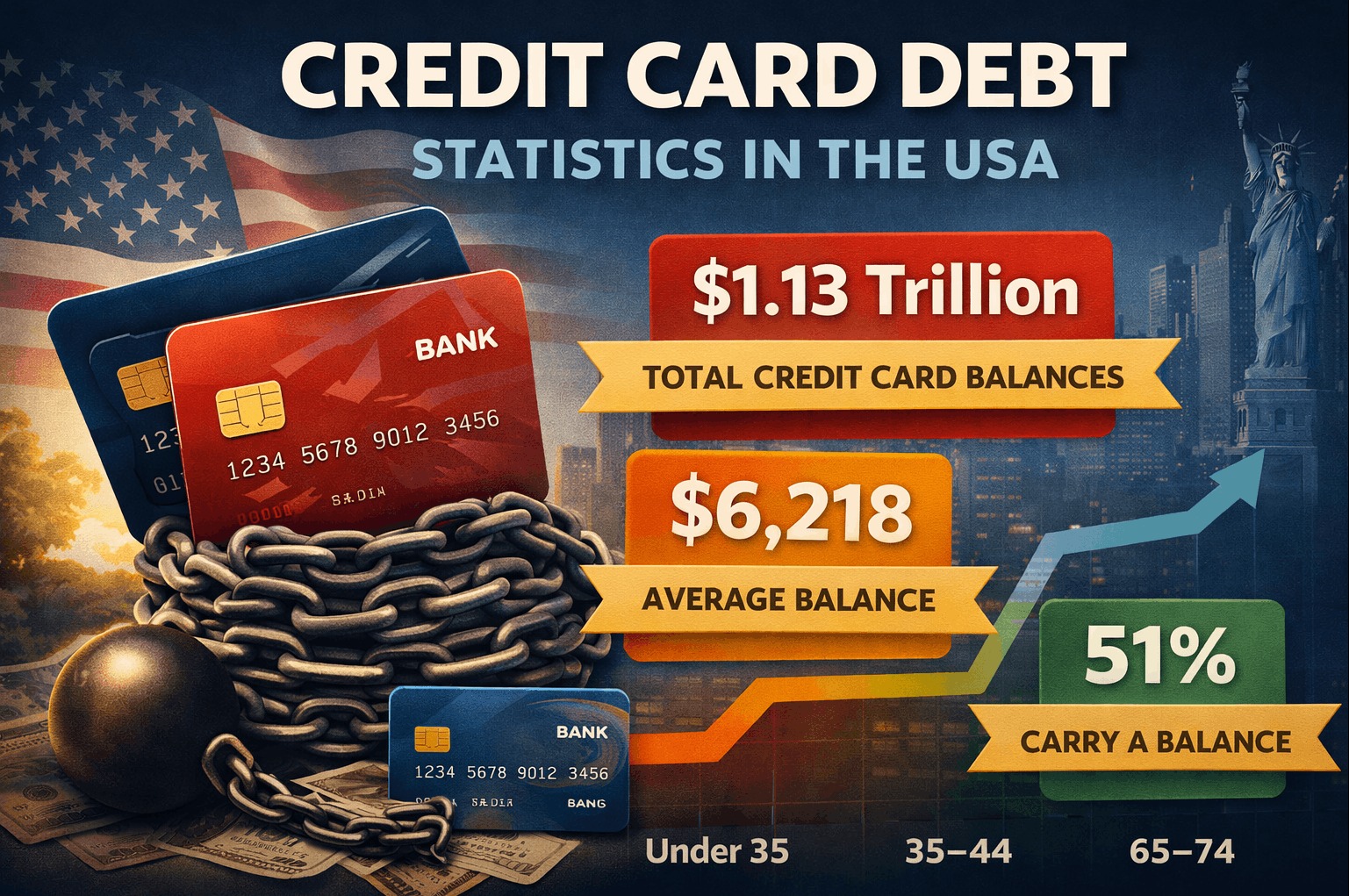
Credit card debt has become a central part of the financial landscape in the United States. For many households, it’s both a convenience and a burden—offering short-term flexibility but often creating long-term financial pressure.
Understanding credit card debt statistics isn’t just about numbers. It helps you see how people borrow, spend, and manage money—and where common financial challenges arise. More importantly, it gives you perspective on how your own situation compares and what you can do to stay in control.
What Is Credit Card Debt?
Credit card debt is the balance you carry on your credit cards after making purchases and not paying the full amount by the due date.
When balances are not paid in full:
- Interest is charged on the remaining amount
- Debt can grow quickly over time
- Minimum payments extend repayment periods
This type of debt is considered high-interest, making it one of the most expensive forms of borrowing.
The Big Picture: Credit Card Debt in the USA
Credit card debt in the U.S. has grown steadily over the years, driven by consumer spending, inflation, and easy access to credit.
At a national level:
- Total credit card debt reaches hundreds of billions of dollars
- Average balances vary widely depending on income and age
- Many households carry debt month to month
These trends show that credit card usage is widespread—but so is the challenge of managing it.
Average Credit Card Debt by Age
Debt levels vary significantly depending on life stage. Younger individuals tend to have lower balances, while middle-aged groups often carry higher debt due to increased expenses.
| Age Group | Debt Pattern | Explanation |
|---|---|---|
| 18–29 | Lower balances | Limited income, early credit usage |
| 30–44 | Increasing debt | Family expenses, housing, lifestyle costs |
| 45–59 | Highest debt levels | Peak spending years, multiple financial responsibilities |
| 60+ | Declining debt | Reduced spending, focus on debt payoff |
Why Credit Card Debt Increases Over Time
Debt doesn’t appear overnight—it builds gradually due to a combination of financial habits and external factors.
Lifestyle Inflation
As income increases, spending often increases as well. Many households rely on credit cards to maintain a certain lifestyle, especially during periods of rising costs.
Unexpected Expenses
Medical bills, car repairs, or emergencies can push people to rely on credit cards when savings are insufficient.
Minimum Payment Trap
Credit cards allow you to make small minimum payments, but this can significantly extend repayment time and increase interest costs.
Real-World Example
Let’s say you have a credit card balance of $5,000 with an interest rate of 20%.
- Minimum payment: around $100–$150 per month
- Total repayment time: several years
- Total interest paid: potentially thousands of dollars
This shows how quickly debt can grow if not managed properly.
Interest Rates and Their Impact
Credit card interest rates are typically much higher than other types of loans.
| Factor | Impact on Debt |
|---|---|
| High interest rate | Increases total repayment amount |
| Compound interest | Causes debt to grow faster |
| Late fees | Adds additional costs |
Because interest compounds, unpaid balances can grow even if you stop spending.
Credit Card Debt vs Other Debt Types
Not all debt is equal. Credit card debt is generally more expensive than other forms of borrowing.
| Debt Type | Interest Rate Level | Risk Level |
|---|---|---|
| Credit Card Debt | Very high | High |
| Mortgage | Low | Moderate |
| Student Loans | Moderate | Lower |
This is why financial experts often recommend paying off credit card debt first.
The Link Between Debt and Financial Stress
Credit card debt doesn’t just affect finances—it also impacts mental well-being.
High debt levels can lead to:
- Stress and anxiety
- Reduced ability to save
- Delayed financial goals
For many households, debt becomes a cycle that’s difficult to break without a clear plan.
How Debt Affects Wealth Building
Carrying high-interest debt can significantly slow down wealth creation.
Instead of investing money for growth, you’re paying interest to lenders.
Example
- Investing $200/month could build long-term wealth
- Using that same $200 to pay interest delays financial progress
To understand this impact:
How Taxes Impact Wealth Building – https://statush.com/finance-statistics/how-taxes-impact-wealth-building
Common Patterns in Credit Card Usage
Across the U.S., certain patterns appear consistently:
- Many people carry balances instead of paying in full
- Credit cards are often used for everyday expenses
- Debt tends to increase during economic uncertainty
These patterns highlight the importance of financial awareness and discipline.
Strategies to Manage and Reduce Debt
Reducing credit card debt requires a structured approach.
Focus on High-Interest Debt First
Paying off the highest-interest balances reduces overall costs.
Avoid Minimum-Only Payments
Paying more than the minimum speeds up repayment and reduces interest.
Track Spending Carefully
Understanding where your money goes helps prevent unnecessary debt.
Use a Debt Repayment Plan
Structured plans can make repayment more manageable.
You can calculate your strategy here:
Debt Payoff Calculator – https://statush.com/debt-payoff-calculator
Preventing Future Debt
Managing current debt is important—but preventing future debt is even more valuable.
This involves:
- Building an emergency fund
- Using credit responsibly
- Living within your means
A strong financial foundation reduces reliance on credit cards over time.
Tools to Stay Financially Organized
Tracking your finances helps you stay in control.
- Net Worth Calculator – https://statush.com/net-worth-calculator
- Savings Goal Calculator – https://statush.com/savings-goal-calculator
- Paycheck Calculator – https://statush.com/paycheck-calculator
These tools provide clarity and help you make better financial decisions.
A Practical Perspective
Instead of focusing only on national statistics, it’s more useful to evaluate your personal situation.
Ask yourself:
- Am I carrying high-interest debt?
- Am I making progress in reducing it?
- Am I avoiding unnecessary spending?
These questions matter more than how your debt compares to national averages.
Final Thoughts
Credit card debt statistics in the USA reveal an important reality: while credit cards are widely used, many people struggle to manage them effectively.
The key takeaway is simple:
- Credit cards are a tool, not free money
- Interest can quickly turn small balances into large debt
- Consistent repayment and discipline are essential
When used wisely, credit cards can be helpful. But without proper management, they can become one of the biggest obstacles to financial freedom.