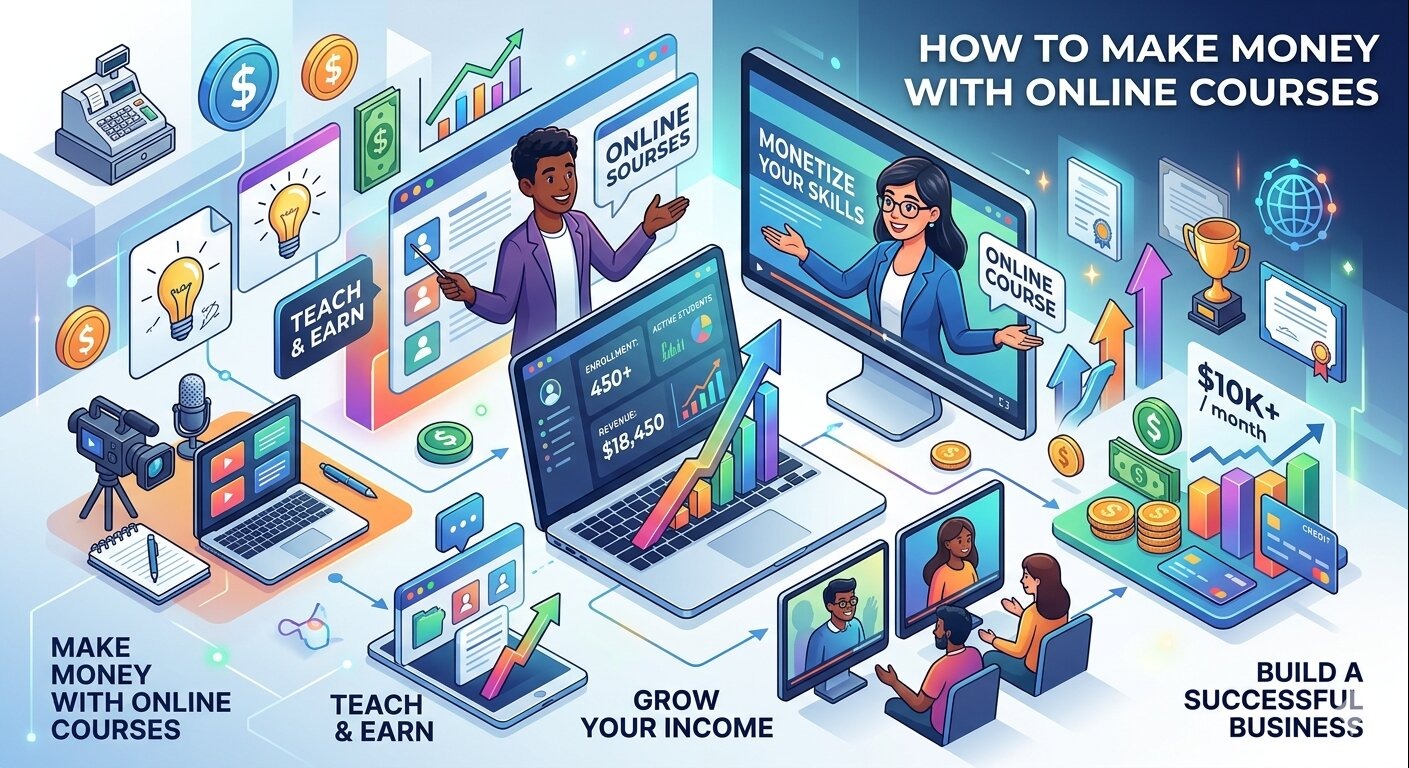
If there’s one side hustle that combines high income potential + scalability + long-term growth, it’s creating and selling online courses.
You create something once—and sell it again and again.
No inventory. No shipping. No ongoing effort for every sale.
But here’s the reality: while it sounds simple, successful course creation requires the right approach.
Let’s break it down step by step so you can actually build something that sells.
What Are Online Courses?
Online courses are structured lessons designed to teach a specific skill or topic.
They usually include:
- Video lessons
- PDFs or notes
- Assignments (optional)
- Recorded sessions
You’re essentially packaging your knowledge into a product.
Why Online Courses Are So Powerful
Online courses are one of the most scalable income models.
Here’s why:
| Benefit | Explanation |
|---|---|
| High income potential | Premium pricing possible |
| Scalable | Sell unlimited times |
| Passive income | Earn after creation |
| Authority building | Position yourself as an expert |
| Global reach | Anyone can buy |
In my opinion, this is one of the best ways to move from active income to leveraged income.
What Can You Teach?
You don’t need to be an “expert”—you just need to be ahead of beginners.
Examples:
- Graphic design
- Coding
- Spoken English
- Fitness training
- Side hustles
If you’re already teaching something, you can scale it into a course.
For example, if you're doing tutoring, explore
Online Tutoring Side Hustle Guide
https://statush.com/side-hustles/online-tutoring-side-hustle-guide
Step 1: Choose a Profitable Topic
Your topic should:
- Solve a specific problem
- Have demand
- Be easy to understand
Bad example:
“Learn everything about business”
Better example:
“How to start a side hustle from home”
Specific sells better.
Step 2: Validate Your Idea
Before creating a course, validate it.
Ways to validate:
- Ask your audience
- Check YouTube comments
- Look at existing courses
- Run a small poll
If people are already paying for similar courses—you’re on the right track.
Step 3: Structure Your Course
Don’t just record random videos.
Break it into modules:
| Module | Example |
|---|---|
| Introduction | Overview of topic |
| Basics | Foundations |
| Advanced | Deeper concepts |
| Practical | Real-world application |
Structure improves learning—and satisfaction.
Step 4: Record Your Course
You don’t need expensive equipment.
Start with:
- Smartphone or laptop
- Basic mic
- Screen recording tools
Focus on:
- Clear explanation
- Good audio
- Simple visuals
Perfection is not required—clarity is.
Step 5: Choose a Platform
You can host your course on:
- Udemy
- Teachable
- Gumroad
- Your own website
Beginners often start with marketplaces like Udemy for exposure.
Step 6: Pricing Strategy
Pricing depends on value.
Typical ranges:
- Beginner course: $10–$50
- Advanced course: $50–$200+
Tip:
Start lower → build reviews → increase price.
Step 7: Marketing Your Course
This is where most people fail.
You need traffic.
Best methods:
1. Content Marketing
Use:
- YouTube
- Blogging
Example:
Teach free content → sell deeper knowledge.
Learn how to build traffic here:
How to Start a Blogging Side Hustle
https://statush.com/side-hustles/how-to-start-a-blogging-side-hustle
2. Affiliate Marketing
Let others promote your course.
Learn more:
Affiliate Marketing Beginner Guide
https://statush.com/side-hustles/affiliate-marketing-beginner-guide
3. Email List
Build an audience and promote directly.
Real-World Example
Let’s say you create a course on “Canva Design.”
- Price: $30
- 100 sales/month = $3,000
Now scale to:
- 500 sales/month = $15,000
That’s the power of digital leverage.
Online Courses vs Other Side Hustles
| Hustle | Effort | Income Type | Scalability |
|---|---|---|---|
| Online courses | High upfront | Passive | Very High |
| Tutoring | Medium | Active | Medium |
| Freelancing | High | Active | Medium |
Courses turn time into assets.
Common Mistakes to Avoid
Most beginners fail because they:
- Overthink perfection
- Choose broad topics
- Don’t validate ideas
- Ignore marketing
- Give up too early
Execution matters more than perfection.
How to Scale Your Course Business
Once you start:
- Create advanced courses
- Build a brand
- Offer bundles
- Create memberships
- Launch coaching
You can turn one course into a full business.
Connecting with Other Income Streams
Online courses work best when combined with:
- YouTube
- Blogging
- Digital products
For example, explore
How to Make Money Selling Digital Products
https://statush.com/side-hustles/how-to-make-money-selling-digital-products
Practical Tips for Beginners
If you’re starting today:
- Choose one topic
- Outline your course
- Record first 3 lessons
- Launch quickly
- Improve later
Don’t wait for perfection.
Final Thoughts
Online courses are one of the most powerful ways to make money online—but they require effort upfront.
You’re building something that can:
- Generate income
- Build authority
- Scale globally
Start small. Focus on value. Improve over time.
Because one good course can change your income completely.