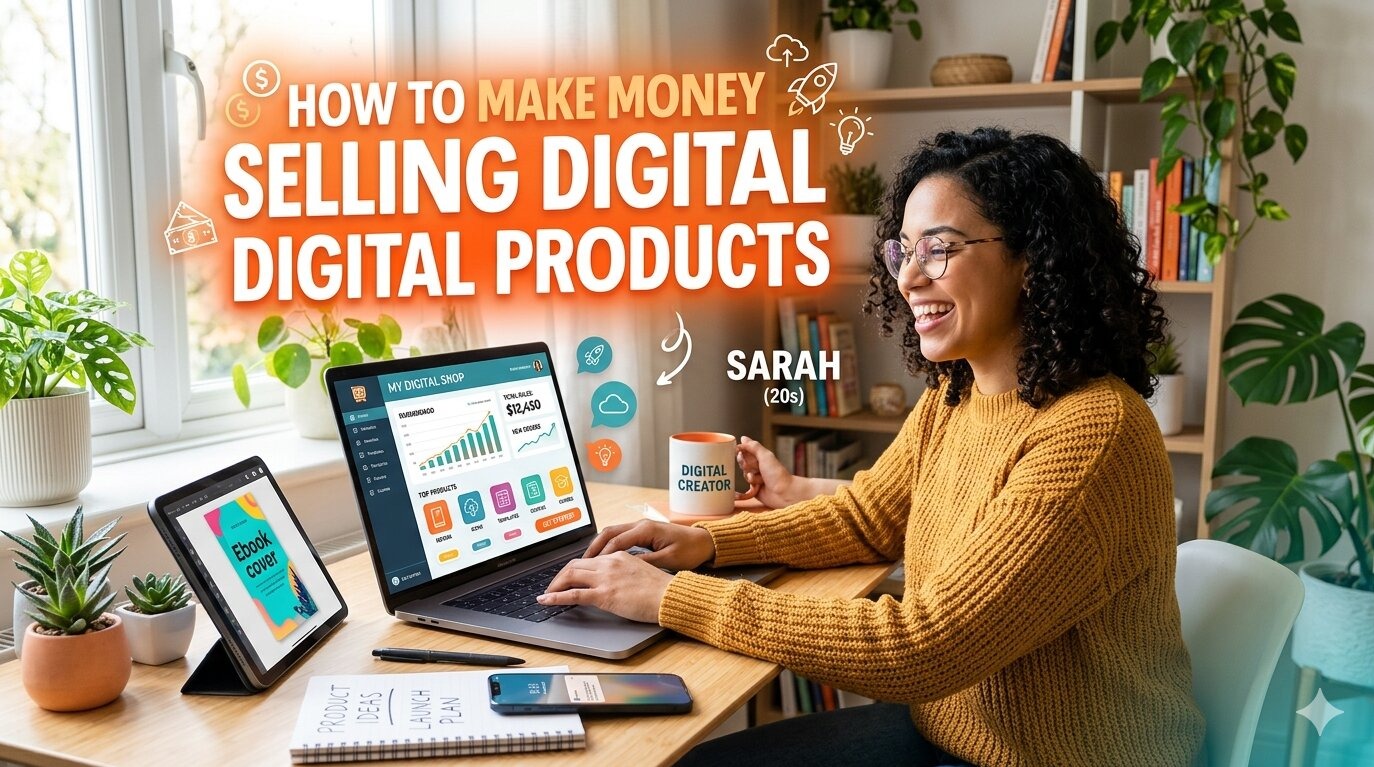
If you’ve ever thought, “I want to make money online without dealing with inventory or shipping,” digital products might be exactly what you’re looking for.
Unlike physical goods, digital products are created once and sold repeatedly. No packaging, no logistics headaches, and often—very high profit margins. It’s one of those business models that sounds simple, and honestly, it kind of is… but only if you approach it the right way.
Let’s break it down in a practical, real-world way so you can actually get started.
What Are Digital Products?
Digital products are intangible items that people can download or access online. Think of them as knowledge, tools, or creative assets packaged into something useful.
Some common examples include:
- Ebooks
- Online courses
- Templates (resume, Canva, Notion, etc.)
- Stock photos or graphics
- Music or sound effects
- Software or apps
The beauty here is scalability. You create once, and you can sell it thousands of times.
Why Digital Products Work So Well
There’s a reason so many creators and entrepreneurs are moving into this space.
Here’s a simple breakdown:
| Benefit | Explanation |
|---|---|
| Low startup cost | You don’t need inventory or storage |
| High profit margins | No recurring production cost |
| Automation potential | Sales can run 24/7 |
| Global reach | Sell to anyone, anywhere |
| Flexible creation | Use skills you already have |
In my opinion, this is one of the most beginner-friendly online income streams—especially if you already have some knowledge or a skill people care about.
Step 1: Choose the Right Digital Product
This is where most people either succeed or fail.
Don’t start with “What can I create?”
Start with “What problem can I solve?”
For example:
- If you’re good at design → sell Canva templates
- If you understand finance → create budgeting spreadsheets
- If you’re into fitness → build a workout guide
A real-world example:
A college student created simple Notion study planners and sold them online. Within months, they were making consistent income—not because the product was complex, but because it solved a clear problem.
If you’re unsure what to pick, you can also explore ideas from
Passive Income Side Hustles You Can Start Today
https://statush.com/side-hustles/passive-income-side-hustles-you-can-start-today
It’s a great starting point for inspiration.
Step 2: Validate Before You Build
One common mistake? Spending weeks creating something nobody wants.
Instead, validate your idea first:
- Search on marketplaces like Etsy or Gumroad
- Look at reviews—what are people asking for?
- Check social media comments in your niche
If people are already buying similar products, that’s a good sign.
You don’t need a completely unique idea—you just need a better or more specific version.
Step 3: Create a High-Quality Product
Once validated, focus on quality. Digital products succeed when they deliver clear value.
Keep it simple:
- Solve one problem well
- Make it easy to use
- Focus on clean design and usability
For example:
A messy spreadsheet won’t sell—even if it’s powerful.
A simple, clean, easy-to-use one? That sells.
Practical tip:
Before launching, give your product to 2–3 people for feedback. You’ll be surprised how much you can improve.
Step 4: Choose Where to Sell
You don’t need a fancy website to start.
Here are some popular platforms:
- Etsy (great for templates and printables)
- Gumroad (easy for beginners)
- Shopify (for building your own brand)
If you’re planning something like print-on-demand, you can also check
How to Start a Print-on-Demand Side Hustle
https://statush.com/side-hustles/how-to-start-a-print-on-demand-side-hustle
It blends physical + digital ideas nicely.
For beginners, Etsy is often the easiest place to test ideas quickly.
Step 5: Pricing Strategy (Don’t Overthink It)
Pricing is tricky, but here’s a simple approach:
- Start affordable
- Focus on volume
- Increase price once you see demand
Example:
- Beginner template: $5–$15
- Premium bundle: $25–$50
You can also bundle products to increase value:
- Instead of 1 template → sell 10 templates as a pack
People love bundles. It feels like a better deal.
Step 6: Marketing That Actually Works
Let’s be honest—this is where most people struggle.
Creating the product is only half the job. Selling it is the real game.
Here are practical ways to market:
1. Short-form content
Use Instagram Reels, TikTok, or YouTube Shorts:
- Show how your product works
- Share tips related to your niche
- Demonstrate results
2. SEO (especially for Etsy)
Use keywords people are searching for:
- “Budget planner template”
- “Resume template for freshers”
3. Social proof
Share:
- Customer feedback
- Before/after results
- Real use cases
If you want more online income ideas without directly selling, explore
How to Make Money Online Without Selling Anything
https://statush.com/side-hustles/how-to-make-money-online-without-selling-anything
It complements this model well.
Step 7: Automate and Scale
Once you start making sales, your goal should be automation.
Set up:
- Instant downloads
- Automated emails
- Basic sales funnels
Then scale by:
- Creating more products
- Expanding into bundles
- Building a brand
Some sellers go from one product to full digital storefronts.
And if you’re thinking long-term, you might eventually transition into something bigger like
Side Hustles That Can Turn Into Full-Time Businesses
https://statush.com/side-hustles/side-hustles-that-can-turn-into-full-time-businesses
Digital products can absolutely grow into a full-time income.
Common Mistakes to Avoid
Let’s save you some time (and frustration):
- Overcomplicating your first product
- Ignoring market demand
- Poor design or usability
- Giving up too early
- Not marketing consistently
Honestly, consistency beats perfection here.
Final Thoughts
Selling digital products is one of the smartest ways to build income online right now. It’s low-risk, scalable, and flexible enough to fit around a full-time job.
But here’s the reality:
It’s not instant money.
The people who succeed are the ones who:
- Focus on solving real problems
- Keep things simple
- Stay consistent with marketing
Start small. Improve as you go. And don’t wait for everything to be perfect.
Because in this space, action always beats overthinking.