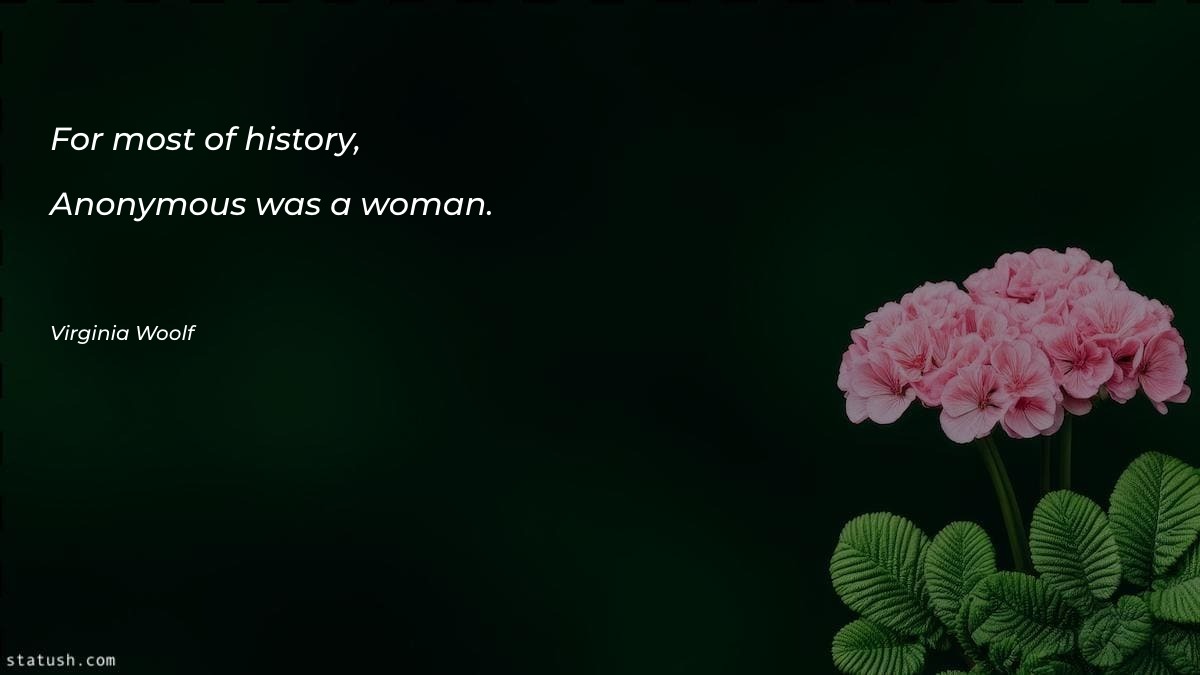
Here are 10 of the most insightful quotes attributed to Virginia Woolf, and the logic behind them.
1. On Time and Memory
He — for there could be no doubt of his sex, though the fashion of the time did something to disguise it — was in the act of slicing at the head of a Moor which swung from the rafters.
The Meaning: Time is treated as something you cannot store—only spend. The meaning is that urgency and patience are both strategies; the quote asks which one matches the stakes. If you feel rushed, check whether the deadline is real or inherited.
2. On Thought and Judgment
It is the nature of the artist to mind excessively what is said about him. Literature is strewn with the wreckage of men who have minded beyond reason the opinions of others.
The Meaning: This line from Virginia Woolf compresses a lived tension into a single readable moment. Read it slowly: it is not asking you to agree, but to notice where the same pattern shows up in your own life. If you take it seriously, it becomes a test—what would you change if this were reliably true for you?
3. On Time and Memory
Examine for a moment an ordinary mind on an ordinary day. The mind receives a myriad impressions — trivial, fantastic, evanescent, or engraved with the sharpness of steel.
The Meaning: Time is treated as something you cannot store—only spend. The meaning is that urgency and patience are both strategies; the quote asks which one matches the stakes. If you feel rushed, check whether the deadline is real or inherited.
4. On Truth and Integrity
She alone spoke the truth; to her alone could he speak it. That was the source of her everlasting attraction for him, perhaps; she was a person to whom one could say what came into one's head.
The Meaning: Truth here is less about moral purity and more about contact with reality. The line suggests that self-deception is expensive: it buys comfort today and confusion tomorrow. Clarity is often uncomfortable, but it is navigable.
5. On Thought and Judgment
I bought the blue paper book [Ulysses], & read it here one summer I think with spasms of wonder, of discovery, & then again with long lapses of immense boredom.
The Meaning: This line from Virginia Woolf compresses a lived tension into a single readable moment. Read it slowly: it is not asking you to agree, but to notice where the same pattern shows up in your own life. If you take it seriously, it becomes a test—what would you change if this were reliably true for you?
6. On Fear and Courage
We are not pleading merely for courage and sincerity; we are suggesting that the proper stuff of fiction is a little other than custom would have us believe it.
The Meaning: Truth here is less about moral purity and more about contact with reality. The line suggests that self-deception is expensive: it buys comfort today and confusion tomorrow. Clarity is often uncomfortable, but it is navigable.
7. On Time
The Reverend C. L. Dodgson had no life. He passed through the world so lightly that he left no print. He melted so passively into Oxford that he is invisible.
The Meaning: This line from Virginia Woolf compresses a lived tension into a single readable moment. Read it slowly: it is not asking you to agree, but to notice where the same pattern shows up in your own life. If you take it seriously, it becomes a test—what would you change if this were reliably true for you?
8. On Action
Women have served all these centuries as looking-glasses possessing the magic and delicious power of reflecting the figure of man at twice its natural size.
The Meaning: This line from Virginia Woolf compresses a lived tension into a single readable moment. Read it slowly: it is not asking you to agree, but to notice where the same pattern shows up in your own life. If you take it seriously, it becomes a test—what would you change if this were reliably true for you?
9. On Learning
All I want to say is that until this disease came on we were perfectly happy. It was all due to you. No one could have been so good as you have been, from the very first day till now. Everyone knows that. V.
The Meaning: Knowledge is framed as something that changes behavior, not something you collect like trophies. If a sentence is true but does not shift what you notice or do, it has not finished its work.
10. On Love and Devotion
The merest schoolgirl [school girl,] when she falls in love, has Shakespeare or Keats to speak her mind for her; but let a sufferer [try to] describe a pain in his head to a doctor and language at once runs dry.
The Meaning: This line treats emotion as something that steers decisions more than arguments do. The meaning is practical: if you ignore what you feel, you may still act—but often on autopilot. Naming the feeling is the first step toward choosing it, rather than being dragged by it.