Here are 10 of the most insightful quotes attributed to Helen Keller, and the logic behind them.
1. On Success and Effort
Character cannot be developed in ease and quiet. Only through experience of trial and suffering can the soul be strengthened, vision cleared, ambition inspired, and success achieved.
The Meaning: This reframes outcomes as feedback rather than verdicts. Success can hide weak processes; failure can reveal strong ones—if you study it. The meaning is to keep your identity separate from any single result.
2. On Clarity
When one door of happiness closes, another opens; but often we look so long at the closed door that we do not see the one which has been opened for us.
The Meaning: This line from Helen Keller compresses a lived tension into a single readable moment. Read it slowly: it is not asking you to agree, but to notice where the same pattern shows up in your own life. If you take it seriously, it becomes a test—what would you change if this were reliably true for you?
3. On People and Relationships
No pessimist ever discovered the secrets of the stars, or sailed to an uncharted land, or opened a new heaven to the human spirit.
The Meaning: This line from Helen Keller compresses a lived tension into a single readable moment. Read it slowly: it is not asking you to agree, but to notice where the same pattern shows up in your own life. If you take it seriously, it becomes a test—what would you change if this were reliably true for you?
4. On Learning
Face your deficiencies and acknowledge them; but do not let them master you. Let them teach you patience, sweetness, insight.
The Meaning: Knowledge is framed as something that changes behavior, not something you collect like trophies. If a sentence is true but does not shift what you notice or do, it has not finished its work.
5. On Love and Devotion
The best and most beautiful things in the world cannot be seen, nor touched... but are felt in the heart.
The Meaning: This line treats emotion as something that steers decisions more than arguments do. The meaning is practical: if you ignore what you feel, you may still act—but often on autopilot. Naming the feeling is the first step toward choosing it, rather than being dragged by it.
6. On Love and Devotion
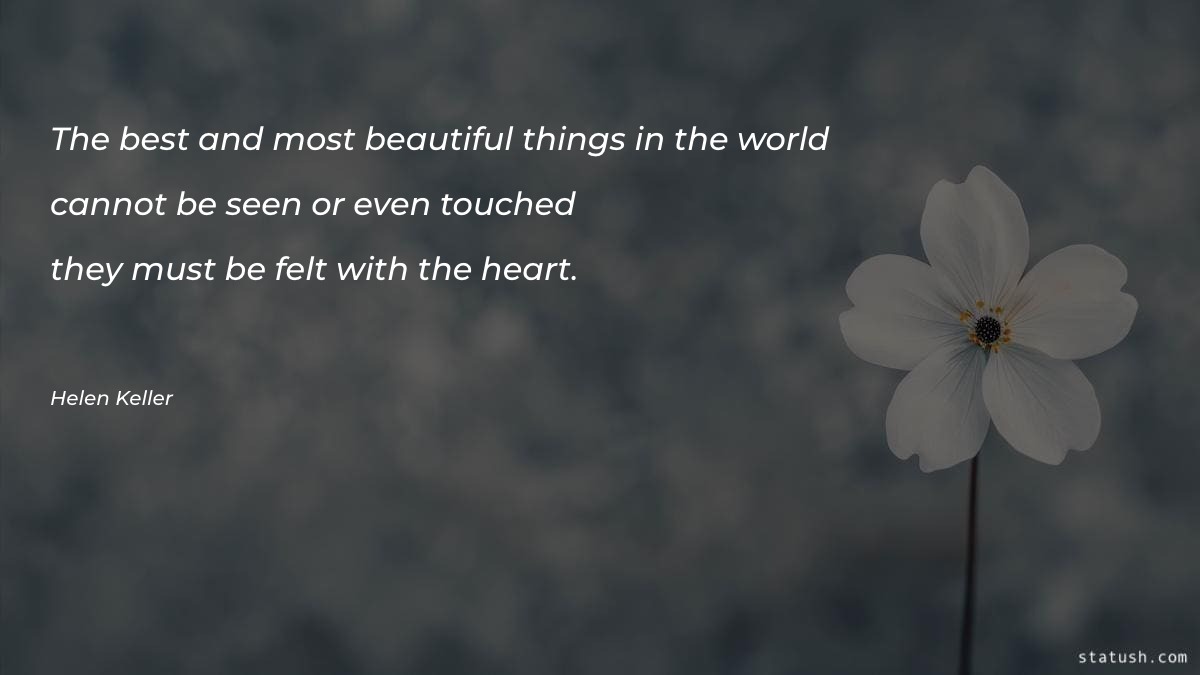
The most beautiful things in the world cannot be seen or even touched. They must be felt with the heart.
The Meaning: This line treats emotion as something that steers decisions more than arguments do. The meaning is practical: if you ignore what you feel, you may still act—but often on autopilot. Naming the feeling is the first step toward choosing it, rather than being dragged by it.
7. On Faith and Meaning
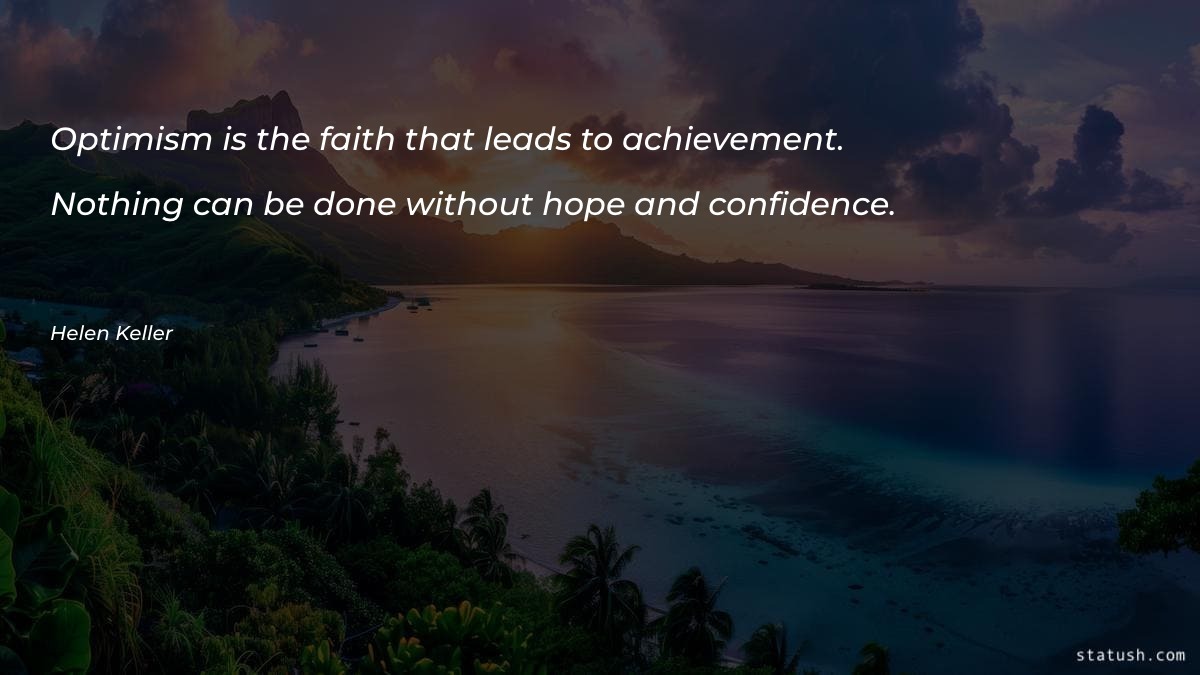
Optimism is the faith that leads to achievement. Nothing can be done without hope and confidence.
The Meaning: This line from Helen Keller compresses a lived tension into a single readable moment. Read it slowly: it is not asking you to agree, but to notice where the same pattern shows up in your own life. If you take it seriously, it becomes a test—what would you change if this were reliably true for you?
8. On Fear and Courage
We could never learn to be brave and patient if there were only joy in the world.
The Meaning: Knowledge is framed as something that changes behavior, not something you collect like trophies. If a sentence is true but does not shift what you notice or do, it has not finished its work.
9. On People and Relationships
Walking with a friend in the dark is better than walking alone in the light.
The Meaning: This line from Helen Keller compresses a lived tension into a single readable moment. Read it slowly: it is not asking you to agree, but to notice where the same pattern shows up in your own life. If you take it seriously, it becomes a test—what would you change if this were reliably true for you?
10. On Growth
Never bend your head. Always hold it high. Look the world right in the eye.
The Meaning: This line from Helen Keller compresses a lived tension into a single readable moment. Read it slowly: it is not asking you to agree, but to notice where the same pattern shows up in your own life. If you take it seriously, it becomes a test—what would you change if this were reliably true for you?