The Renegade Philosopher: Anthony Bourdain Quotes on Life, Food, and the Road
Anthony Bourdain was the chef who left the kitchen to show us the world—not as a collection of tourist spots, but as a series of shared meals and messy, human stories. He was a "poet of the underbelly," someone who found more beauty in a plastic stool at a Vietnamese noodle stall than in a five-star dining room.
His words are a call to action: to move, to eat, and to be transformed by the unknown. Here is the meaning behind some of his most legendary wisdom.
1. On the Brutal Beauty of Travel
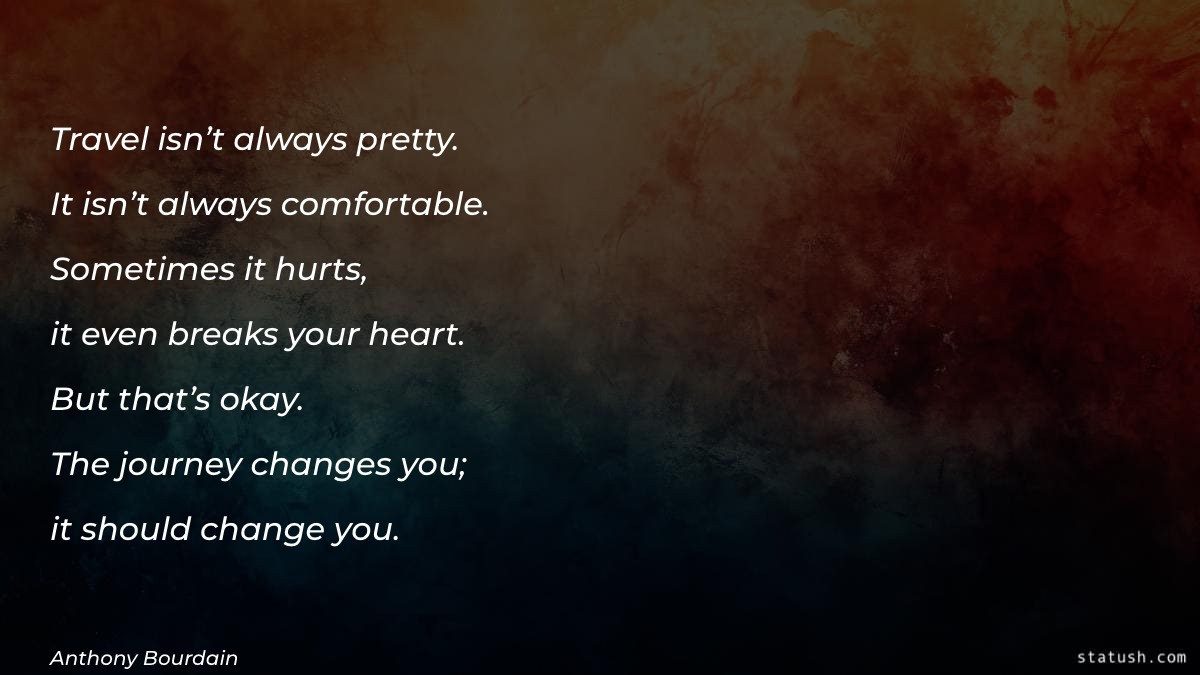
“Travel isn’t always pretty. It isn’t always comfortable. Sometimes it hurts, it even breaks your heart. But that’s okay. The journey changes you; it should change you.”
The Meaning:
Bourdain hated "sanitized" travel. He believed that if you return from a trip exactly the same person you were when you left, you did it wrong. Real travel requires vulnerability. It means getting lost, feeling uncomfortable, and witnessing the hardships of others. Those "marks" left on your heart aren't scars to be avoided; they are the evidence that you actually lived.
2. On the Philosophy of the Body
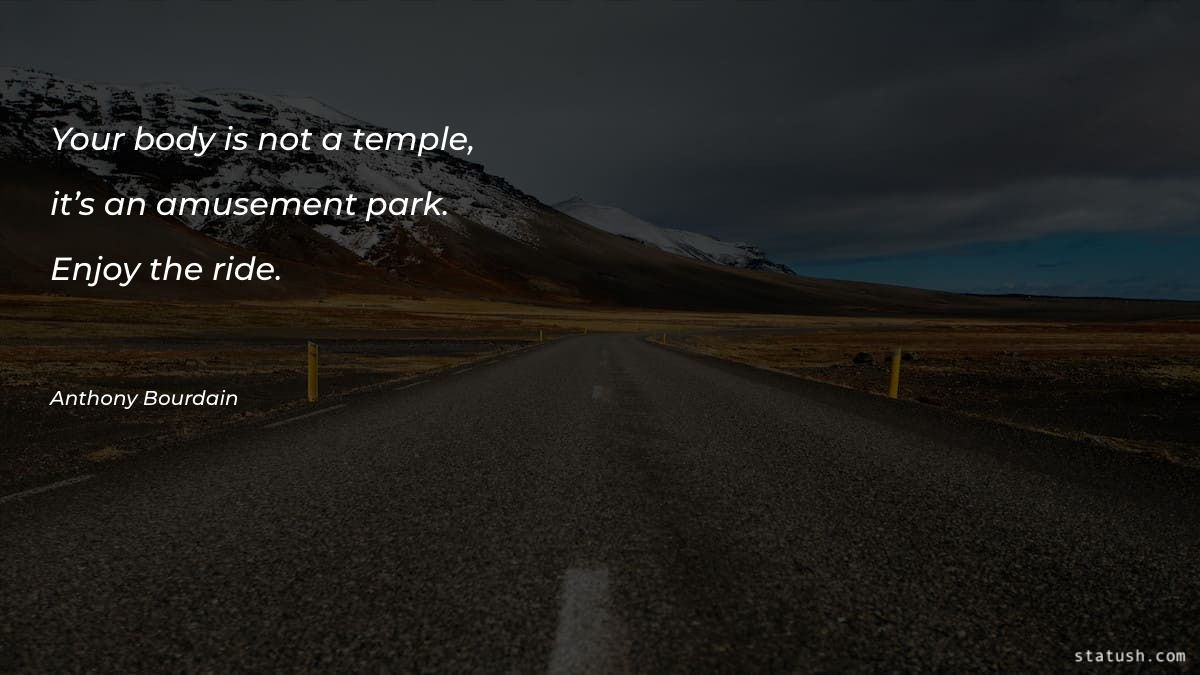
“Your body is not a temple, it’s an amusement park. Enjoy the ride.”
The Meaning:
In a world obsessed with wellness trends and restrictive diets, Bourdain offered a rebellious alternative. He didn't see the body as something to be preserved in a pristine state, but as a vessel for experience. To him, life was meant to be tasted, toasted, and thoroughly used up. It’s a reminder to stop worrying about the "perfect" lifestyle and start enjoying the one you have.
3. On the Importance of Early Adventure
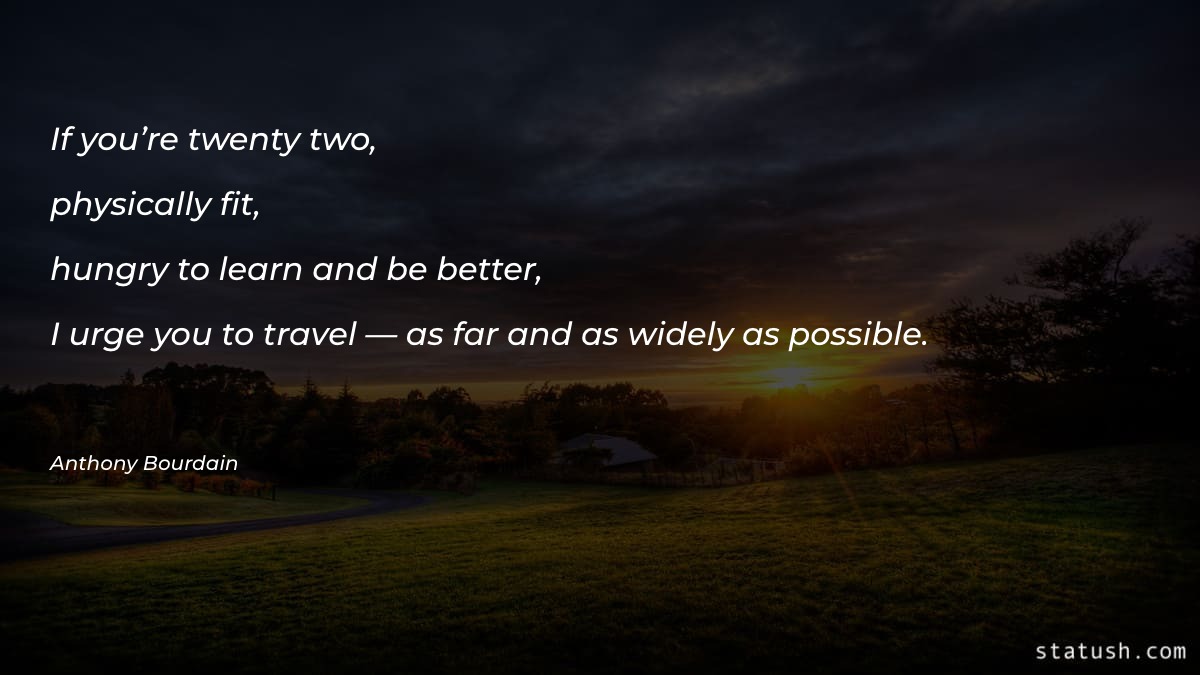
“If you’re twenty-two, physically fit, hungry to learn and be better, I urge you to travel—as far and as widely as possible. Sleep on floors if you have to.”
The Meaning:
Bourdain believed that the perspective gained from seeing how the rest of the world lives is the most important education a person can have. He advocated for "rough" travel—the kind where you don't have a safety net—because it builds empathy and resilience. Seeing the world before you're "settled" prevents you from becoming narrow-minded later in life.
4. On Connection Through Food
“You learn a lot about someone when you share a meal together.”
The Meaning:
Food is the ultimate "icebreaker." When you sit down and eat what someone else eats, you are saying, "I respect you." Bourdain used the dinner table as a diplomatic tool. He knew that even if two people speak different languages or have opposing politics, the simple act of breaking bread creates a common ground where real conversation can finally begin.
5. On the Skill of Being a Human
“Basic cooking skills are a virtue... [It’s] as vital to growing up as learning to wipe one’s own ass, cross the street by oneself, or be trusted with money.”
The Meaning:
To Bourdain, being able to feed yourself and others was a matter of self-respect and character. He didn't think everyone needed to be a "chef," but he believed everyone should be a "cook." To be able to take simple ingredients and turn them into a meal for friends is an act of independence and a fundamental way of caring for your community.
6. On Keeping an Open Mind
“I don’t have to agree with you to like you or respect you.”
The Meaning:
This is perhaps his most relevant quote for the modern era. Bourdain traveled to places that many would consider "enemy territory," yet he always sought the humanity in the individuals he met. He believed that we’ve lost the ability to disagree without dehumanizing each other. Respect, for him, was the baseline for any interaction, regardless of ideology.
7. On the Danger of Perfection
“I’m a big believer in winging it. I’m a big believer that you’re never going to find the perfect city travel experience or the perfect meal without a constant willingness to experience a bad one.”
The Meaning:
If you only go where the reviews are five stars, you’ll only see what everyone else has already seen. Bourdain championed the "happy accident." By leaving the itinerary behind and being willing to have a mediocre meal in a random alley, you open the door for the "magical" meal that no guidebook could ever find.
The Bourdain Legacy: A Checklist for Life
| Principle | The Lesson |
|---|---|
| Curiosity | Ask the "stupid" questions; be the student, not the expert. |
| Humility | Realize how small you are in the grand scheme of the world. |
| Authenticity | Seek the "real" version of a place, not the "tourist" version. |
| Empathy | Eat their food, walk their streets, listen to their stories. |
Anthony Bourdain’s life taught us that the world is much bigger, messier, and more wonderful than we imagine. He didn't want us to just watch him on TV; he wanted us to get off the couch and go see it for ourselves.