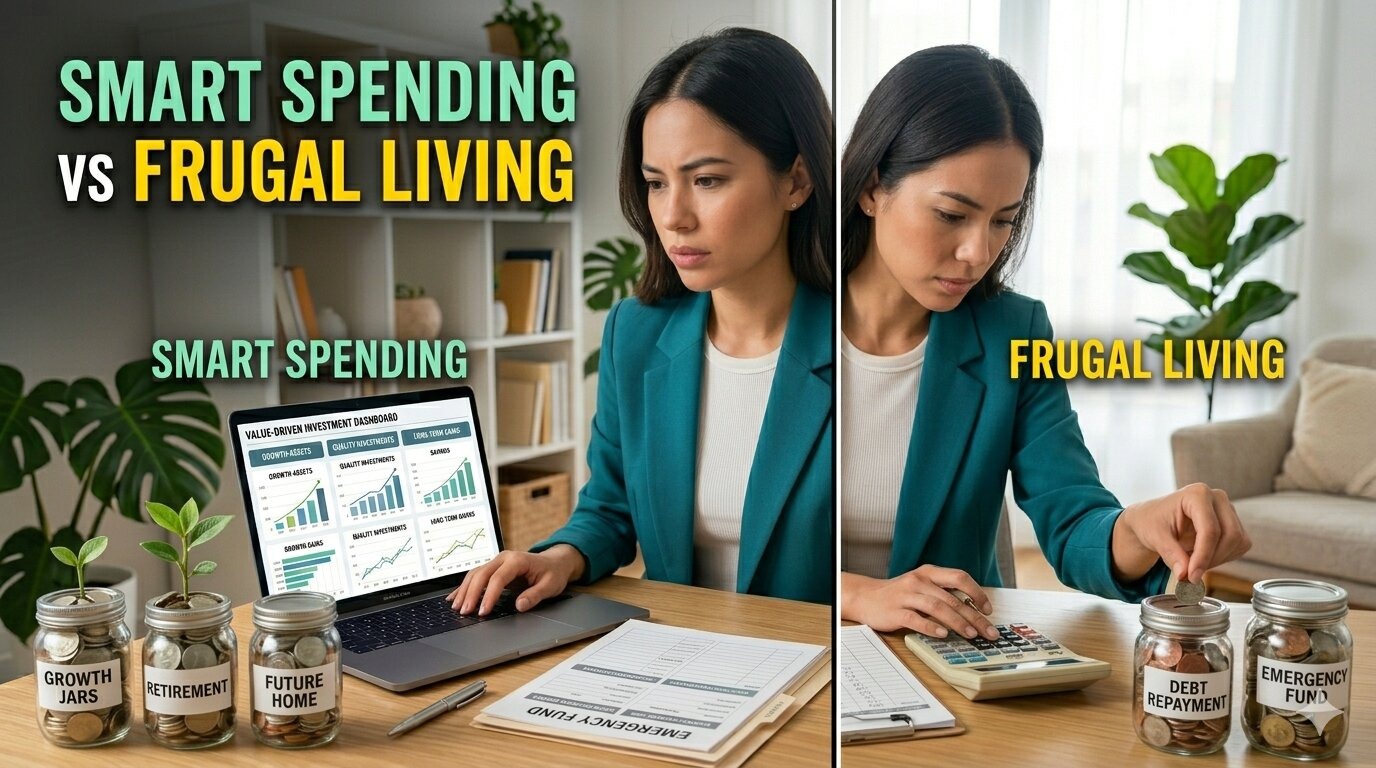
When it comes to managing money, two popular approaches often come up—smart spending and frugal living. At first glance, they may seem similar. Both aim to help you save money and improve your financial life. But in reality, they are quite different in mindset and execution.
Some people believe cutting every expense is the key to financial success. Others focus on spending wisely rather than restricting themselves too much. So which approach is better?
The truth is, you don’t have to choose one over the other. The real power lies in understanding both—and using them in the right balance.
What Is Frugal Living?
Frugal living is all about minimizing expenses. It focuses on spending as little as possible and avoiding unnecessary costs.
This approach often includes:
- Cutting non-essential spending
- Choosing cheaper alternatives
- Avoiding luxury purchases
- Maximizing savings
For example, someone living frugally might:
- Cook at home instead of eating out
- Use public transport instead of owning a car
- Buy only discounted or second-hand items
Frugal living is especially useful when:
- You are paying off debt
- You have limited income
- You are trying to build savings quickly
If you're working on reducing expenses, you may find this helpful:
https://statush.com/money/how-to-reduce-monthly-expenses-quickly
What Is Smart Spending?
Smart spending, on the other hand, is about spending intentionally rather than just spending less.
It focuses on:
- Getting value for money
- Prioritizing important expenses
- Spending on things that improve your life
- Avoiding wasteful purchases
For example, a smart spender might:
- Invest in a high-quality product that lasts longer
- Spend on education or skill development
- Pay for convenience when it truly saves time
Smart spending doesn’t mean being cheap—it means being thoughtful.
If you want to build better habits around this, explore:
https://statush.com/money/simple-money-habits-that-improve-finances
Key Differences Between Smart Spending and Frugal Living
To understand this clearly, let’s compare both approaches side by side:
| Aspect | Frugal Living | Smart Spending |
|---|---|---|
| Focus | Spend less | Spend wisely |
| Approach | Cost-cutting | Value-based decisions |
| Lifestyle | Restrictive | Balanced |
| Goal | Save maximum money | Maximize value and happiness |
| Flexibility | Low | High |
Both approaches have their place—but they serve different purposes.
When Frugal Living Works Best
Frugal living is extremely effective in certain situations.
You should lean toward frugality when:
- You are in financial stress
- You are trying to get out of debt
- You are building an emergency fund
- Your income is unstable
For example:
If someone is living paycheck to paycheck, reducing expenses aggressively can create immediate breathing room.
This guide can help if you're in that situation:
https://statush.com/money/how-to-stop-living-paycheck-to-paycheck
Frugality acts like a reset button for your finances.
When Smart Spending Is More Effective
Smart spending becomes more important as your financial situation improves.
You should focus on smart spending when:
- Your income is stable
- You already have basic savings
- You want to improve your quality of life
- You are planning long-term growth
For example:
Instead of buying the cheapest laptop, a smart spender may invest in a reliable one that lasts 5 years—saving money in the long run.
To align spending with long-term goals, read:
https://statush.com/money/how-to-build-long-term-financial-stability
The Common Mistake: Going Too Extreme
One of the biggest mistakes people make is going too far in either direction.
Extreme Frugality
- Leads to frustration
- Reduces quality of life
- Hard to maintain long-term
Oversmart Spending (Justifying Everything)
- Leads to overspending
- Creates hidden financial stress
- Slows down savings
Balance is key.
Money management is not about restriction—it’s about alignment.
Real-Life Example
Let’s look at two individuals:
Person A (Frugal Approach)
- Avoids eating out completely
- Buys the cheapest options
- Saves aggressively
Person B (Smart Spending Approach)
- Eats out occasionally but within budget
- Invests in quality products
- Saves and invests consistently
After 5 years:
- Person A may have higher savings but lower satisfaction
- Person B may have slightly lower savings but better lifestyle and sustainable habits
The ideal path? A mix of both.
How to Combine Smart Spending and Frugal Living
You don’t need to choose one—you can combine them strategically.
Here’s how:
Be Frugal in Low-Value Areas
Cut costs where it doesn’t affect your happiness:
- Subscriptions you don’t use
- Impulse shopping
- Expensive habits with little return
Spend Smartly in High-Value Areas
Spend where it truly matters:
- Health
- Education
- Time-saving tools
- Experiences that matter to you
This approach gives you both financial control and life satisfaction.
A Simple Framework to Follow
| Category | Approach |
|---|---|
| Essentials (rent, food) | Optimize, don’t overspend |
| Lifestyle | Spend with limits |
| Savings | Prioritize consistently |
| Investments | Increase over time |
If you need help structuring this, check:
https://statush.com/money/how-to-create-a-monthly-budget-that-works
Practical Tips to Apply Today
- Before buying, ask: “Is this worth it?”
- Focus on long-term value, not short-term savings
- Avoid emotional spending
- Review your expenses regularly
- Set clear financial priorities
If you want to strengthen discipline, this is useful:
https://statush.com/money/how-to-build-financial-discipline
Final Thoughts
Smart spending and frugal living are not opposites—they are tools.
Frugality helps you gain control.
Smart spending helps you enjoy and grow.
The goal isn’t to spend the least or the most—it’s to spend right.
When you combine both approaches, you create a financial system that is not only efficient but also sustainable.
Because in the end, money is not just about saving—it’s about living well while building a secure future.