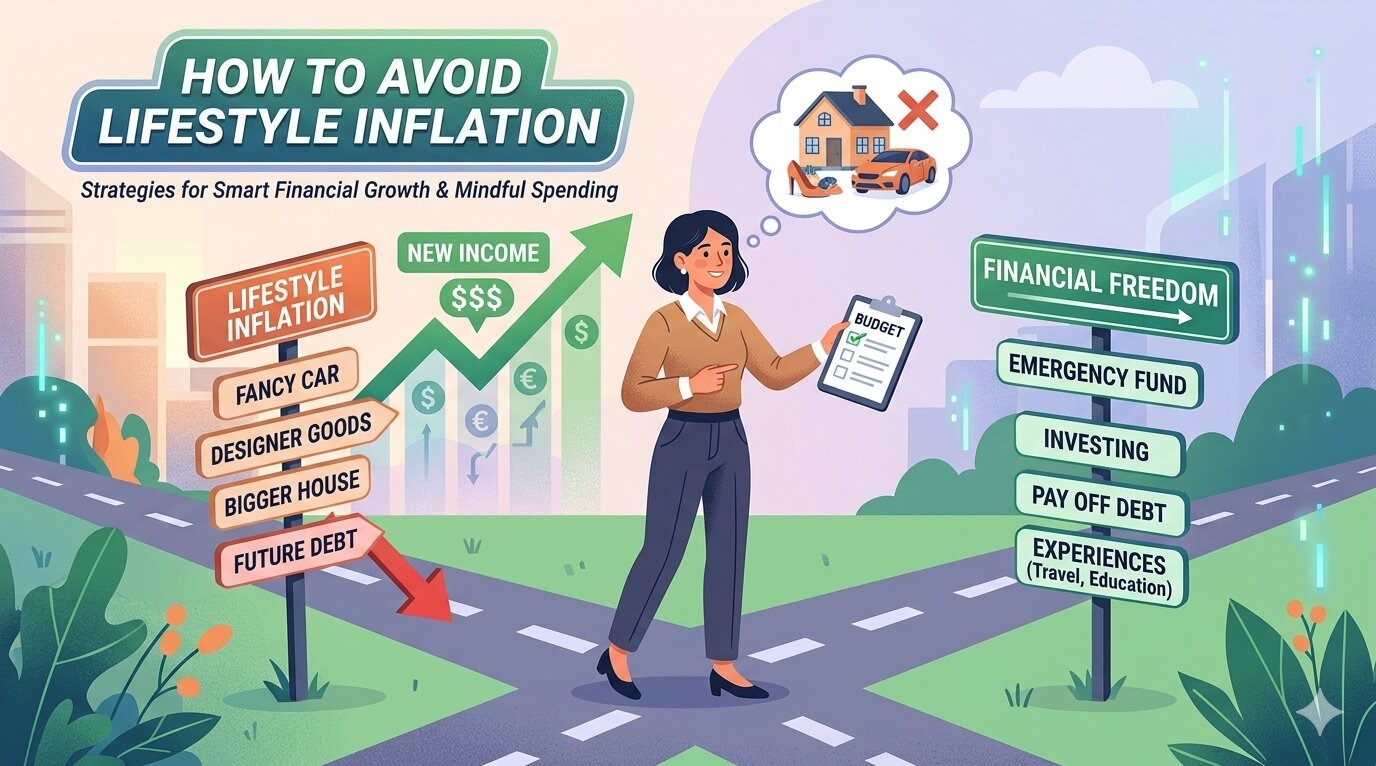
Lifestyle inflation is one of the most common—and most dangerous—financial traps. It happens quietly. You earn more, so you spend more. A better phone, a bigger house, more dining out, upgraded travel. It all feels justified because your income has increased.
But here’s the problem: if your expenses grow as fast as your income, your financial situation doesn’t actually improve.
Avoiding lifestyle inflation isn’t about depriving yourself. It’s about making sure your future benefits from your present success.
Let’s break down how to do it in a practical, realistic way.
Understand What Lifestyle Inflation Really Is
Lifestyle inflation happens when your spending increases with every income increase.
It often starts small:
- Slightly better brands
- More frequent outings
- Upgrading things earlier than needed
Over time, these small upgrades become your “new normal.”
Example:
You get a ₹10,000 salary increase. Instead of saving or investing it, you upgrade your car EMI, increase subscriptions, and dine out more. After a few months, that extra income disappears completely.
Set Clear Financial Priorities First
Before your income increases—or as soon as it does—decide where that extra money should go.
Without a plan, money will naturally flow toward spending.
Start by defining your goals using
How to Set Financial Goals
https://statush.com/money/how-to-set-financial-goals
Once your goals are clear, you’ll find it easier to resist unnecessary upgrades.
Follow the “Save First, Spend Later” Rule
One of the simplest ways to avoid lifestyle inflation is to lock in savings before spending anything extra.
Whenever your income increases:
- Allocate a fixed percentage to savings/investments
- Use only the remaining portion for lifestyle upgrades
You can build this system with
How to Create a Monthly Budget That Works
https://statush.com/money/how-to-create-a-monthly-budget-that-works
Practical tip:
If your salary increases by ₹20,000, try saving at least ₹10,000 before adjusting your lifestyle.
Keep Your Fixed Expenses in Check
Lifestyle inflation becomes dangerous when it increases your fixed costs.
Examples:
- Higher rent
- Bigger EMIs
- Long-term subscriptions
These are hard to reduce later.
Use strategies from
How to Reduce Monthly Expenses Quickly
https://statush.com/money/how-to-reduce-monthly-expenses-quickly
to keep fixed costs under control.
Track Spending After Every Income Increase
Most people track expenses only when they are struggling—not when they are earning more.
That’s a mistake.
After every income increase, monitor:
- Where extra money is going
- Which expenses have increased
- Whether savings have improved
Use
How to Track Your Spending Effectively
https://statush.com/money/how-to-track-your-spending-effectively
to stay aware.
Real-world example:
A working professional noticed that after a promotion, his monthly spending increased by ₹15,000—without any major lifestyle change. It was all small upgrades adding up.
Increase Savings Rate, Not Just Spending
Your savings rate should grow along with your income.
Here’s a simple comparison:
| Situation | Income | Savings | Savings Rate |
|---|---|---|---|
| Before Increase | ₹50,000 | ₹5,000 | 10% |
| After Increase (Bad) | ₹70,000 | ₹5,000 | 7% |
| After Increase (Good) | ₹70,000 | ₹14,000 | 20% |
The goal is to improve your savings rate—not reduce it.
To build this habit, follow
Simple Money Habits That Improve Finances
https://statush.com/money/simple-money-habits-that-improve-finances
Delay Major Lifestyle Upgrades
When income increases, there’s often an urge to upgrade immediately.
Instead, delay big decisions:
- Wait 3–6 months before upgrading lifestyle
- Evaluate whether it’s truly necessary
This gives you time to adjust your financial plan.
Practical tip:
Impulse upgrades are the biggest cause of lifestyle inflation.
Avoid Comparing Your Lifestyle to Others
One of the biggest drivers of lifestyle inflation is social comparison.
Seeing others upgrade:
- Cars
- Homes
- Vacations
can create pressure to do the same.
But financial stability is personal—not social.
Focus on your goals, not someone else’s lifestyle.
Build Long-Term Thinking
Lifestyle inflation is short-term thinking. Financial growth is long-term thinking.
When you receive extra income, ask:
- Will this expense matter in 5 years?
- Would investing this be more valuable?
To shift your mindset, explore
How to Build Long-Term Financial Stability
https://statush.com/money/how-to-build-long-term-financial-stability
Maintain a Strong Financial Foundation
If your basics are strong, lifestyle inflation becomes easier to control.
Focus on:
- Emergency fund
- Low debt
- Consistent savings
If you haven’t built this yet, start with
How to Build a Strong Financial Foundation
https://statush.com/money/how-to-build-a-strong-financial-foundation
Balance Enjoyment and Responsibility
Avoiding lifestyle inflation doesn’t mean you can’t enjoy your money.
It means being intentional.
A good approach:
- Save/invest first
- Spend a portion guilt-free
This balance helps you stay consistent long-term.
Watch Out for Hidden Lifestyle Inflation
Not all lifestyle inflation is obvious.
Hidden examples:
- More frequent food delivery
- Subscription creep
- Premium versions of everything
These seem small—but they add up quickly.
To control this, review your expenses regularly using
How to Track Your Financial Progress
https://statush.com/money/how-to-track-your-financial-progress
Avoid Common Money Mistakes
Lifestyle inflation often comes from poor financial habits.
Some examples:
- Spending to reward yourself
- Upgrading too early
- Ignoring savings after income increase
To avoid these patterns, read
Money Management Mistakes to Avoid
https://statush.com/money/money-management-mistakes-to-avoid
Final Thoughts
Lifestyle inflation is not about spending more—it’s about losing control.
The goal is not to stop upgrading your life. It’s to upgrade it wisely.
Earn more. Save more. Invest more. Then spend thoughtfully.
Because the real power of higher income isn’t a better lifestyle—it’s greater freedom.
And the people who understand this early are the ones who build lasting wealth.