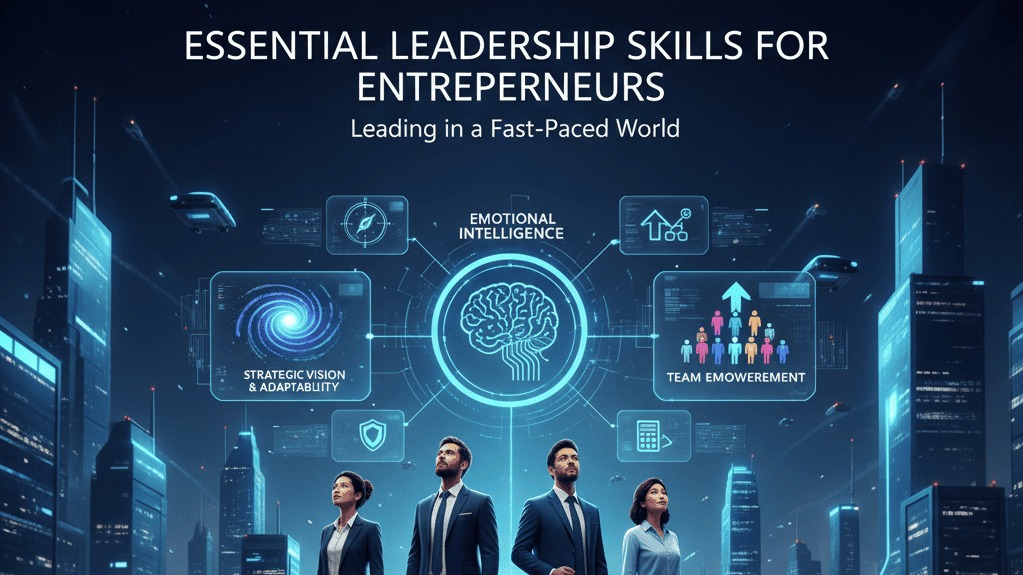
In the world of entrepreneurship, there is a fundamental difference between being a "boss" and being a "leader." A boss manages tasks; a leader inspires people to achieve a shared vision. As we navigate the complex, AI-integrated, and highly remote workforce of 2026, the traditional "command and control" style of leadership is officially obsolete.
For an entrepreneur, leadership isn't just about giving orders—it’s about managing the psychology of your team, the trajectory of your product, and the stability of your own mind. Here are the essential leadership skills you must master to thrive.
1. Visionary Thinking and Strategic Alignment
As a founder, you are the navigator. If you don't know where the ship is going, the crew will eventually stop rowing.
- Defining the "Why": Beyond profit, why does your company exist? Leaders must articulate a vision that resonates emotionally with employees and customers.
- Strategic Adaptability: While your vision should be firm, your strategy must be fluid. In a market where technologies shift overnight, the ability to "pivot" without losing team morale is a high-level leadership skill.
- The North Star Metric: Great leaders simplify. They identify the one key metric that defines success and align every department's goals to it.
2. Emotional Intelligence (EQ)
In 2026, EQ has surpassed IQ as the most critical predictor of leadership success. With the rise of automated technical tasks, the human element—empathy, self-regulation, and social skills—is your greatest competitive advantage.
The Four Pillars of EQ for Founders:
- Self-Awareness: Recognizing your own triggers. If you are stressed, your team will feel it.
- Self-Management: The ability to stay calm during a "black swan" event or a failed funding round.
- Social Awareness: Reading the room. Understanding the unsaid anxieties of your team during a reorganization.
- Relationship Management: Using your influence to mentor others and resolve conflicts before they turn toxic.
3. High-Stakes Decision Making
Entrepreneurs are professional decision-makers. You will often have to make choices with only 60% of the information you need.
- The 2-Minute Rule for Small Decisions: Don't let minor choices (like office decor or email providers) drain your cognitive energy.
- Decision Frameworks: Use tools like the Eisenhower Matrix to distinguish between what is urgent and what is important.
- Psychological Safety: A great leader creates an environment where team members feel safe to provide "red flags" before a decision is finalized.
4. Building and Empowering High-Performance Teams
You cannot scale a business if you are a bottleneck. Transitioning from "doing" to "leading" requires a shift in how you view your team.
- Recruiting for Values, Training for Skill: Skills can be taught; character cannot. Build a team that shares your core values.
- Radical Delegation: Trust your team with meaningful projects. If you find yourself micromanaging a senior hire, you’ve either hired the wrong person or you’re failing as a leader.
- Feedback Loops: Move away from annual reviews. Implement "continuous feedback" where praise is public and constructive criticism is private and immediate.
5. Resilience and Crisis Management
Entrepreneurship is a series of highs and lows. Your team looks to you to gauge how they should react to a crisis.
- Stoic Optimism: This is the "Stockdale Paradox"—retaining faith that you will prevail in the end, regardless of the difficulties, while simultaneously confronting the most brutal facts of your current reality.
- Transparency: In times of trouble, silence is the enemy. Clear, honest communication builds trust even when the news is bad.
6. Financial Literacy as a Leadership Tool
You don’t need to be a CPA, but you must understand the "language of business." A leader who doesn't understand their cash flow is leading blindly.
- Unit Economics: Knowing exactly how much it costs to acquire a customer versus their lifetime value.
- Burn Rate Management: Having the discipline to say "no" to vanity projects to ensure the company’s survival.
Conclusion: The Journey Inward
Leadership is not a destination; it is a muscle that must be trained. The most successful entrepreneurs of our era are those who are perpetual students—reading, seeking mentorship, and practicing self-reflection. When you grow as a leader, your business grows as a byproduct.