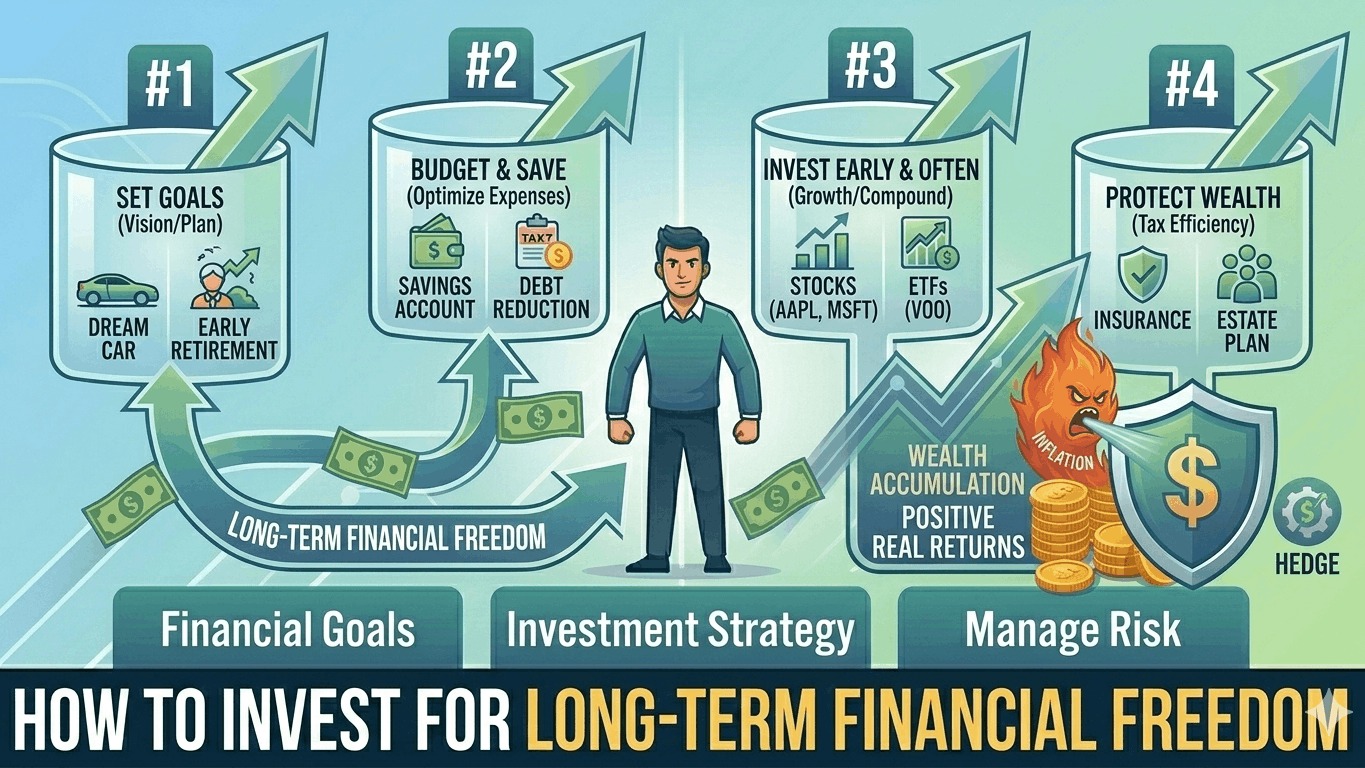
In the economic climate of 2026, the definition of "financial freedom" has shifted. It is no longer just about having a large bank balance; it is about building a self-sustaining "money machine" that covers your lifestyle expenses without requiring your active labor. With inflation holding steady around 3% and new tax regulations like the One Big Beautiful Bill changing the landscape of retirement accounts, a disciplined long-term strategy is more critical than ever.
Financial freedom is a marathon, not a sprint. Here is the blueprint for building a resilient, long-term portfolio.
1. The Foundation: The "Six-Month Safety Net"
Before you buy your first stock or rental property in 2026, you must secure your foundation. Experts now recommend a six-month emergency fund as the baseline for resilience.
- Why it matters: An emergency fund prevents you from being a "forced seller." If the market dips and you have a medical emergency or a job shift, you won't have to sell your long-term investments at a loss to cover the bill.
- Where to keep it: In 2026, High-Yield Savings Accounts (HYSAs) and Money Market Funds are providing a rare combination of safety and decent yield (often between 3% and 4.5%), keeping your safety net ahead of inflation.
2. The Power of "Uninterrupted" Compounding
The greatest force in finance is compounding—earning interest on your interest. In 2026, the key to maximizing this is consistency over intensity.
The Real-World Example: The "Late Starter" vs. The "Early Bird"
- Investor A (The Early Bird): Starts at age 25, investing $500 a month for just 10 years, then stops contributing entirely but leaves the money to grow at 8% annually.
- Investor B (The Late Starter): Starts at age 35, investing $500 a month every single month for 30 years until age 65, also earning 8%.
- The Result: Despite Investor B putting in three times more cash, Investor A will likely end up with a larger nest egg at age 65.
- The Lesson: Time is the most expensive commodity in investing. In 2026, starting with $50 or $100 via a Systematic Investment Plan (SIP) is better than waiting five years to start with $1,000.
3. Navigating the 2026 Tax Landscape
Wealth isn't just about what you earn; it's about what you keep. In 2026, several legislative updates have changed how we should allocate our funds:
- The Roth Shift: Starting in 2026, high earners (those making over $145,000 in the prior year) must make their catch-up contributions to 401(k) plans on a Roth (after-tax) basis. This means you pay the tax now to enjoy tax-free withdrawals in retirement—a powerful tool if you expect tax rates to rise in the future.
- Trump Accounts: The new tax-advantaged savings vehicles for children (created in late 2025) now offer a $1,000 pilot contribution from the Treasury for eligible beneficiaries. Opening these early allows a child's wealth to compound for 60+ years.
- HSAs (The Triple Threat): Health Savings Accounts remain the only triple-tax-advantaged tool: contributions are tax-deductible, growth is tax-free, and withdrawals for medical expenses are tax-free. In 2026, savvy investors treat the HSA as a "stealth IRA" by paying medical bills out of pocket and letting the HSA balance grow in the stock market.
4. Avoiding "Lifestyle Creep"
The biggest enemy of financial freedom in 2026 is not market volatility; it is lifestyle creep. As your income grows, your expenses naturally want to follow.
- The 2026 Rule: For every raise or bonus you receive, commit 50% of the increase to your investments. This allows you to enjoy your success today while exponentially accelerating your freedom date.
- The Gap: A household earning $150,000 that saves 20% will build wealth faster than a household earning $250,000 that saves only 5%. Financial freedom is found in the gap between your income and your ego.
5. Modern Diversification: Beyond Stocks and Bonds
While the "Total Stock Market" remains the core of a 2026 portfolio, many are branching out into "Alternatives" to reduce volatility:
- Private Credit: Lending directly to companies.
- Fractional Real Estate: Owning a "slice" of a commercial building for passive rental income.
- Gold and Commodities: Used as a hedge against the ongoing "3% Inflation" era.