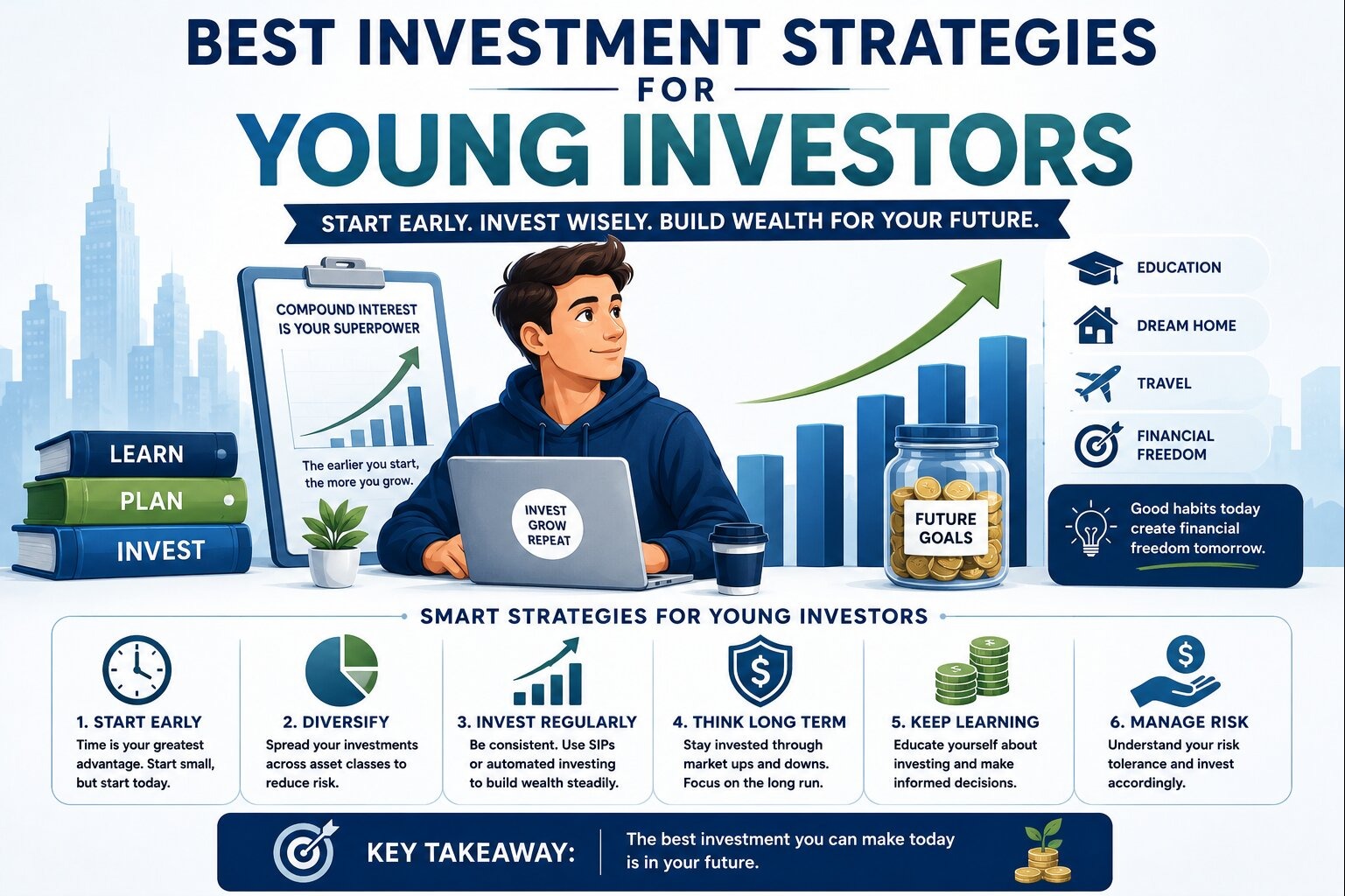
Being young is one of the biggest advantages an investor can have.
Not because younger investors know more about the market. Usually, they don’t.
The real advantage is time.
Time allows investments to compound for decades, mistakes to recover, and market growth to work more powerfully. Even relatively small investments made early can grow into surprisingly large amounts later in life.
That’s why investment strategy matters so much for young investors. The habits built in your 20s and 30s often have a far greater impact than trying to “catch up” later with larger investments.
And honestly, many young investors underestimate how valuable consistency is because retirement still feels extremely far away. But compounding rewards people who start early far more than people who try to invest aggressively later.
Why Young Investors Have a Huge Advantage
Young investors typically have:
- Longer time horizons
- Greater ability to recover from market downturns
- More flexibility to take calculated risks
- More years for compounding to work
A market crash at age 25 is very different from a market crash near retirement.
With decades ahead, younger investors often have time to wait through volatility and allow markets to recover.
The Power of Compounding
Compounding happens when investment returns begin generating additional returns over time.
It’s one of the most important concepts in investing.
Even modest investments can grow significantly over long periods because returns compound year after year.
Simple Example
| Monthly Investment | Time Invested | Potential Growth Advantage |
|---|---|---|
| Start at 25 | 40 years | Massive compounding |
| Start at 35 | 30 years | Much less compounding |
The earlier investing starts, the more powerful compounding becomes.
Focus on Long-Term Investing
Young investors sometimes become attracted to:
- Fast profits
- Meme stocks
- Speculative trading
- Viral investing trends
While some speculation can be exciting, long-term investing usually produces more stable results.
Long-term investing helps:
- Reduce emotional decisions
- Lower taxes
- Improve compounding
- Reduce trading costs
This connects closely with concepts discussed in Long-Term vs Short-Term Capital Gains Explained.
Invest Consistently
Consistency matters more than perfection.
Trying to perfectly predict market highs and lows is extremely difficult.
Instead, many successful investors simply invest regularly regardless of market conditions.
This approach is often called dollar-cost averaging.
Benefits of Regular Investing
| Benefit | Why It Helps |
|---|---|
| Reduces timing pressure | No need to predict markets |
| Builds discipline | Encourages consistency |
| Lowers emotional investing | Reduces panic decisions |
| Creates long-term habits | Supports compounding |
Even small monthly investments matter early on.
Prioritize Diversification
Some younger investors take excessive risks by concentrating heavily in:
- One stock
- One industry
- Cryptocurrency
- Trending sectors
While concentrated bets can create large gains, they also create major downside risk.
Diversification helps protect against catastrophic losses.
A balanced portfolio may include:
- Broad stock market funds
- International exposure
- Bonds later over time
- Cash reserves
You can learn more about portfolio risk management in How to Reduce Investment Risk.
Use Low-Cost Index Funds
For many young investors, low-cost index funds are an excellent starting point.
Why?
Because they provide:
- Diversification
- Simplicity
- Lower fees
- Broad market exposure
Trying to consistently outperform professional investors becomes extremely difficult over long periods.
Index investing removes much of that pressure.
This aligns naturally with strategies discussed in Passive vs Active Investing Strategies.
Avoid Lifestyle Inflation Early
One major financial mistake happens when income rises and spending rises just as quickly.
Young professionals often increase spending on:
- Cars
- Apartments
- Luxury items
- Travel
- Subscription services
There’s nothing wrong with enjoying money, but investing early while expenses are still manageable can create enormous long-term advantages.
Small sacrifices early may produce huge financial flexibility later.
Understand Risk Tolerance
Young investors generally have more capacity to tolerate market volatility because retirement is still far away.
That often allows for:
- Higher stock allocations
- More growth-focused investing
- Greater tolerance for temporary downturns
However, “higher risk tolerance” should not mean reckless speculation.
Calculated risk differs from gambling.
Build an Emergency Fund
Investing is important, but financial stability matters too.
An emergency fund helps avoid:
- Selling investments during market declines
- Taking on high-interest debt
- Financial panic during emergencies
Many financial experts recommend maintaining several months of living expenses in accessible savings.
Avoid Emotional Investing
Young investors often experience strong emotions during:
- Market crashes
- Bull markets
- Viral stock trends
- Economic uncertainty
Social media can amplify emotional investing dramatically.
Fear and hype spread quickly online.
Successful investing usually requires staying disciplined even when markets feel chaotic.
Learn Basic Financial Analysis
Young investors do not need advanced accounting skills immediately, but understanding basic financial concepts helps enormously.
Useful skills include:
- Reading financial statements
- Understanding valuation
- Evaluating debt
- Recognizing sustainable businesses
You can build those skills through guides like How to Evaluate Company Financial Statements and Price-to-Earnings Ratio Explained.
Take Advantage of Tax-Efficient Investing
Taxes may not feel important early on, but tax-efficient investing becomes increasingly valuable over time.
Young investors can benefit from:
- Tax-advantaged accounts
- Long-term investing
- Lower portfolio turnover
- Dividend reinvestment
The earlier tax-efficient habits begin, the more long-term compounding improves.
You can explore this more deeply in Tax-Efficient Investing Strategies.
Real-World Example
Imagine two investors:
Investor A
- Starts investing at 22
- Invests modestly but consistently
- Uses diversified index funds
- Reinvests gains
Investor B
- Waits until 35
- Invests larger amounts later
- Tries to aggressively catch up
Even if Investor B contributes more money annually later, Investor A may still end up with greater long-term wealth because of extra years of compounding.
That’s the hidden advantage younger investors possess.
Avoid Comparing Yourself to Others
Social media often creates unrealistic expectations around investing.
You’ll constantly see:
- “Millionaire at 25” stories
- Viral trading wins
- Extreme crypto profits
- Luxury lifestyles
Most long-term investing success actually looks boring:
- Consistent investing
- Patience
- Diversification
- Gradual wealth accumulation
And honestly, boring investing often works surprisingly well.
Common Mistakes Young Investors Make
| Mistake | Potential Problem |
|---|---|
| Chasing hype | Large losses |
| Overtrading | Higher taxes and emotional stress |
| Delaying investing | Lost compounding years |
| Ignoring diversification | Excessive concentration risk |
| Lifestyle inflation | Reduced investment capacity |
Practical Investing Tips for Young Adults
Start Before You Feel “Ready”
Many people delay investing because they think they need large amounts of money first.
You don’t.
Starting small is far better than waiting years.
Increase Investments Gradually
As income rises, increase contributions steadily.
Stay Patient During Market Declines
Market downturns are normal.
Historically, long-term investors who stayed invested were often rewarded over time.
Focus on Building Habits
Consistent investing habits matter more than occasional lucky trades.
Final Thoughts
Young investors possess an incredible advantage that cannot be purchased later: time.
The combination of:
- Long investment horizons
- Compounding
- Consistent investing
- Tax efficiency
- Diversification
can create powerful long-term wealth growth.
The best investment strategies for young investors are usually not the flashiest ones. They are often the simple, disciplined habits repeated consistently for many years.
And honestly, that’s probably the hardest part for younger investors to believe. Wealth building often feels slow in the beginning — until compounding suddenly starts accelerating everything years later.