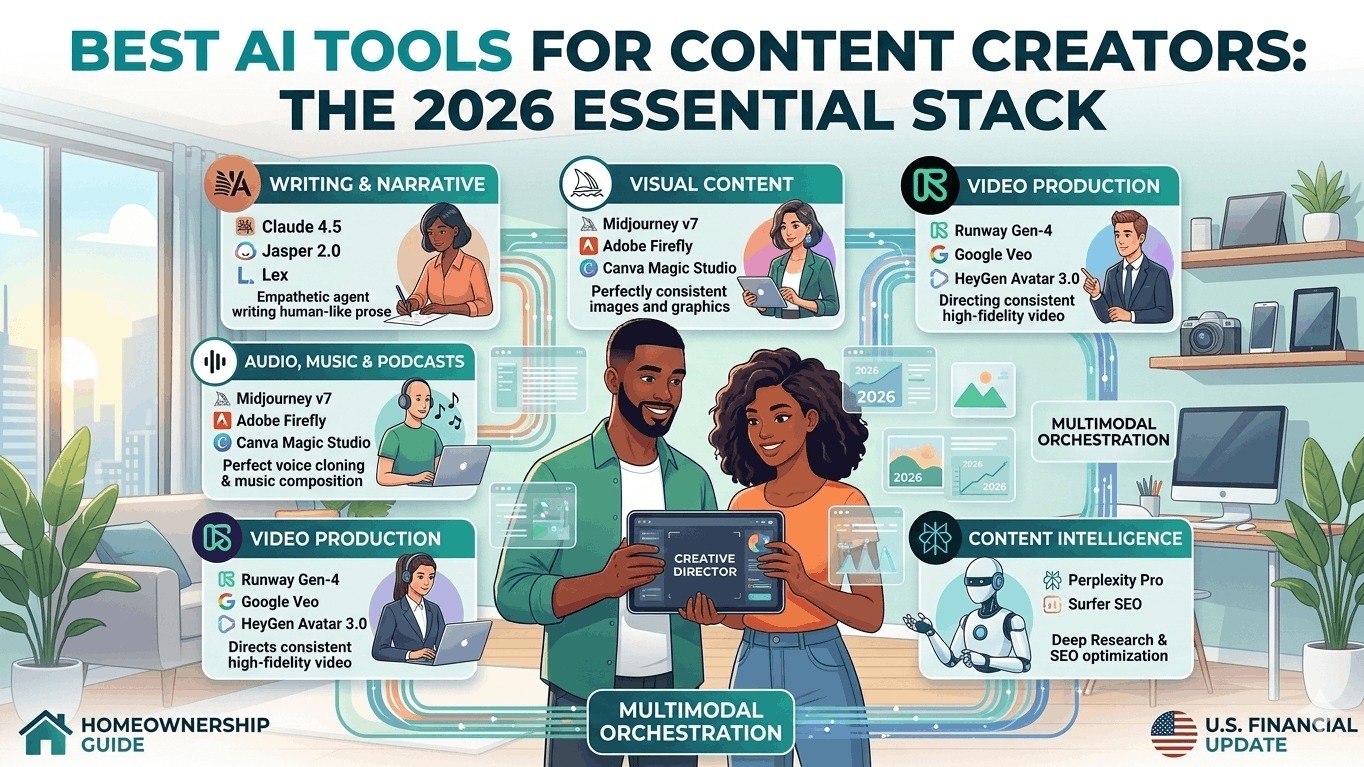
In 2026, content creation has moved beyond simple "generation" and into the realm of multimodal orchestration. Creators are no longer just writers or editors; they are creative directors managing a fleet of AI agents that can handle everything from SEO research to high-fidelity video production.
This guide highlights the top AI tools currently empowering creators to produce professional-grade content at scale.
1. Writing & Narrative Design
While basic LLMs are everywhere, these tools specialize in the nuances of brand voice and long-form storytelling.
- Claude 4.5: Widely regarded in 2026 as the best model for "human-like" prose. Its superior emotional intelligence and nuanced writing style make it the go-to for scripts, newsletters, and creative storytelling.
- Jasper (Brand Voice 2.0): Essential for marketing teams. Jasper scans your existing website and social media to create a "digital twin" of your brand voice, ensuring every AI-generated tweet or blog post sounds like your team wrote it.
- Lex: A specialized word processor for writers that uses AI to help overcome writer's block. Its "Check" feature provides real-time feedback on the flow and logic of your arguments.
2. Visual Content & Graphic Design
The gap between a concept and a final image has virtually disappeared thanks to improved spatial consistency and text rendering.
- Midjourney v7: Still the gold standard for artistic high-fidelity images. With the 2026 "Style Reference" updates, creators can maintain perfect character and aesthetic consistency across an entire series of images.
- Adobe Firefly (Integrated): The professional’s choice for commercial work. Because it is trained on Adobe Stock images, it is legally safe for business use. Its "Generative Expand" and "Text-to-Vector" features are staples in modern design workflows.
- Canva Magic Studio: The "all-in-one" solution for social media creators. It can take a single prompt and generate a full set of branded templates, including Instagram stories, LinkedIn posts, and presentation slides.
3. Video Production & Animation
2026 is the year of "Cinematic AI," where high-definition video with consistent physics is accessible to everyone.
- Runway Gen-4: Offers unprecedented control over video generation. Its "Motion Brush" and "Director Mode" allow you to specify exactly how objects and cameras move within a generated scene.
- Google Veo: A powerhouse for high-fidelity cinematic clips. In 2026, Veo is favored for its ability to generate natively synced audio and sound effects alongside the video, saving hours in post-production.
- HeyGen (Avatar 3.0): The leader in AI-driven video presentation. You can create a digital avatar of yourself that speaks multiple languages fluently with perfect lip-syncing and natural body language.
4. Audio, Music & Podcasts
Audio AI has reached a point where cloning and composition are indistinguishable from live recordings.
- ElevenLabs: The standard for voiceovers. Its 2026 "Speech-to-Speech" feature allows you to record a scratch track in your own voice and have it transformed into a professional voice actor's delivery while keeping your original emotion and timing.
- Adobe Podcast (Enhance): A "magic" tool for podcasters. It uses AI to remove background noise and echo, making a recording made on a smartphone sound like it was produced in a professional studio.
- Suno v5: For creators needing original, royalty-free background music. Suno can generate full two-minute songs with lyrics and vocals in any genre, perfect for YouTube intros or transitions.
5. SEO & Content Intelligence
Agents now do the heavy lifting of figuring out what to create based on live market data.
- Perplexity (Pro): The ultimate research tool. Instead of browsing for hours, creators use Perplexity to synthesize current trends into comprehensive content outlines with cited sources.
- Surfer SEO (AI Writer): Merges content creation with data. It analyzes the top-ranking pages on Google in real-time and tells you exactly which keywords and headers to use to outrank the competition.