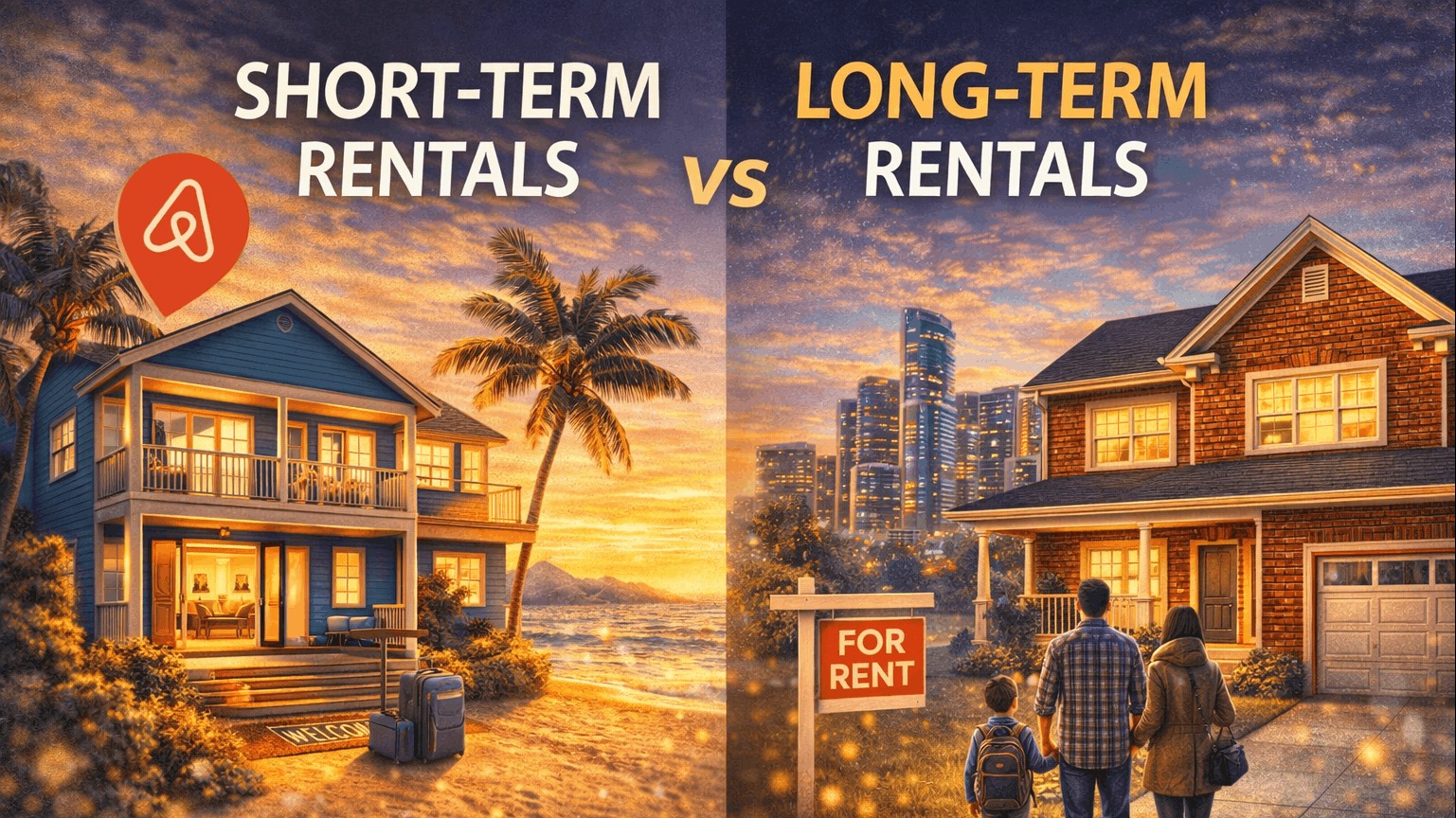
The landscape of U.S. real estate has shifted significantly in 2026. While the previous decade was defined by the "Airbnb gold rush," today’s investors are faced with a more mature, regulated, and expensive market. Choosing between a Short-Term Rental (STR) and a Long-Term Rental (LTR) is no longer just a lifestyle choice—it is a high-stakes business decision based on local laws, tax strategy, and “execution risk.”
1. At a Glance: The Key Differences
| Feature | Short-Term Rental (STR) | Long-Term Rental (LTR) |
|---|---|---|
| Typical Stay | 1–30 Days | 12+ Months |
| Primary Goal | High Cash Flow / Hospitality | Wealth Building / Stability |
| Effort Level | High (Business Operations) | Low (Passive Management) |
| Furniture | Fully Furnished & Designed | Typically Unfurnished |
| Income Trend | Seasonal & Volatile | Steady & Predictable |
| Regulatory Risk | High (Zoning/Caps/Bans) | Low (Stable Landlord Laws) |
2. Short-Term Rentals (STR): The High-Reward Hospitality Play
In 2026, STRs are no longer treated as "passive rentals" but as small hospitality businesses.
The Pros
- Superior Cash Flow: Nightly rates often generate 2x to 3x the gross revenue of a long-term lease, especially in 2026 "event-driven" markets (e.g., FIFA World Cup host cities or resort areas).
- The "STR Tax Loophole": If the average stay is 7 days or less, the IRS often classifies it as a business. If you materially participate, you can potentially use depreciation losses to offset your W-2 income—a massive benefit for high earners.
- Flexibility: You can block out dates for your own family vacations or perform maintenance without waiting for a lease to end.
The Cons
- Operational Intensity: You are responsible for cleaning, guest communication, and 24/7 troubleshooting.
- Regulation "Crackdowns": 2026 has seen a surge in "STR Caps" and registration fees in cities like Austin, Miami, and NYC. Operating an illegal STR now carries fines as high as $10,000 in some jurisdictions.
- Higher Expenses: You pay for all utilities, Wi-Fi, streaming services, and professional photography/design to stay competitive.
3. Long-Term Rentals (LTR): The Wealth-Building Anchor
For many investors in 2026, the "calm and predictable" nature of long-term rentals has become more attractive as interest rates hover around 6.5%.
The Pros
- Low Vacancy & Turnover: A single tenant for 12–24 months means no cleaning fees every 3 days and no "ghost months" where the property sits empty.
- Bankability: Lenders prefer the stability of long-term leases, making it easier to qualify for refinancing or new loans.
- Tenant Ownership: Long-term tenants treat the house like a home. They typically handle minor maintenance and pay their own utilities, lowering your overhead.
The Cons
- Lower Monthly Profit: After the mortgage, taxes, and insurance, your "take-home" cash flow is significantly thinner than a successful STR.
- Inflation Vulnerability: If your lease is locked for a year, you cannot raise rents mid-term even if property taxes or insurance premiums spike.
- Legal "Lock-In": In tenant-friendly states, evicting a non-paying or problematic tenant can take months and cost thousands in legal fees.
4. The 2026 "Execution Risk" Comparison
To decide, you must look at your Debt Service Coverage Ratio (DSCR).
- If you need the cash flow to pay the mortgage today: An STR might be the only way the deal "pencils" with 2026 interest rates.
- If you are playing for 10-year appreciation: An LTR is the safer bet to avoid sudden regulatory bans that could render your business model illegal overnight.