Building wealth through real estate is a timeless strategy, but in 2026, the game is about more than just "buying low and selling high." With a stabilized economic recovery and the rise of smart, sustainable housing, successful investors are focusing on a multi-dimensional approach to growth.
By combining the immediate gratification of rental income with the long-term engine of equity growth and leverage, you can transform a single property into a self-sustaining wealth machine.
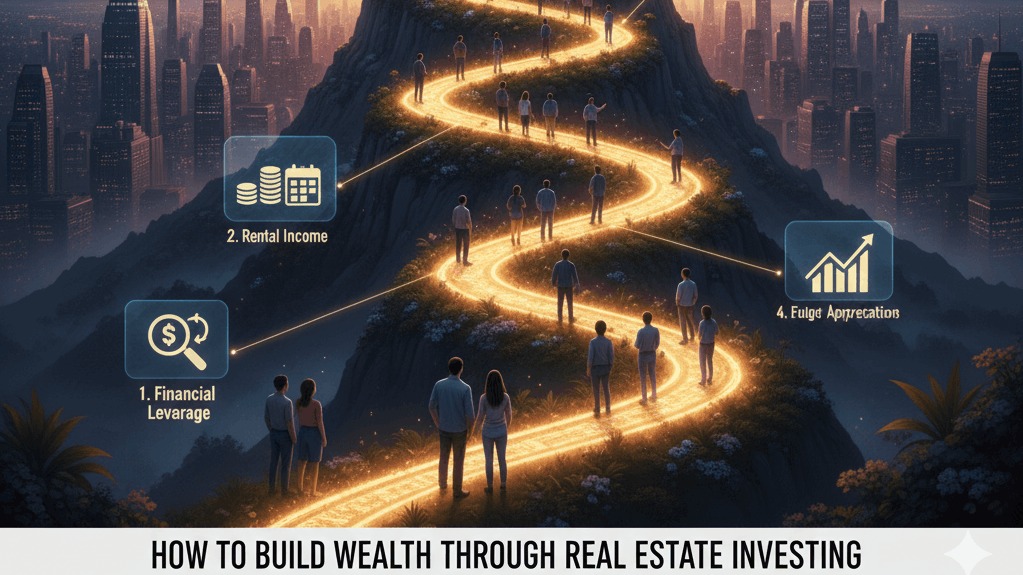
1. The Power of Financial Leverage
Leverage is the "secret sauce" of real estate. It is the ability to use a small amount of your own money (the down payment) to control a much larger asset.
- How it Multiplies Returns: If you buy a $500,000 property with $100,000 down (20% leverage) and the property value increases by just 5%, you haven't made a 5% return. You've made $25,000 on your $100,000 investment—a 25% return.
- 2026 Strategy: In a higher-rate environment, smart leverage means shopping for competitive financing and ensuring your rental income comfortably covers the debt service (the "Debt Service Coverage Ratio").
2. Generating Consistent Rental Income
Rental income is the foundation of your passive income strategy. It provides the cash flow needed to maintain the property and pay down your debt.
- Inflation Protection: Real estate is a natural hedge. As the cost of living rises, so do rents. While your fixed-rate mortgage payment stays the same, your "spread" (the profit) increases over time.
- Passive Management: To make this truly passive, 2026 investors utilize AI-driven property management platforms or hire professional firms to handle tenant screening and 24/7 maintenance.
3. Long-Term Appreciation
While cash flow pays the bills, appreciation builds the fortune. Real estate values historically trend upward due to land scarcity, population growth, and infrastructure development.
- Strategic Positioning: Wealth is built by identifying "path of progress" locations—areas where new transit lines, tech hubs, or sustainable "smart city" projects are being launched.
- Compounding Wealth: Just like stocks, property values compound. A property that appreciates at 4% annually will double in value in roughly 18 years.
4. Forced Appreciation and Equity Growth
Unlike stocks, you can "force" your investment to be worth more through strategic improvements.
- Equity Growth: Every month your tenant pays the rent, a portion of that money goes toward your mortgage principal. You are effectively using someone else's money to buy the house for yourself, brick by brick.
- Value-Add Strategy: In 2026, "green" upgrades—such as solar panels, EV charging stations, and smart HVAC systems—not only attract high-quality tenants but significantly boost the property's appraised value.
5. The Velocity of Wealth: Refinancing and Scaling
Once you have built significant equity, you can "unlock" it without selling the property.
- The BRRRR Method: (Buy, Rehab, Rent, Refinance, Repeat). By refinancing a stabilized property, you can pull out your initial capital tax-free and use it as a down payment on your next investment.
- Scaling: This "velocity of capital" allows you to grow from one property to a diversified portfolio, multiplying your income streams and tax advantages.