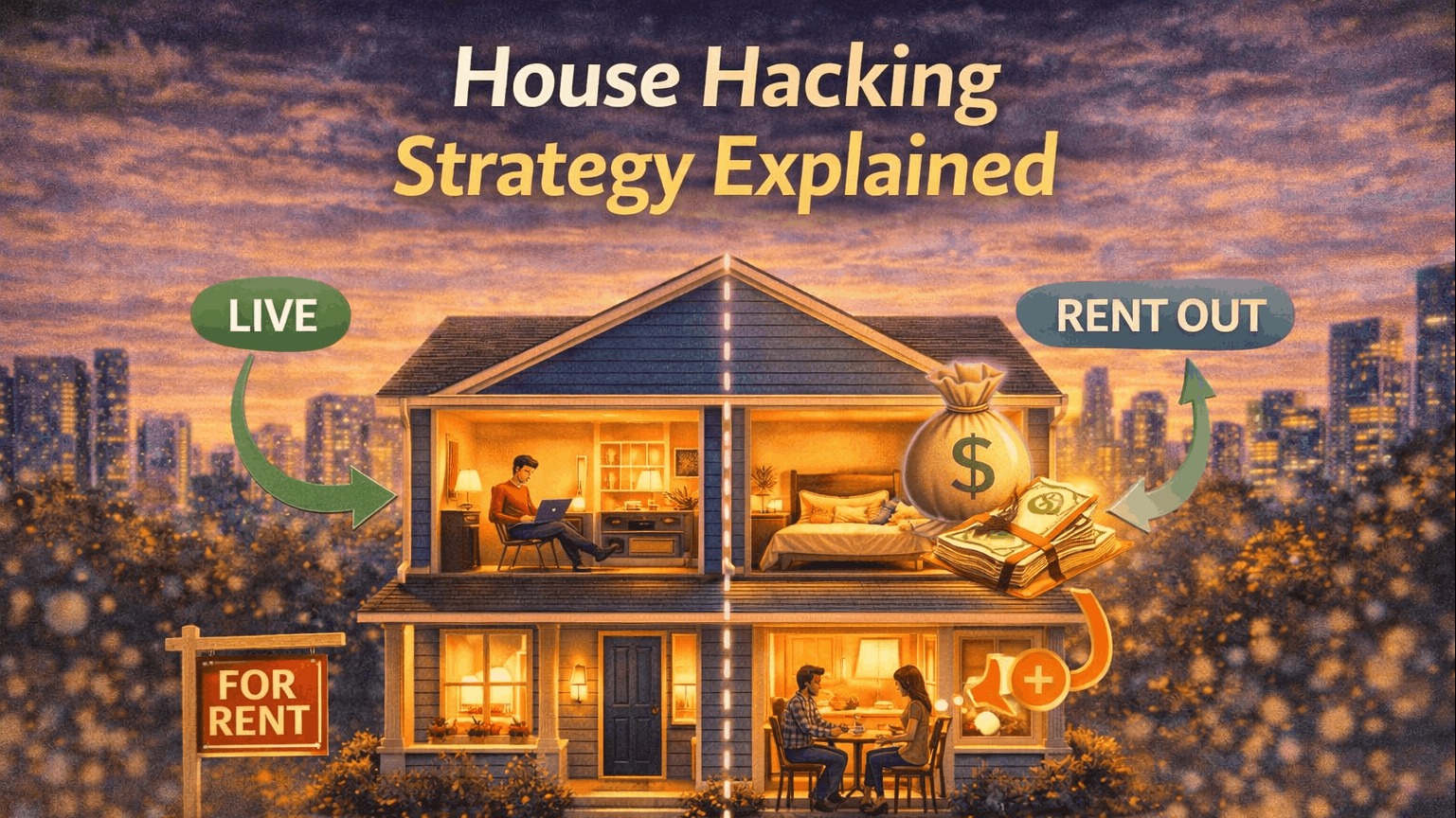
In the 2026 U.S. housing market, "House Hacking" has evolved from a niche real estate "trick" into a mainstream financial survival strategy. With the national median home price stabilizing at higher levels and mortgage rates averaging around 6.2%, many first-time buyers are using house hacking to offset—or entirely eliminate—their monthly housing costs.
Simply put, house hacking is the process of buying a primary residence, living in one part of it, and renting out the other parts to cover your mortgage and expenses.
1. Why House Hacking is the #1 Beginner Move in 2026
The "magic" of house hacking lies in the financing. When you buy an investment property, banks typically require a 20% to 25% down payment. However, because a house hack is your primary residence, you can take advantage of low-down-payment loans:
- FHA Loans: Buy a 1–4 unit property with only 3.5% down.
- VA Loans: Eligible veterans can buy with 0% down.
- Conventional 5%: Many 2026 conventional products now allow for 5% down on multi-unit properties if you intend to live there.
2. Common House Hacking Models
Depending on your comfort level and local zoning laws, there are four primary ways to execute this strategy in 2026:
A. The Multi-Unit Hack (The Gold Standard)
You buy a duplex, triplex, or four-plex. you live in one unit and rent the others.
- Benefit: You have your own kitchen, bathroom, and privacy. It is the easiest way to transition into being a "professional" landlord.
B. The "Rent-by-the-Room" Hack
You buy a large single-family home (e.g., 4 or 5 bedrooms) and rent out the spare rooms to friends or individual tenants.
- Benefit: Often generates the highest cash flow, especially in 2026 college towns or high-density tech hubs.
C. The ADU (Accessory Dwelling Unit) Hack
You buy a property with a "granny flat," a finished basement, or a converted garage.
- Benefit: Popular in 2026 California and Texas markets due to relaxed zoning laws. It offers a balance of privacy and income.
D. The Live-In Flip Hack
You buy a "fixer-upper" primary residence, live in it while renovating, and sell it after two years.
- Benefit: Under Section 121 of the IRS code, you can keep up to $250,000 (single) or $500,000 (married) of the profit tax-free if you lived there for two of the last five years.
3. Real-World House Hacking Example: The 2026 Duplex
Let’s look at a "Real-World" scenario in a market like San Antonio, TX or Columbus, OH.
The Purchase:
- Property Type: Duplex (2 Units)
- Price: $400,000
- Loan: FHA 3.5% Down Payment ($14,000)
- Closing Costs: $10,000
- Total Cash Invested: $24,000
The Monthly Math:
- Mortgage (PITI at 6.2%): $2,850
- Rental Income (Unit 2): $1,600
- Your Net Housing Cost: $1,250
Analysis: Instead of paying $2,400 to rent an apartment, you are living in your own home for $1,250. Furthermore, your tenant is paying off $400–$500 of your mortgage principal every month, and you are building equity in a $400k asset.