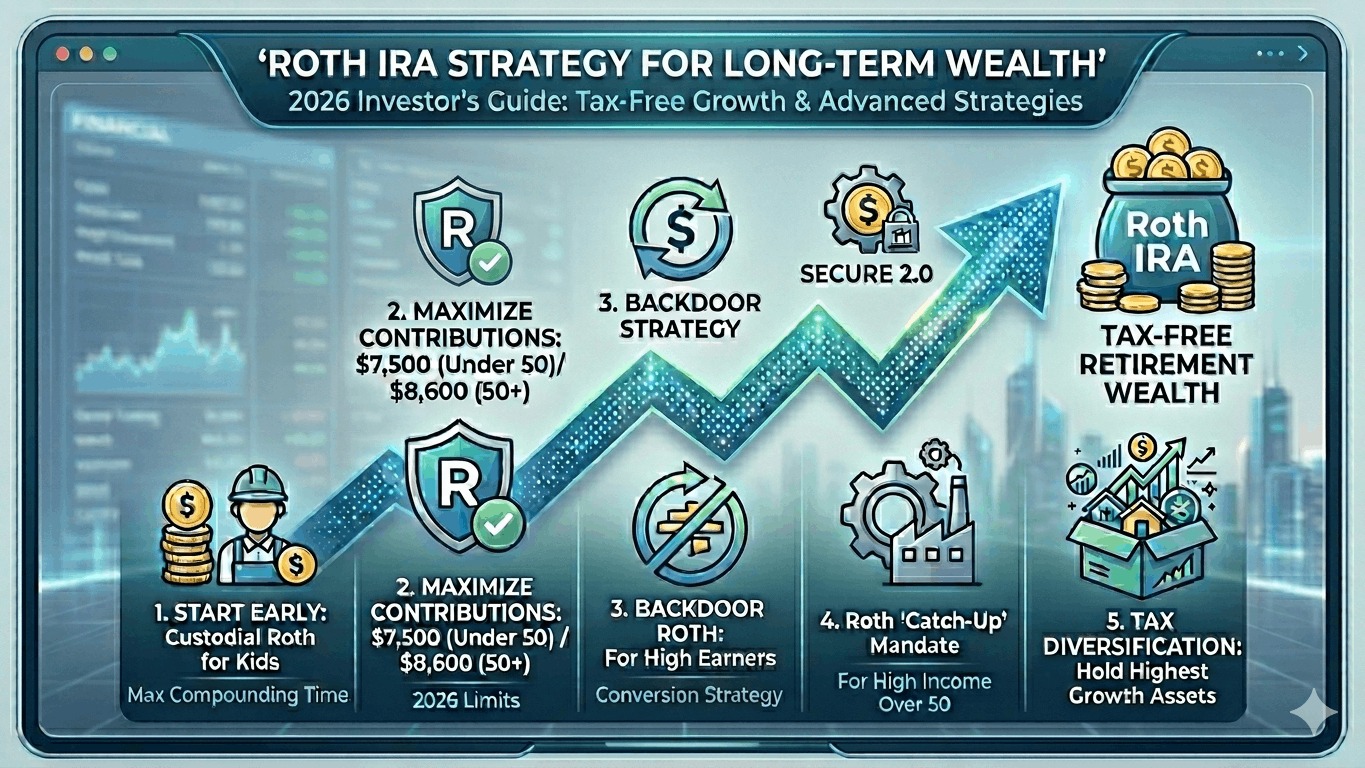
💰 2026 Contribution Limits: The New Numbers
The IRS has increased limits for 2026 to combat inflation, giving you more "tax-advantaged space" to grow your nest egg.
| Category | 2026 Limit | Change from 2025 |
|---|---|---|
| Employee Deferral (Under 50) | $24,500 | +$1,000 |
| Standard Catch-Up (Age 50+) | $8,000 | +$500 |
| "Super" Catch-Up (Ages 60–63) | $11,250 | No Change |
| Total Limit (Employee + Employer) | $72,000 | +$2,000 |
Note: If you are aged 60, 61, 62, or 63, your total possible employee contribution is $35,750 ($24,500 + $11,250).
🚀 4 Essential 401(k) Strategies for 2026
1. The "Free Money" Priority (The Match)
Never leave money on the table. Most employers offer a match (e.g., 50% of your contributions up to 6% of your salary).
- The Strategy: Contribute at least enough to trigger the full employer match. This is an immediate 50%–100% return on your investment before the market even moves.
2. High-Earner Roth Mandate
Under SECURE 2.0, if you earned more than $145,000 (indexed to roughly $150,000+ in 2026) in the previous year, your catch-up contributions MUST be made to a Roth 401(k).
- The Strategy: Check if your plan offers a Roth option now. If it doesn't, and you are a high earner over 50, you may be barred from making catch-up contributions until your employer adds a Roth feature.
3. The "Mega Backdoor Roth"
If your plan allows for after-tax contributions (distinct from Roth) and in-plan conversions, you can contribute up to the $72,000 total limit.
- The Strategy: After hitting your $24,500 limit, funnel extra savings into the after-tax bucket and immediately convert them to Roth. This allows you to shield an additional ~$40k+ from taxes forever.
4. Automated "Step-Up"
Many 2026 plans now feature mandatory auto-enrollment for new employees, starting at 3% and increasing 1% annually.
- The Strategy: Don't just stick to the default. If you receive a 3% raise this year, increase your 401(k) contribution by 2%. You won't feel the "pinch" in your take-home pay, but your future self will reap the rewards.
⚖️ Traditional vs. Roth 401(k): Which is Better?
- Traditional 401(k): Best if you are currently in a high tax bracket (e.g., 32% or 35%) and expect to be in a lower one during retirement. You get a tax break today.
- Roth 401(k): Best if you are early in your career or expect tax rates to rise. You pay taxes today to get tax-free withdrawals tomorrow.
- The 2026 Hybrid Move: Many investors now split their contributions to create "tax flexibility" in retirement, drawing from Traditional funds when they need a low-tax "floor" and Roth funds to stay out of higher brackets.
Here are 10 strong quotes for “401(k) Strategy to Build Retirement Wealth”:
- "A 401(k) is one of the most powerful tools for building long-term retirement wealth."
- "Contribute consistently, invest wisely, and let time do the heavy lifting."
- "The employer match in a 401(k) is free money — never leave it behind."
- "Retirement wealth grows faster when contributions increase with income."
- "A disciplined 401(k) strategy turns decades of work into decades of security."
- "Start early, stay consistent, and allow compounding to build your future."
- "Automating 401(k) contributions removes emotion from investing."
- "Your 401(k) balance reflects years of patience and smart financial habits."
- "Small percentage increases in contributions can create major long-term results."
- "Building retirement wealth isn’t about timing the market — it’s about time in the market."