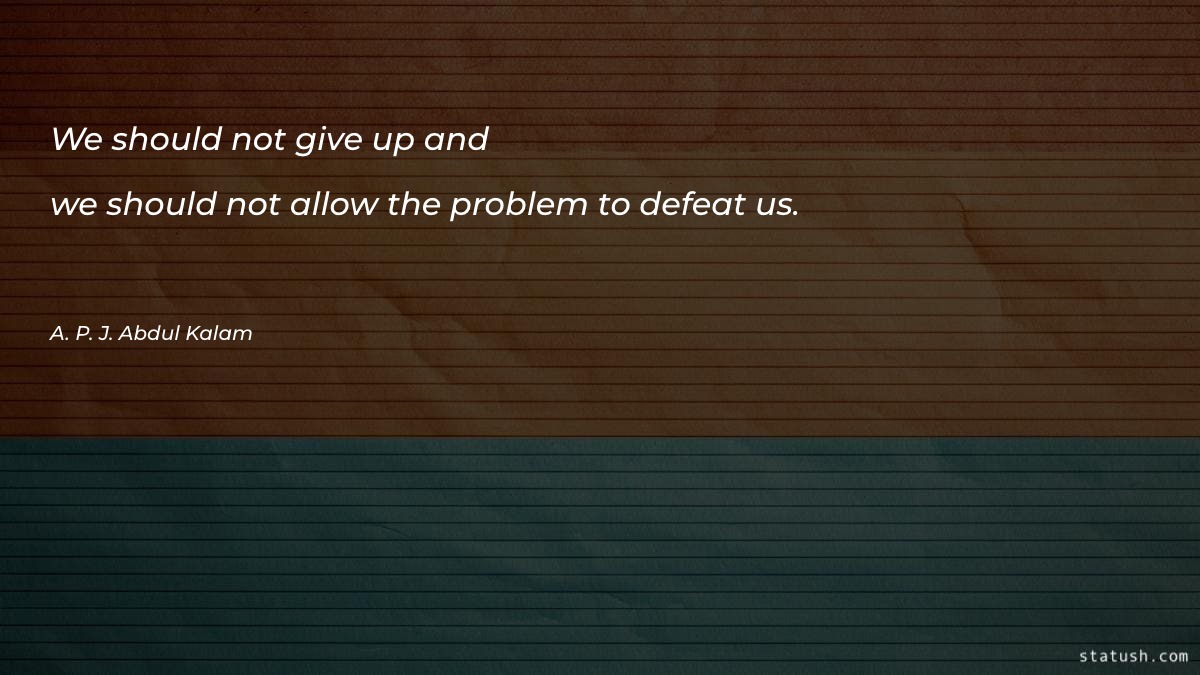
We should not give up and we should
Meaning
About Author

A. P. J. Abdul Kalam
A. P. J. Abdul Kalam was an Indian aerospace scientist, engineer, and the 11th President of India, widely known as the “Missile Man of India.” He played a pivotal role in India’s space research and missile development programs while inspiring millions through his vision for a developed and self-reliant nation. Beyond science, Kalam was a motivational leader who emphasized education, innovation, and ethical responsibility. His speeches and writings often highlight perseverance, humility, and the power of dreaming big. Students and professionals alike are inspired by his words on discipline, leadership, and optimism. Even decades after his presidency, Kalam’s thoughts on youth empowerment, creativity, and social progress continue to influence generations. His quotes remain timeless lessons on determination, morality, and the transformative power of knowledge, making him one of the most respected and quoted figures in modern history.
Related Quotes
“ Do we not realize that self respect comes with self reliance ”
“ Writing is my love. If you love something, you find a lot of time. I write for two hours a day, usually starting at midnight; at times, I start at 11. ”
“ There are a number of women who have brought about immense change in society. ”