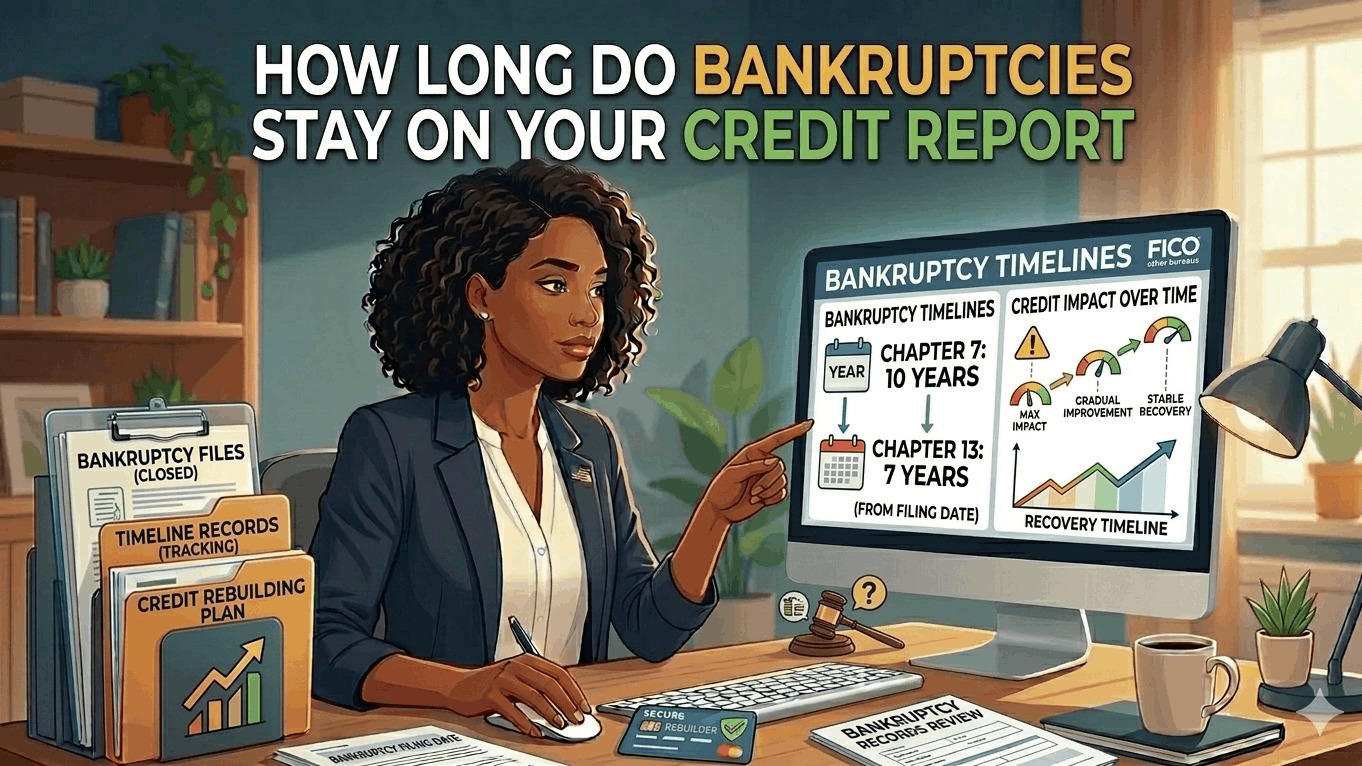
In the 2026 American credit landscape, bankruptcy remains one of the most significant "negative marks" an individual can have. However, as credit reporting becomes more automated and data-driven, the "stigma" of bankruptcy is increasingly measured by how long ago it occurred rather than just its presence on your report.
Understanding the legal timelines for reporting is the first step in planning your financial recovery and eventually removing the mark for good.
1. The Timeline: Chapter 7 vs. Chapter 13
The length of time a bankruptcy stays on your report depends entirely on which "chapter" of the U.S. Bankruptcy Code you filed under.
| Bankruptcy Type | Duration on Credit Report | Why the Difference? |
|---|---|---|
| Chapter 7 | 10 Years from filing date | Known as "Liquidation," this wipes out most debt entirely. Because creditors receive little to nothing back, it is viewed as more severe. |
| Chapter 13 | 7 Years from filing date | Known as "Reorganization," this involves a 3- to 5-year repayment plan. Since you are paying back a portion of the debt, bureaus "reward" you with a shorter reporting window. |
Critical Note: The clock starts on the Filing Date, not the date your bankruptcy is "discharged" (completed). If you filed Chapter 13 in January 2026, it will disappear in January 2033, even if your repayment plan lasted until 2031.
2. Accounts "Included in Bankruptcy"
While the bankruptcy itself stays for 7 or 10 years, the individual accounts (credit cards, medical bills, etc.) that were discharged follow a different rule:
- The 7-Year Rule: Most negative accounts must be removed 7 years after the original delinquency date (the first time you were late before filing).
- The Zero-Balance Mandate: Once your bankruptcy is discharged, these accounts must show a $0 balance and a status of "Discharged in Bankruptcy." If they still show "Active" or "Past Due," they are illegally dragging down your score.
3. The "Healing" Process: Why 24 Months Matters
By 2026, FICO and VantageScore algorithms are more sophisticated in tracking recovery. While the bankruptcy is a "scar," it is a scar that heals.
- Months 1–12: The impact is maximum. You may see a score drop of 130–240 points immediately after filing.
- Months 13–24: If you have established new, positive credit (like a secured card), the "weight" of the bankruptcy begins to drop.
- The "Prime" Threshold: Many 2026 mortgage lenders will consider applicants just 2 years after a Chapter 7 discharge, provided they have perfect payment history since the filing.
4. Can You Remove a Bankruptcy Early?
In almost all cases, no. If the bankruptcy is accurate, there is no legal way to remove it before the 7- or 10-year window.
Exceptions for Early Removal:
- Inaccuracy: If the filing date is wrong, the chapter type is incorrect, or it belongs to someone with a similar name.
- Identity Theft: If the bankruptcy was filed fraudulently in your name.
- Beyond the Limit: If it’s been 10 years and one day and it’s still there, you can dispute it for instant removal.